
By 50, many men have noticed the changes: less energy, softer muscle, a thicker middle, lower drive. It’s easy to assume this is just irreversible ageing and that nothing can be done without medical intervention. But that’s not quite true. While testosterone does naturally decline with age, a significant portion of what men experience is driven by reversible lifestyle factors, and addressing them can support testosterone, even after 50. This guide covers what works to raise testosterone naturally in older men, and realistic expectations about what it can and can’t do.
The Realistic Starting Point
First, realistic expectations. Testosterone declines by roughly 1% per year from around age 30, so by 50 your levels are naturally lower than in your twenties (see testosterone levels by age). Natural approaches won’t turn a 50-year-old’s testosterone back into a 25-year-old’s, and if you have clinically low testosterone with significant symptoms, natural methods may not fully resolve it (in which case, see a doctor, see when to see a doctor about low testosterone).
But much of what men blame on “low testosterone after 50” is caused or worsened by reversible factors, excess weight, poor sleep, inactivity, stress, that also happen to suppress testosterone (see andropause). Fix those, and you can meaningfully support your levels and, just as importantly, feel dramatically better regardless of the exact number.
What Works After 50
1. Lose excess body fat (the biggest lever)
This is often the single most impactful thing. Excess body fat, especially belly fat, converts testosterone into estrogen and drives levels down in a self-reinforcing cycle (see testosterone and belly fat). Losing that fat reduces the conversion and can raise testosterone. For many men over 50 carrying extra weight, fat loss is the highest-return move available (see how to lose belly fat after 40).
2. Lift weights (resistance training)
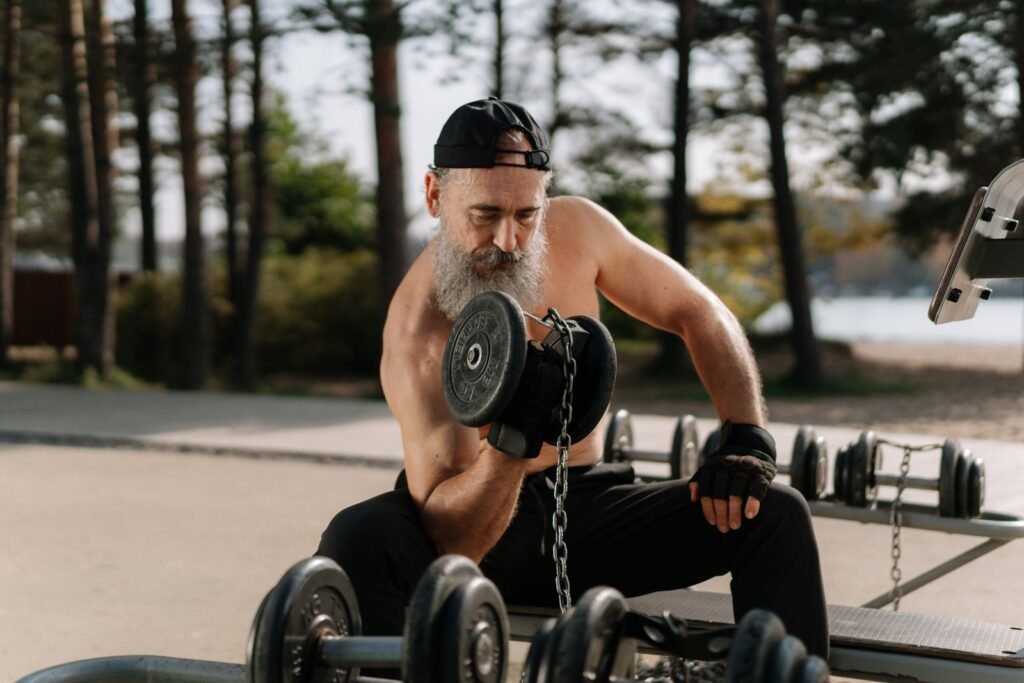
Resistance training is powerful for testosterone at any age, and it becomes even more important after 50 because it also fights the accelerating muscle loss of sarcopenia (see building muscle after 40 and sarcopenia in men). Focus on compound movements, and don’t assume you’re “too old”, men in their 50s, 60s, and beyond build muscle and benefit hormonally from lifting (see exercises to increase testosterone and best compound lifts).
3. Prioritise sleep
Most testosterone is produced during deep sleep, and sleep often worsens with age, creating a hidden drain on testosterone (see sleep and testosterone). Prioritising 7 to 9 hours of quality sleep, and ruling out sleep apnea (common and testosterone-suppressing in older men), is impactful (see sleep apnea symptoms in men and how to increase deep sleep).
4. Manage stress
Chronic stress elevates cortisol, which suppresses testosterone (see chronic stress symptoms and cortisol and testosterone). Managing stress through the fundamentals supports your levels (see how to manage stress).
5. Correct nutrient deficiencies
Deficiencies in vitamin D, zinc, and magnesium, all more common with age, can limit testosterone. Correcting true deficiencies helps (see vitamin D deficiency in men, zinc deficiency in men, and the men’s supplement stack). Note: this only helps if you’re deficient, supplementing when you’re not does little.
6. Limit alcohol
Excess alcohol suppresses testosterone and adds belly fat, a double hit. Moderating it supports your levels (see alcohol and belly fat).
7. Eat a supportive diet
A whole-food diet with adequate protein and healthy fats supports testosterone and helps you stay lean (see foods that boost testosterone and best diet for men over 40). Healthy fats matter, since cholesterol is the building block of testosterone.

What About Supplements and “Boosters”?
Be realistic here. Most over-the-counter “testosterone boosters” don’t meaningfully raise testosterone in healthy men (see do testosterone supplements work). The exceptions are correcting true deficiencies (vitamin D, zinc, magnesium) and possibly ashwagandha for stress-related benefit (see ashwagandha for men). Don’t waste money on exotic booster blends promising dramatic results, the fundamentals above do far more (see when supplements are a waste of money).
When Natural Isn’t Enough
If you’ve addressed the fundamentals, lost excess weight, trained, fixed sleep, managed stress, and still have significant symptoms of low testosterone (persistent fatigue, low libido, erectile issues, low mood), see a doctor for proper evaluation (see signs of low testosterone). You may have clinically low testosterone that warrants medical consideration, including possibly TRT (see testosterone replacement therapy explained). Natural methods are the right first step, but they’re not a substitute for medical care when it’s needed.
Frequently Asked Questions
Can you increase testosterone naturally after 50?
Yes, to a meaningful degree. While testosterone naturally declines with age, much of what men experience after 50 is driven by reversible factors, excess weight, poor sleep, inactivity, stress. Addressing these supports testosterone, though it won’t restore youthful levels entirely.
What’s the best way to raise testosterone after 50?
Losing excess body fat is often the biggest lever, followed by resistance training, prioritising sleep, managing stress, correcting nutrient deficiencies, and limiting alcohol. These fundamentals support testosterone and make you feel dramatically better.
Do testosterone boosters work for men over 50?
Most over-the-counter boosters don’t meaningfully raise testosterone. The exceptions are correcting true deficiencies (vitamin D, zinc, magnesium) and possibly ashwagandha for stress. The lifestyle fundamentals do far more than any booster.
Is low testosterone just part of aging after 50?
Some decline is normal, but much of what’s blamed on age is reversible, driven by lifestyle factors that also suppress testosterone. You shouldn’t simply accept significant symptoms without addressing these factors or seeing a doctor.
When should I see a doctor about testosterone after 50?
If you’ve addressed the fundamentals and still have significant symptoms, persistent fatigue, low libido, erectile issues, low mood, see a doctor for proper evaluation. You may have clinically low testosterone warranting medical consideration.
The Bottom Line on Testosterone After 50
Yes, you can increase testosterone naturally after 50, not back to youthful levels, but meaningfully, because much of what men experience is driven by reversible factors rather than age alone. The highest-return moves are losing excess body fat (which otherwise converts testosterone to estrogen), lifting weights, prioritising sleep, managing stress, correcting real nutrient deficiencies, and limiting alcohol. Skip the exotic booster supplements, the fundamentals do the real work. And crucially, even where these don’t fully restore your testosterone number, they’ll make you feel dramatically better in energy, strength, and drive. If significant symptoms persist despite real effort, see a doctor. But don’t assume 50 means giving up: you have far more control than the “it’s all downhill” narrative suggests.
This article is for informational purposes only and does not constitute medical advice. Consult a qualified healthcare professional about low testosterone.
Sources
- Armamento-Villareal R et al. Effect of Lifestyle Intervention on the Hormonal Profile of Frail, Obese Older Men. J Nutr Health Aging, 2016
- Corona G et al. European Academy of Andrology (EAA) guidelines on investigation, treatment and monitoring of functional hypogonadism in males: Endorsing organization: European Society of Endocrinology. Andrology, 2020
- NIH Office of Dietary Supplements, Vitamin D