
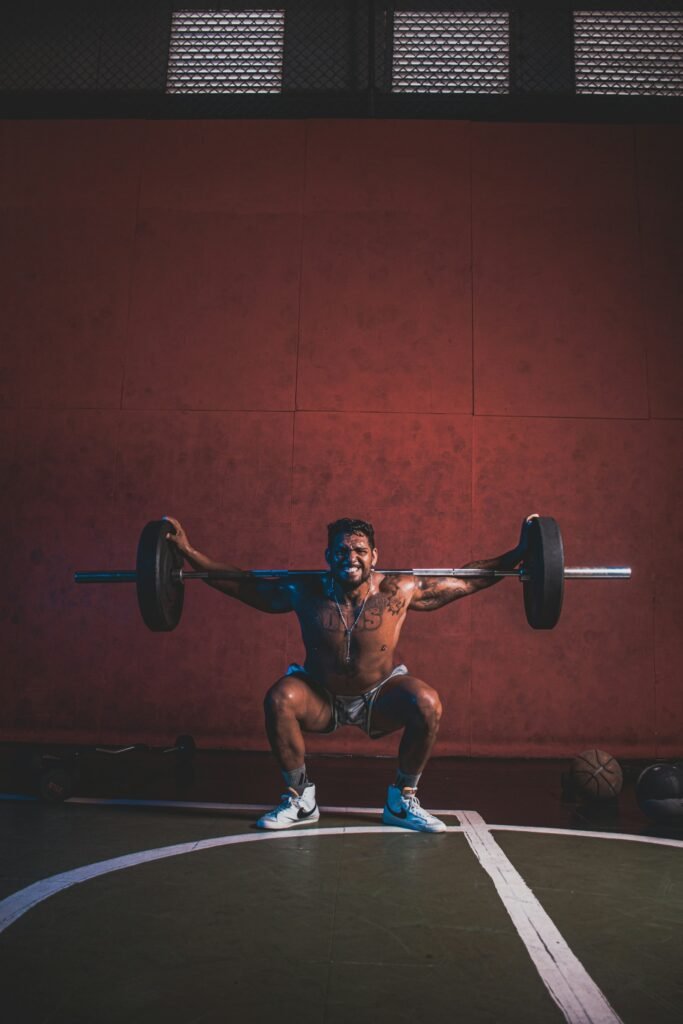
Exercise is one of the few proven, no-cost ways to support healthy testosterone, but not all exercise is equal, and more isn’t always better. Some training raises testosterone; some, done to excess, suppresses it. Getting this right is one of the highest-leverage things a man can do for his hormones. Here are the exercises to increase testosterone that the evidence supports.
This guide covers which exercises move the needle, why they work, the dose that helps versus the dose that backfires, and how to build a simple routine around it.
Here’s where the evidence stands on exercises to increase testosterone, which steps pay off, and which ones you can ignore.
Why Exercise Affects Testosterone
Exercise influences testosterone through several mechanisms: it stimulates acute hormone release, builds the muscle mass associated with healthier levels (see building muscle after 40), reduces body fat (which otherwise converts testosterone to estrogen, see testosterone and belly fat), and improves insulin sensitivity and sleep, both tied to hormone health (see sleep and testosterone).
But the relationship has a ceiling. Short, intense training produces beneficial hormonal responses; excessive, under-recovered training raises cortisol and can lower testosterone. The goal is to train hard enough to stimulate, without overreaching into suppression.
1. Heavy Resistance Training (the Foundation)
If you do one thing for your testosterone, make it lifting weights, specifically heavy, compound movements.
Why it works: Large, multi-joint exercises recruit the most muscle mass, which produces the strongest acute testosterone and growth hormone response, and builds the lean muscle associated with healthier long-term levels.
The best exercises are the big compounds:
- Squats
- Deadlifts
- Bench press and overhead press
- Rows and pull-ups
These beat isolation exercises (bicep curls, leg extensions) for hormonal impact because they involve far more muscle. Train with challenging weights in a moderate rep range (roughly 6 to 12 reps), with enough load that the last few reps are hard.
This also builds and preserves muscle as you age, which we cover in our guide to building muscle after 40.
2. High-Intensity Interval Training (HIIT)
Why it works: Short bursts of all-out effort followed by recovery have been shown to support testosterone, while also burning fat and improving cardiovascular fitness efficiently.
What it looks like: Sprints (running, cycling, or rowing) of 20 to 30 seconds at maximum effort, followed by 60 to 90 seconds of easy recovery, repeated for 15 to 20 minutes. Two or three sessions a week is plenty.
The key with HIIT is that it’s brief and intense: that’s the hormonal sweet spot. It’s also time-efficient, which makes it sustainable.
3. Don’t Neglect Cardio, but Keep It Moderate
Steady aerobic exercise (like zone 2 cardio) won’t spike testosterone the way lifting does, but it supports it indirectly by improving cardiovascular health, aiding fat loss, reducing stress, and improving sleep. It also keeps you healthy enough to train hard in the gym.
The caution: excessive endurance training, think very high-volume long-distance running, has been associated with lower testosterone in some men, because chronic, prolonged training elevates cortisol. Moderate cardio supports testosterone; obsessive endurance volume can work against it.
The Overtraining Trap
This is the part most “boost your testosterone” articles ignore. More training is not more testosterone. Beyond a certain point, training does the opposite:
- Chronic overtraining without recovery keeps cortisol elevated, and cortisol suppresses testosterone (we cover this relationship in our guide to high cortisol vs low cortisol in men).
- Insufficient recovery, sleep, and nutrition turn training into a stressor rather than a stimulus.
- Signs you’re overdoing it: persistent fatigue, declining performance, poor sleep, low mood, and reduced libido, ironically, the same symptoms as low testosterone.
The fix is built into good programming: train hard, then recover properly. Rest days are where adaptation happens, not weakness.
A Simple Weekly Template of Exercises to Increase Testosterone
A balanced, testosterone-supportive week might look like:
- 3 days resistance training: full-body or upper/lower split, built around compound lifts
- 2 days moderate cardio: including zone 2 work for cardiovascular health
- 1 to 2 short HIIT sessions: can be combined with cardio days
- At least 1 to 2 full rest days
- Sleep prioritised every night: testosterone is produced largely during deep sleep, so this is non-negotiable
Notice this isn’t extreme. It’s sustainable, balanced, and built around recovery, which is exactly what supports hormones over the long term.
The Other Essentials
Exercise works best alongside the rest of the foundation:
- Sleep: most testosterone is produced during deep sleep; poor sleep undercuts all your training
- Nutrition: adequate protein and the nutrients testosterone needs (see foods that boost testosterone)
- Healthy body fat: staying lean amplifies every other effort
- Stress management: to keep cortisol in check
Training is powerful, but it’s one pillar. The men who see the biggest hormonal benefit combine smart training with sleep, nutrition, and recovery.
How Big Is the Effect, Really?
This is where the subject gets oversold, so it pays to be precise. Two completely different things get filed under exercise raises testosterone, and only one of them matters to you.
The post-workout spike
Heavy compound training does produce a measurable rise in testosterone shortly afterwards. It is real, it is well documented, and it is also transient, fading within roughly an hour. The intuitive conclusion is that this spike is what builds the muscle, which is why you will see exercises ranked by how much they supposedly raise testosterone.
The evidence does not support that conclusion. Research designed specifically to test it found that exposing trained muscle to these acute rises in anabolic hormones enhanced neither muscle growth nor strength in young men. Muscle cross-sectional area increased to a similar degree whether the training was done in a high hormone or a low hormone condition, and the same held for both type I and type II fibres. Related work found that increases in muscle protein synthesis happen without any rise in systemic anabolic hormones and are not improved by the post-exercise elevation.
So choosing squats over leg presses because squats spike testosterone more is not a sound argument. Choose squats because they load a lot of muscle efficiently, which is a much better reason and happens to be true.
What moves your baseline
Your resting testosterone level is a different matter, and exercise influences it mostly indirectly. Losing visceral fat helps, because fat tissue converts testosterone to oestrogen. Sleeping properly helps, because most of your daily testosterone is released during sleep. Not training yourself into the ground helps, because chronic under-recovery suppresses it.
That is a less exciting story than a workout that spikes your hormones, but it is the accurate one, and it points at the same behaviours. Train hard, get lean, sleep well. The hormone follows the body composition and the recovery, not the individual exercise selection.
And if you suspect your baseline is clinically low, that is a question for a blood test and a doctor rather than a training programme.
FAQ: Exercises to Increase Testosterone
Some quick answers on exercises to increase testosterone:
What exercise increases testosterone the most?
Heavy compound resistance training, squats, deadlifts, presses, rows, produces the strongest testosterone response because it recruits the most muscle. HIIT also helps. Isolation exercises do far less.
How often should I work out to boost testosterone?
Around 3 resistance sessions plus some moderate cardio and 1 to 2 short HIIT sessions per week, with adequate rest days. Consistency and recovery matter more than sheer volume.
Can too much exercise lower testosterone?
Yes. Chronic overtraining and excessive endurance training keep cortisol elevated and can suppress testosterone. Recovery is essential, more is not always better.
Do bodyweight exercises boost testosterone?
They help build muscle and fitness, especially challenging movements like pull-ups and pistol squats, but heavy loaded compound lifts produce a stronger hormonal response. Both have value.
How long until exercise improves my testosterone?
Lifestyle-driven improvements typically build over weeks to months of consistent training, better sleep, and fat loss, not overnight. The body-composition benefits compound over time.
The Bottom Line on Exercises to Increase Testosterone
The bottom line on exercises to increase testosterone: The best exercises for testosterone are heavy compound lifts, squats, deadlifts, presses, rows, supported by short HIIT sessions and moderate cardio. They work by building muscle, burning fat, and triggering beneficial hormonal responses. But the crucial caveat is recovery: chronic overtraining raises cortisol and suppresses the very testosterone you’re trying to build. Train hard three or so days a week, keep cardio moderate, prioritise sleep, and respect your rest days. Smart, sustainable training beats grinding yourself into the ground every time.
This article is for informational purposes only and does not constitute medical advice. Consult a qualified healthcare professional before starting a new exercise programme.
Sources
- Acute testosterone and cortisol responses to high power resistance exercise, PubMed
- Acute effect of HIIT on testosterone and cortisol levels in healthy individuals: A systematic review and meta-analysis
- Acute Response to Endurance Exercise Stress: Cortisol, Testosterone, and SHBG in Professional Athletes, PMC
- Kraemer WJ et al. Hormonal responses and adaptations to resistance exercise and training. Sports Med, 2005
- Elevations in ostensibly anabolic hormones with resistance exercise enhance neither training-induced muscle hypertrophy nor strength.
- Resistance exercise-induced increases in putative anabolic hormones do not enhance muscle protein synthesis in young men.
- Hormones, Hypertrophy, and Hype: An Evidence-Guided Primer on Endogenous Endocrine Influences on Exercise-Induced Muscle Hypertrophy.