
Not everyone who lifts wants to get bigger. Plenty of men want to be stronger, more capable, more athletic, without adding significant muscle size or bodyweight, whether for a sport with weight classes, for practical strength, or simply personal preference. The good news is that strength and size, while related, aren’t the same thing, and you can train to prioritise strength while minimising size gains. This guide explains how to get stronger without getting significantly bigger, and why it works.
Strength and Size Are Related but Different
First, the key concept that makes this possible. Building muscle size (hypertrophy) and building strength are related, bigger muscles generally have more strength potential, but they’re driven by somewhat different adaptations, so you can emphasise one over the other.
Strength comes from two main sources:
- Muscle size: more muscle has more strength potential.
- Neuromuscular adaptations: your nervous system’s ability to recruit muscle fibres efficiently, coordinate the movement, and produce force. This is essentially getting better at using the muscle you have.
You can get significantly stronger largely through the neuromuscular adaptations, improving how effectively your body uses its existing muscle, without necessarily adding much size. This is why some lean people are remarkably strong, and why you can build strength while minimising size gains. Powerlifters in lower weight classes, for instance, are extremely strong without being huge, they’ve maximised strength relative to size.
How to Train for Strength Without Size
The training approach that emphasises strength over size:
1. Lift heavy weights for low reps
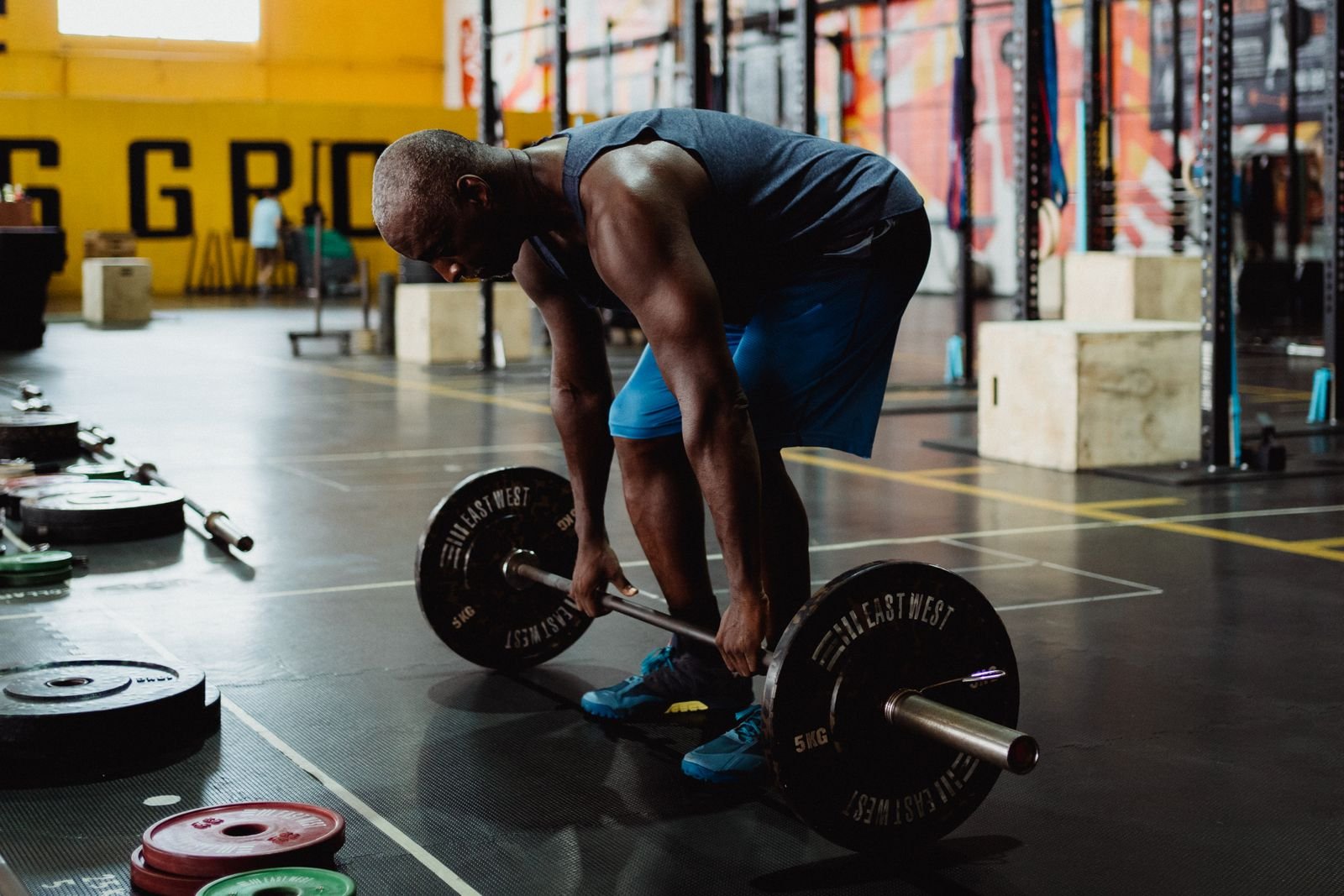
This is the core principle. Training with heavy weights for low reps (roughly 1 to 5 reps per set) primarily develops strength through neuromuscular adaptations, with less of the muscle-size stimulus that comes from higher-rep, higher-volume training (see best rep range for muscle). Heavy, low-rep work makes you stronger by improving force production and efficiency more than by adding size.
2. Keep the volume lower
Muscle size is heavily driven by training volume (total sets and reps, see sets per muscle group). To minimise size gains, keep your volume relatively lower, fewer total sets, focused on quality heavy lifting, rather than the high volume that maximises hypertrophy. Lower volume with heavy weight builds strength while limiting the size stimulus.
3. Focus on compound lifts and skill
Prioritise the big compound lifts (squats, deadlifts, presses) and treat strength as a skill to practise, focus on getting more efficient and coordinated at these lifts (see best compound lifts). Much of strength is technique and neuromuscular efficiency, which you develop by practising the lifts heavy.
4. Rest longer between sets
For strength (heavy, low-rep) work, take longer rest periods between sets (a few minutes), so you can lift heavy with full recovery each set. This supports strength development, whereas shorter rests and higher fatigue lean more toward size.
5. Apply progressive overload
Progressively increase the weight over time: that’s how you get stronger (see progressive overload explained). The goal is steadily adding weight to your key lifts.
6. Manage your nutrition
This matters for controlling size. To build significant muscle size, you generally need a calorie surplus and ample protein. To get stronger without adding much size, eat at roughly maintenance calories (not a big surplus), so you’re not providing the extra energy that fuels significant muscle growth, while still eating adequate protein to support strength and recovery (see how much protein men need). Eating at maintenance while strength training lets you get stronger with minimal size gain.
Realistic Expectations
A note: getting stronger while completely avoiding any size gain isn’t fully possible, some muscle change may occur, especially if you’re a beginner (beginners tend to gain some size regardless). But you can strongly emphasise strength and minimise size gains with the approach above. The result is getting notably stronger with little added bulk, which is exactly what most people seeking this want. If you’re a beginner, expect a little size gain initially; if you’re more experienced, you can add strength with very little size change using this method.
Also note the difference in goals: this is the opposite emphasis from someone wanting maximum size, who would use higher volume, moderate reps, and a calorie surplus (see building muscle after 40). Same tools, different emphasis.
Frequently Asked Questions
Can you get stronger without getting bigger?
Yes. Strength comes from both muscle size and neuromuscular adaptations (how efficiently your body uses its muscle). You can get significantly stronger largely through the neuromuscular adaptations, improving force production and technique, without adding much size, by training heavy for low reps with lower volume.
How do I build strength without size?
Lift heavy weights for low reps (1 to 5), keep training volume lower, focus on compound lifts and technique, rest longer between sets, apply progressive overload, and eat at roughly maintenance calories (not a surplus) with adequate protein. This emphasises strength while minimising the size stimulus.
Why are some lean people so strong?
Because much of strength comes from neuromuscular efficiency, how well your nervous system recruits and coordinates your muscles, not just muscle size. Lean, strong people have maximised their strength relative to their size through this, which is exactly what training heavy for low reps develops.
Does lifting heavy make you bulky?
Not necessarily. Lifting heavy for low reps primarily builds strength through neuromuscular adaptations, with less size stimulus than higher-volume, moderate-rep training. Combined with lower volume and maintenance calories, heavy lifting can build strength with minimal size gain.
What rep range builds strength without size?
Roughly 1 to 5 reps per set with heavy weight primarily develops strength through neuromuscular adaptations, with less of the muscle-size stimulus of higher-rep training. Keep volume lower and rest longer between sets to emphasise strength over size.
The Bottom Line on Getting Stronger Without Getting Bigger
You can get stronger without getting significantly bigger, because strength and size, while related, are driven by somewhat different adaptations. Much of strength comes from neuromuscular adaptations, improving how efficiently your body recruits and coordinates its existing muscle, rather than just from added size, which is why lean people can be remarkably strong. To emphasise strength while minimising size, lift heavy weights for low reps (1 to 5), keep your training volume relatively low, focus on compound lifts and technique, rest longer between sets, apply progressive overload, and eat at roughly maintenance calories (not a surplus) with adequate protein. Realistically, completely avoiding any size gain isn’t fully possible (especially for beginners), but you can strongly emphasise strength and get notably stronger with little added bulk, which is exactly what most people seeking this want. It’s the same tools as building size, just applied with a different emphasis.
This article is for informational purposes only and does not constitute medical advice. Consult a qualified healthcare professional before starting a new exercise programme.
Sources
- Gabriel DA et al. Neural adaptations to resistive exercise: mechanisms and recommendations for training practices. Sports Med, 2006
- Androulakis-Korakakis P et al. The Minimum Effective Training Dose Required to Increase 1RM Strength in Resistance-Trained Men: A Systematic Review and Meta-Analysis. Sports Med, 2020
- Lopez P et al. Resistance Training Load Effects on Muscle Hypertrophy and Strength Gain: Systematic Review and Network Meta-analysis. Med Sci Sports Exerc, 2021