
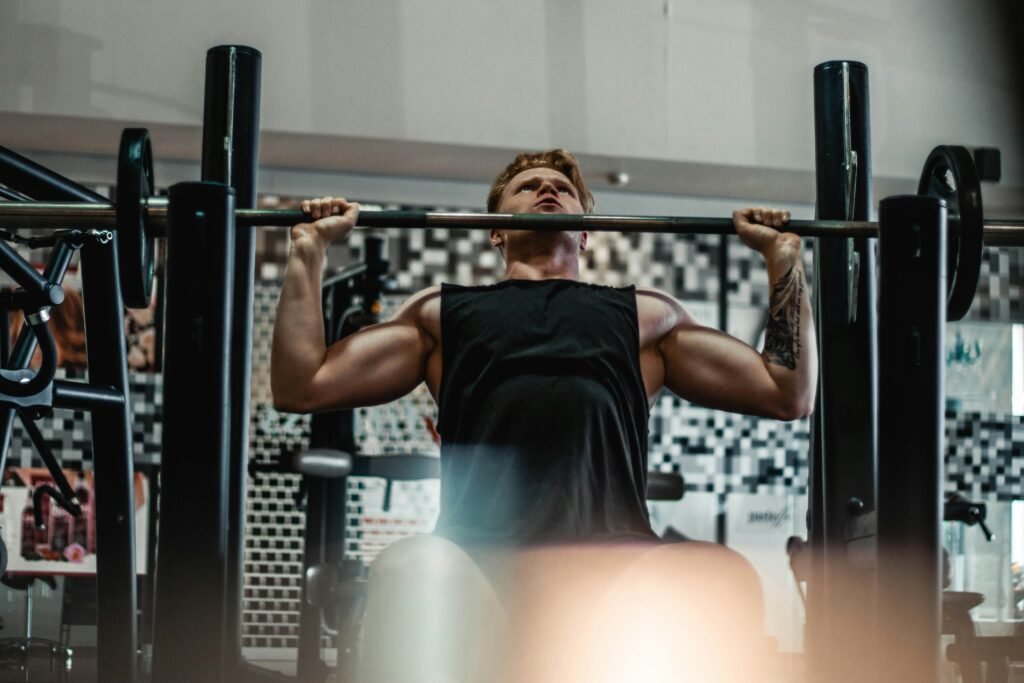
If you could only do a handful of exercises for the rest of your life, they’d be compound lifts. These are the big, multi-joint movements that build the most muscle, the most strength, and the most real-world capability per minute spent in the gym. For a man who wants results without living at the gym, mastering a few compound lifts is the highest-return training decision there is.
This guide covers what compound lifts are, why they beat isolation exercises, the essential movements every man should learn, and how to program them.
Below are the compound lifts that give you the most for your time, and how to program them.
What the Best Compound Exercises Are
A compound lift is any exercise that works multiple muscle groups across multiple joints at once. Contrast that with isolation exercises, which target a single muscle across one joint, think bicep curls or leg extensions.
A squat, for example, works your quads, hamstrings, glutes, core, and lower back simultaneously across the hip, knee, and ankle joints. A bicep curl works… your biceps. That difference is why compound lifts are the foundation of any efficient strength programme.
Why Best Compound Exercises Beat Isolation Exercises
For most men, compound lifts should make up the bulk of training, for several reasons:
- More muscle worked per exercise = more efficient. You build a whole body in a handful of movements rather than dozens.
- The strongest hormonal response. Recruiting large amounts of muscle produces a greater testosterone and growth hormone response than isolation work (see exercises to increase testosterone).
- More strength and real-world function. Compound movements mirror how your body moves, lifting, pushing, pulling, carrying, so the strength transfers to daily life.
- Better for fat loss. Working more muscle burns more energy and supports a better body composition.
- Time-efficient. Three or four compound lifts can train your entire body. Ideal for busy men.
Isolation exercises aren’t useless. They’re good for bringing up a lagging muscle or adding volume, but they’re the supporting cast, not the foundation.
The Essential Compound Lifts
Master these movements and you’ve covered the entire body.
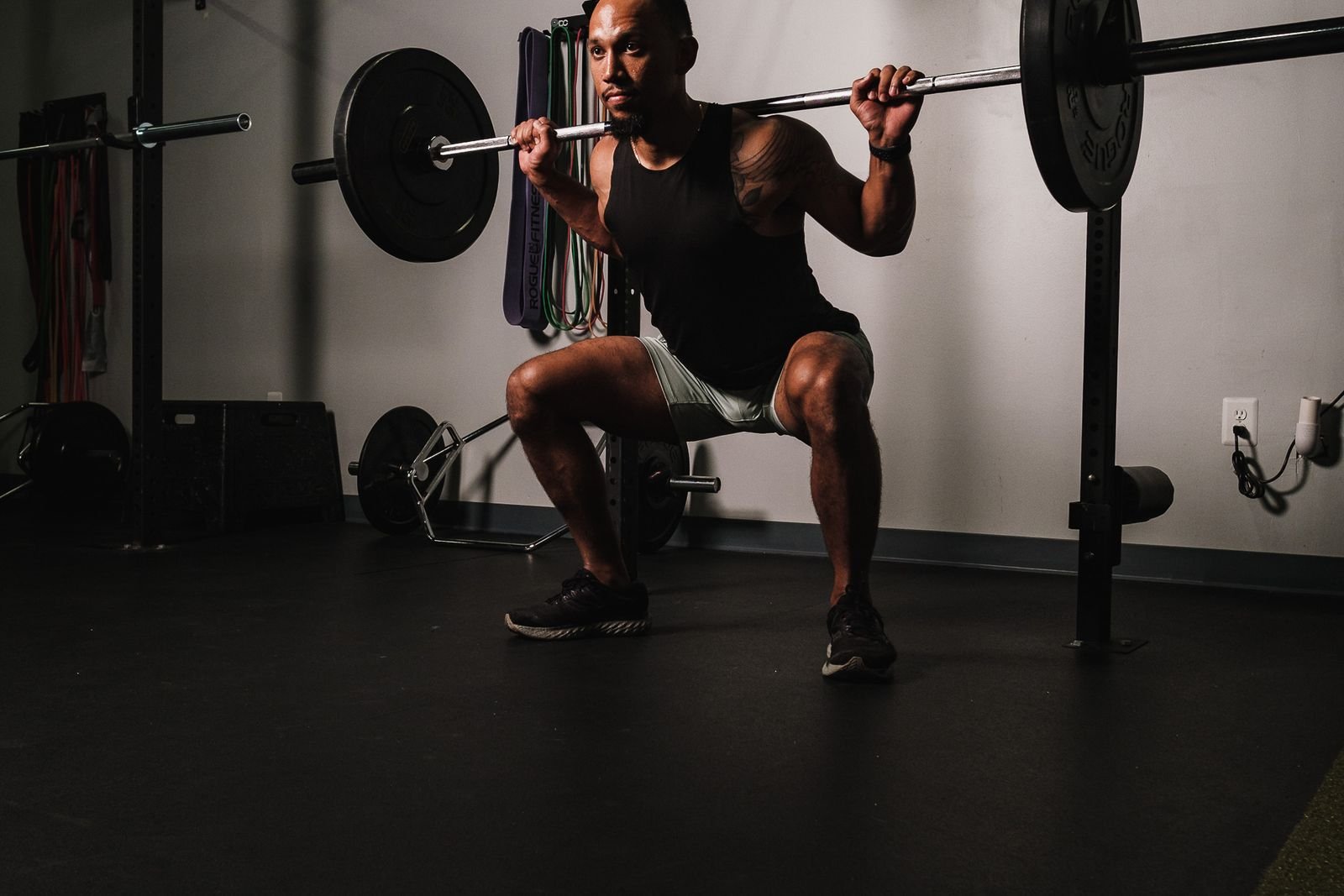
1. Squat
The king of lower-body lifts. Works quads, glutes, hamstrings, and core. Variations include the back squat, front squat, and goblet squat (a great starting point). Builds full lower-body strength and size.
2. Deadlift
Arguably the most complete strength-builder there is, working the entire posterior chain, hamstrings, glutes, back, and grip. It also directly builds the grip strength linked to longevity (see grip strength and longevity). Form is critical here; learn it properly before adding heavy load.
3. Bench Press
The primary upper-body pushing movement, working chest, shoulders, and triceps. Variations include barbell, dumbbell, and incline presses.
4. Overhead Press
Pressing weight overhead builds strong shoulders, triceps, and a stable core. A real test of total-body strength and stability.
5. Row (Bent-Over or Dumbbell)
The horizontal pulling movement that builds a strong back and balances all the pressing. Essential for posture and shoulder health.
6. Pull-Up / Chin-Up
The vertical pulling movement, one of the best builders of the back, biceps, and grip. Hard at first, but few exercises deliver more. Use assistance (bands or a machine) if you can’t do them yet.
Together these six cover squat, hinge, push (horizontal and vertical), and pull (horizontal and vertical), every fundamental movement pattern your body has.
How to Program the Best Compound Exercises
A simple, effective approach for most men:
- Train 3 to 4 days a week: built around these lifts
- Use a full-body or upper/lower split so each movement gets trained roughly twice weekly
- Work in a moderate rep range (around 6 to 12 reps) with weight challenging enough that the last reps are hard
- Apply progressive overload: gradually add weight or reps over time (see progressive overload explained)
- Prioritise form over ego. Especially with squats and deadlifts, technique protects you from injury. Start lighter than you think and build.
A basic full-body template might be: squat, bench press, row one day; deadlift, overhead press, pull-up another. Add a little isolation work (curls, calf raises) if you like, but the compounds do the heavy lifting, literally.
A Note on Safety, Especially After 40
Compound lifts are safe and hugely beneficial when done with good form, but the heavier loads mean technique matters more than with isolation work. If you’re newer to lifting or over 40, consider a few sessions with a qualified coach to nail your form on the squat and deadlift particularly. Warm up properly, progress gradually, and don’t sacrifice form for weight. Done right, these lifts keep you strong and capable for decades (see building muscle after 40).
What to Do When a Lift Does Not Fit You
The six lifts above are the standard answer, and the standard answer assumes a standard body. Hip sockets sit at different depths and angles, arms and torsos come in different proportions, and most men over 40 are carrying the results of at least one old injury. Some of you will never squat deep with a bar on your back without something complaining, and that is anatomy rather than weakness.
The useful principle is that the movement pattern is what matters, not the specific implement. You need to push, pull, hinge, squat and carry. How you get there is negotiable.
Swaps that keep the pattern
Back squat becomes a goblet squat, a front squat, a split squat or a leg press. The front-loaded versions let most men stay upright and reach depth with less demand on the lower back.
Conventional deadlift becomes a trap bar deadlift, a Romanian deadlift or a rack pull. The trap bar in particular sits the load in line with your body rather than in front of it, which many men find far kinder to the lower back while training the same pattern.
Barbell bench press becomes a dumbbell press or a floor press. Dumbbells let your shoulders find their own path instead of being locked to a fixed bar, and the floor press limits how far the elbow travels.
Overhead press becomes a landmine press or a half-kneeling dumbbell press. Both reduce how much overhead range you need, which matters if your shoulders are not happy above your head.
Pull-up becomes a band-assisted pull-up, a lat pulldown or a ring row. None of these are consolation prizes. They train the same thing at a load you can control.
The rule worth following
Muscle soreness is normal and joints are not. If a specific lift produces sharp or lingering pain in a joint rather than fatigue in a muscle, and it does so consistently, the answer is to change the variation, not to push through it and hope. Pushing through joint pain is how men lose six months to something that a different bar would have avoided entirely.
No single lift on this list is compulsory. Plenty of very strong, very well-built men have never performed a conventional deadlift in their lives.
FAQ: Best Compound Exercises
What are the best compound exercises?
The core six are the squat, deadlift, bench press, overhead press, row, and pull-up. Together they train every fundamental movement pattern and the whole body.
Are compound lifts better than isolation exercises?
For building overall muscle, strength, and efficiency, yes. They work more muscle per movement and produce a stronger hormonal response. Isolation exercises are useful as supporting work, not the foundation.
How many compound lifts should I do per workout?
Typically 2 to 4 compound lifts per session is plenty, since each works multiple muscle groups. Built into a 3 to 4 day week, that covers the whole body effectively.
Are deadlifts and squats safe?
Yes, with proper form. The heavier loads mean technique matters, learn the movements properly (ideally with coaching), warm up, and progress gradually, especially if you’re over 40.
Can beginners do compound lifts?
Absolutely, they’re ideal for beginners. Start with accessible variations (goblet squats, dumbbell presses, assisted pull-ups), focus on form, and progress over time.
The Bottom Line on Best Compound Exercises
The bottom line on best compound exercises: Compound lifts, the squat, deadlift, bench press, overhead press, row, and pull-up, are the most efficient muscle and strength builders a man can do, because they work multiple muscle groups at once, trigger the strongest hormonal response, and build strength that transfers to real life. Make them the foundation of your training, program them across 3 to 4 days a week with progressive overload, and prioritise good form over heavy ego lifts. A handful of these movements, done consistently, will build more than a gym full of machines ever could.
This article is for informational purposes only and does not constitute medical advice. Consult a qualified healthcare professional before starting a new exercise programme, and consider professional coaching to learn proper lifting technique.
Sources
- Gentil P et al. Single vs. Multi-Joint Resistance Exercises: Effects on Muscle Strength and Hypertrophy. Asian J Sports Med, 2015
- Kraemer WJ et al. Hormonal responses and adaptations to resistance exercise and training. Sports Med, 2005
- American College of Sports Medicine. American College of Sports Medicine position stand. Progression models in resistance training for healthy adults. Med Sci Sports Exerc, 2009