
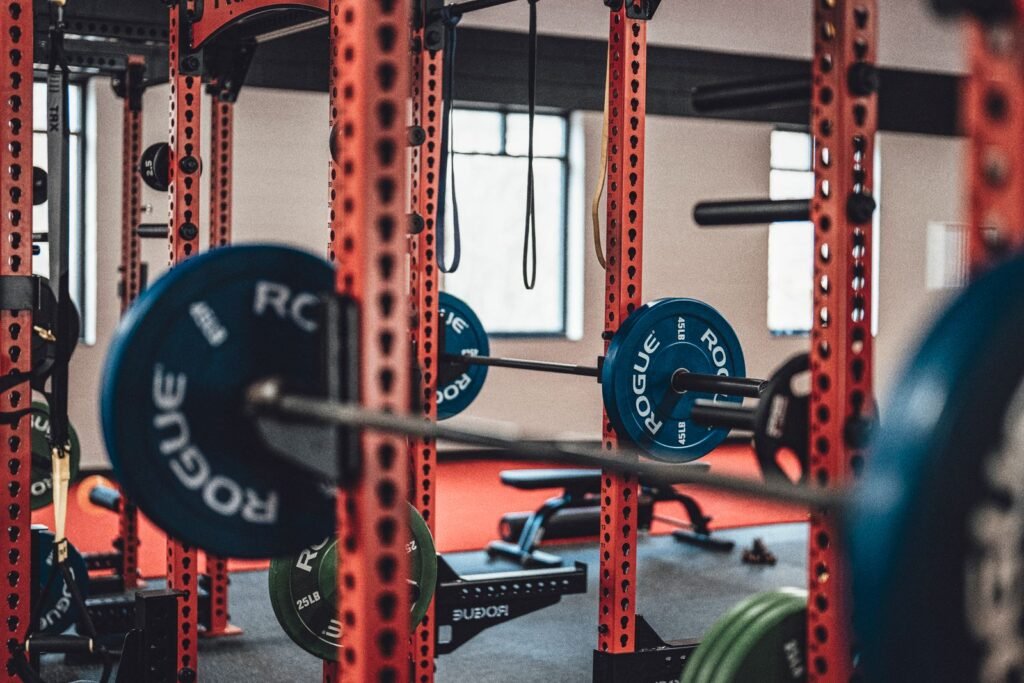
Walk into any gym and you’ll see two camps: those who swear by free weights (barbells and dumbbells) and those who prefer machines. The debate over which is better for building muscle is long-running, and often more heated than it needs to be. The answer, backed by research, is that both build muscle effectively and each has real advantages, so the “better” choice depends on your goals and situation. This guide compares machines and free weights so you can use both wisely.
Both Build Muscle
Let’s start with the key point that settles much of the debate: research shows both machines and free weights effectively build muscle. Muscle grows in response to challenging your muscles with progressive overload, and both machines and free weights provide this (see progressive overload explained). Studies comparing them generally find similar muscle growth from both. So this isn’t a case of one building muscle and the other not, both work well. The debate is about their practical strengths and which suits your goals (see bodyweight vs weights, since even bodyweight builds muscle too).
Free Weights: Pros and Cons
Free weights (barbells, dumbbells) require you to control and stabilise the weight yourself.
Pros:
- Engage stabiliser muscles. Because you control the weight through space, free weights recruit more stabilising muscles, building functional strength and coordination.
- Functional, real-world strength. The movements often translate better to real-life activities and athletic performance.
- Great for compound lifts. Ideal for the big multi-joint movements (squats, deadlifts, presses) that efficiently build strength and muscle (see best compound lifts).
- Full, natural range of motion. Movement isn’t constrained by a fixed path.
- Versatile and space-efficient. A barbell or dumbbells enable countless exercises (see dumbbells vs barbells).
Cons:
- Steeper learning curve. Proper form on free-weight lifts takes time to learn, and poor form raises injury risk (see how to avoid injury in the gym).
- Higher injury risk if done carelessly. Without the guided path, bad form or ego-lifting can cause injury.
- Require more skill to target specific muscles. Isolating a muscle can be trickier.
- Can be intimidating for beginners.
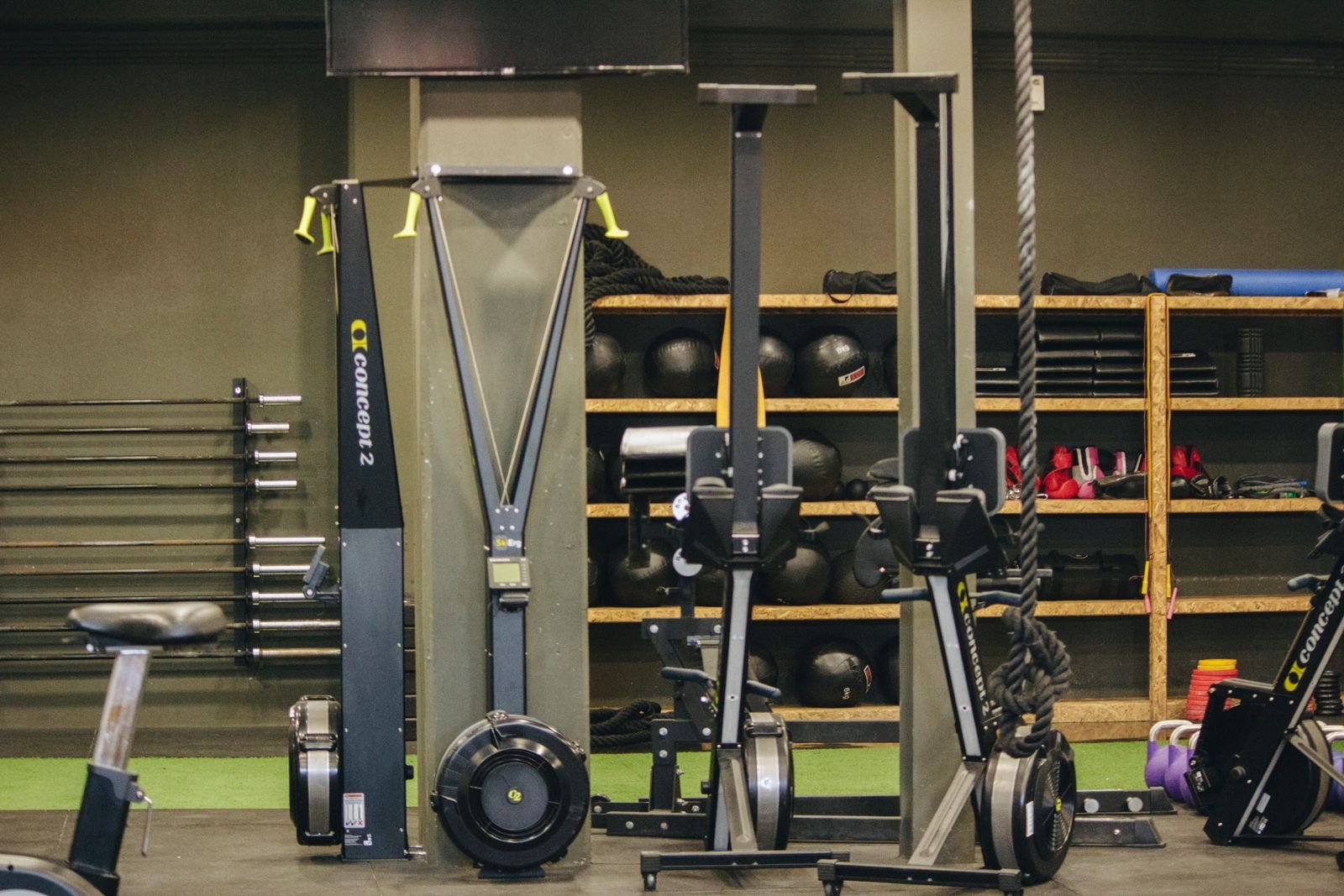
Machines: Pros and Cons
Machines guide the weight along a fixed path.
Pros:
- Easier to learn and use. The guided movement makes machines beginner-friendly: you can use them safely with less technique knowledge.
- Safer in some ways. The fixed path and ability to bail easily (no getting stuck under a barbell) reduce certain injury risks, useful for training close to failure safely or when training alone.
- Good for targeting/isolating muscles. Machines make it easy to target specific muscles, useful for addressing weak points or bodybuilding-style training.
- Useful for beginners and rehab. Their control and guidance suit beginners and those recovering from injury or working around limitations (see how to train around shoulder pain).
- Can push closer to failure safely. Since bailing is easy, machines let you train a muscle to failure with less risk.
- Less stabilisation required. This can be a pro (more focused muscle work) or a con (less stabiliser development).
Cons:
- Less stabiliser and functional development. The guided path means less recruitment of stabilising muscles and potentially less functional carryover.
- Fixed movement path. May not fit everyone’s body/limb proportions perfectly, and constrains natural movement.
- Less versatile. Each machine typically does one or a few exercises, requiring many machines for full-body training.
- Availability. You’re limited to the machines your gym has.
Which Should You Use?
The practical guidance:
- For functional strength, athletic carryover, and the big compound lifts: free weights have the edge (see best compound lifts).
- For beginners, ease of use, safety, targeting specific muscles, or working around injuries: machines are excellent.
- For training close to failure safely, especially when alone: machines are useful (you can bail easily).
- For most people building muscle: use both. This is the real answer. Machines and free weights complement each other, use free weights (especially compound lifts) for the foundation of functional strength and efficient muscle building, and machines to safely target specific muscles, train close to failure, address weak points, and add volume. A program using both gives you the best of each.
It’s Not Either/Or
The machines-vs-free-weights framing suggests you must pick a side, but the smartest approach usually uses both. Free weights build functional strength and are great for compound movements; machines are safer, easier, and good for targeting muscles and training to failure. Combining them covers all bases. If you can only use one (say, machines while learning, or free weights in a minimal home gym), you can still build excellent muscle, both are effective.
And as always, whichever you use, the fundamentals matter most: consistency, progressive overload, adequate protein, and recovery (see progressive overload explained, how much protein men need, and sleep and muscle growth). The equipment is far less important than training hard and progressively over time. Don’t let the debate distract from the real work.
Frequently Asked Questions
Are machines or free weights better for building muscle?
Both build muscle effectively, research shows similar muscle growth from each. Neither is universally better; they have complementary strengths. Free weights excel for functional strength and compound lifts; machines are easier, safer, and good for targeting muscles and training to failure.
Do free weights build more muscle than machines?
Not necessarily, studies find both build muscle well. Free weights engage more stabiliser muscles and suit compound lifts, while machines allow safe targeting and training to failure. For most people, using both is optimal rather than one being superior.
Are machines good for building muscle?
Yes. Research shows machines build muscle effectively. They’re easier to learn, safer in some ways, good for targeting specific muscles, useful for beginners and rehab, and let you train close to failure safely. They’re a legitimate muscle-building tool, not inferior.
Are free weights better for beginners?
Not necessarily, machines are often more beginner-friendly because the guided path is easier to learn and safer. That said, learning free-weight compound lifts (ideally with guidance) builds valuable functional strength. A mix, or starting with machines and adding free weights, works well.
Should I use machines or free weights?
For most people building muscle, use both, they complement each other. Use free weights (especially compound lifts) for functional strength and machines to safely target muscles, train to failure, and address weak points. If you can only use one, both are effective, so use what you have.
The Bottom Line
The machines-versus-free-weights debate has a clear, research-backed answer: both build muscle effectively, and each has real, complementary strengths, so for most people, the best approach is using both. Free weights engage more stabiliser muscles, build functional real-world strength, and are ideal for the big compound lifts, but have a steeper learning curve and higher injury risk if done carelessly.
Machines are easier to learn, safer in some ways, excellent for targeting specific muscles and training close to failure safely, and great for beginners and rehab, but develop less stabiliser strength. Rather than one being superior, they each do certain things better, which is why combining them, free weights for the compound foundation, machines for safe targeting and volume, is optimal. If you can only use one, you can still build excellent muscle with either. Ultimately, the equipment matters far less than training consistently and progressively with adequate protein and recovery.
This article is for informational purposes only and does not constitute medical advice. Consult a qualified healthcare professional before starting a new exercise programme.
Sources
- Schwanbeck SR et al. Effects of Training With Free Weights Versus Machines on Muscle Mass, Strength, Free Testosterone, and Free Cortisol Levels. J Strength Cond Res, 2020
- Currier BS et al. American College of Sports Medicine Position Stand. Resistance Training Prescription for Muscle Function, Hypertrophy, and Physical Performance in Healthy Adults: An Overview of Reviews. Med Sci Sports Exerc, 2026
- Behm DG et al. Canadian Society for Exercise Physiology position stand: The use of instability to train the core in athletic and nonathletic conditioning. Appl Physiol Nutr Metab, 2010