
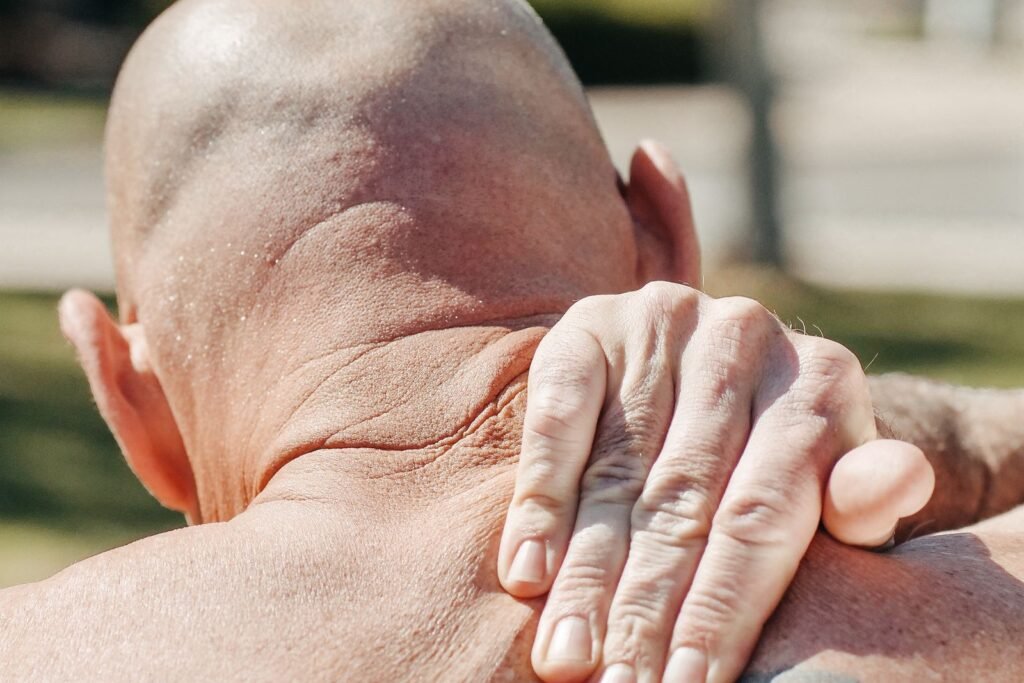
Shoulder pain is one of the most common complaints among men who lift, the shoulder is a complex, mobile joint that takes a beating from pressing and pulling movements. The instinct is often to either push through the pain (making it worse) or stop training entirely (losing progress). Usually, neither is necessary: with the right adjustments, you can often keep training productively while working around a cranky shoulder. But an important caveat first: this is general guidance, and real or persistent shoulder pain warrants a professional assessment, not self-diagnosis.
First: When to Stop and See a Professional
Before anything else, know when training around it is not appropriate. See a doctor or physiotherapist, rather than trying to train through it, if you have:
- Sharp, severe, or sudden shoulder pain
- Pain from a specific injury (a fall, a pop, a tear)
- Significant weakness, instability, or loss of range of motion
- Numbness or tingling (possible nerve involvement)
- Pain that persists or worsens despite rest and modification
- Night pain that disrupts sleep
- Any pain you’re unsure about
These warrant proper assessment, not a workaround. Trying to “train around” a real injury can worsen it. The guidance below is for minor, non-serious shoulder discomfort or niggles, and even then, if in doubt, get it checked (see how to avoid injury in the gym). Don’t self-diagnose a shoulder problem from an article.
The General Principle: Modify, Don’t Push Through
For minor shoulder discomfort, the key principle is to work around the pain, not through it. Pushing through real pain tends to worsen the issue and can turn a minor niggle into a real injury. Instead, the goal is to find ways to keep training, often training other body parts freely, and modifying or substituting the movements that bother your shoulder, while giving it a chance to settle. This lets you maintain progress and fitness without aggravating the shoulder.
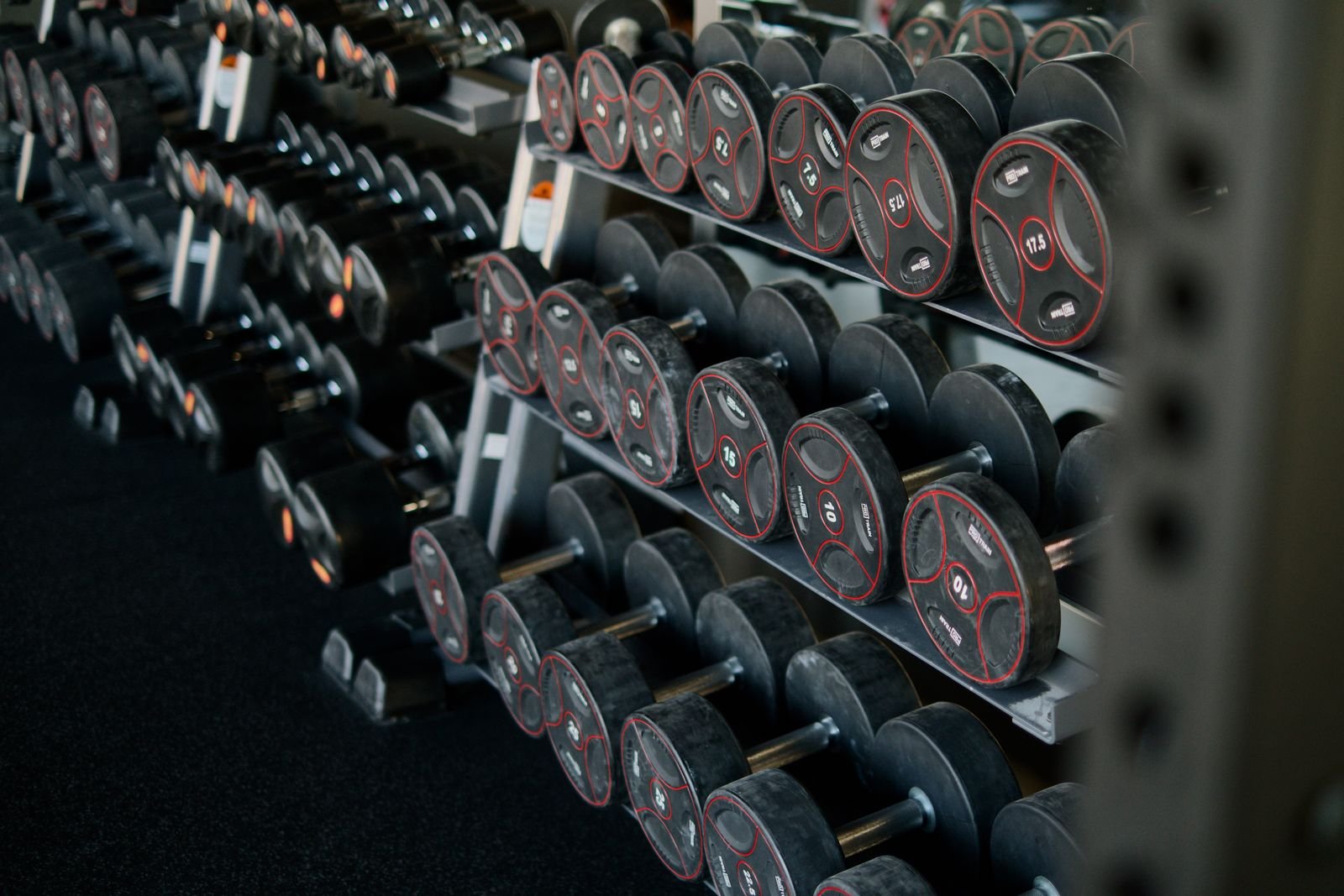
How to Train Around a Cranky Shoulder
1. Train everything that doesn’t hurt
A shoulder issue doesn’t mean stopping training entirely. You can usually train your legs, core, and often your back and other areas freely while working around the shoulder. Keep making progress everywhere that’s pain-free, this maintains your overall training and fitness (see how often to lift after 40).
2. Avoid or modify the movements that hurt
Identify which specific movements aggravate your shoulder (often certain pressing movements, especially overhead, or specific angles) and avoid or modify them. Common culprits are overhead pressing, barbell bench pressing at certain angles, and dips. You don’t have to do the exact exercises that hurt: there are usually alternatives.
3. Find pain-free variations
For most exercises, there’s a variation that trains the same muscles without the pain:
- Swap barbell for dumbbell pressing (dumbbells allow a more natural path your shoulder may tolerate better, see dumbbells vs barbells)
- Adjust the angle or grip (e.g. a neutral grip is often more shoulder-friendly)
- Use machines for controlled, guided movement that may avoid the painful range (see machines vs free weights)
- Reduce the range of motion to a pain-free range temporarily
- Choose different exercises that hit the target muscle without aggravating the shoulder
Experiment to find what’s pain-free, and use those.
4. Reduce the weight
Often, lighter weight on a movement is pain-free where heavy weight isn’t. Reducing the load lets you keep training the movement pattern without aggravation, and rebuild as the shoulder settles (see how to avoid injury in the gym).
5. Prioritise good form and warm-up
Poor form and inadequate warm-up contribute to shoulder issues. Warm up thoroughly (especially the shoulders) before upper-body work, and ensure good technique (see how to avoid injury in the gym).
6. Work on shoulder mobility and health
Poor shoulder mobility and muscle imbalances often underlie shoulder pain. Working on shoulder (and thoracic spine) mobility, and strengthening the supporting muscles (like the rotator cuff and upper back), can help address the root and prevent recurrence (see mobility for men over 40). This is where a physiotherapist’s guidance is especially valuable.
7. Allow it to recover
Give the shoulder time and reduced stress to settle. Sometimes backing off the aggravating movements for a while, while training everything else, lets a minor issue resolve (see recovery after 40).
Don’t Ignore Recurring Shoulder Pain
A final important point. If shoulder pain keeps recurring, or doesn’t settle with modification and rest, don’t just keep working around it indefinitely, get it properly assessed. Recurring or persistent shoulder pain often has an underlying cause (a mobility issue, imbalance, impingement, or something needing treatment) that a physiotherapist or doctor can diagnose and address. Working around it is a short-term strategy for minor niggles, not a substitute for fixing a real, ongoing problem. Addressing the root cause is what keeps you training long-term (see how to avoid injury in the gym).
Frequently Asked Questions
Should I work out with shoulder pain?
For minor discomfort, you can often train around it, working other body parts freely and modifying the movements that hurt, without pushing through the pain. But sharp, severe, injury-related, or persistent shoulder pain warrants stopping and seeing a professional, not training through it.
How do I train around shoulder pain?
Train everything that doesn’t hurt (legs, core, often back), avoid or modify the movements that aggravate the shoulder, find pain-free variations (dumbbell instead of barbell, different angles/grips, machines, reduced range), reduce the weight, warm up well, and work on shoulder mobility and health.
What exercises should I avoid with shoulder pain?
It depends on what aggravates your specific shoulder, but common culprits are overhead pressing, barbell bench pressing at certain angles, and dips. Identify which movements cause pain and avoid or modify those, substituting pain-free variations that train the same muscles.
When should I see a doctor about shoulder pain?
If you have sharp, severe, or sudden pain, pain from a specific injury, significant weakness or instability, numbness or tingling, pain that persists or worsens despite rest, or night pain. Don’t try to train around a real injury, get it properly assessed.
Can I still build muscle with a shoulder injury?
Often yes, you can usually keep training legs, core, and other pain-free areas while working around the shoulder, maintaining much of your progress. But for a real injury, prioritise proper assessment and recovery over training through it, working around it is for minor niggles.
The Bottom Line
Shoulder pain is common among men who lift, but it usually doesn’t mean stopping training entirely, nor pushing through the pain (which worsens it). For minor discomfort, the key is to work around the pain: train everything that doesn’t hurt (legs, core, often back), avoid or modify the movements that aggravate the shoulder, find pain-free variations (dumbbells instead of barbells, different angles, machines, lighter weight), warm up well, and work on shoulder mobility and supporting strength.
This maintains your progress while giving the shoulder a chance to settle. Crucially, though, this workaround approach is for minor niggles, not real injuries: sharp, severe, injury-related, or persistent shoulder pain warrants proper assessment by a doctor or physiotherapist, not a self-directed workaround. And if pain keeps recurring, get to the root cause rather than working around it forever. Train smart, respect real pain, and you can usually keep progressing while looking after your shoulders.
This article is for informational purposes only and does not constitute medical advice. For real, sharp, severe, or persistent shoulder pain, consult a qualified healthcare professional or physiotherapist rather than self-treating.
Sources
- Diercks R et al. Guideline for diagnosis and treatment of subacromial pain syndrome: a multidisciplinary review by the Dutch Orthopaedic Association. Acta Orthop, 2014
- Millar NL et al. Tendinopathy. Nat Rev Dis Primers, 2021
- Golshani K et al. Upper extremity weightlifting injuries: Diagnosis and management. J Orthop, 2018