
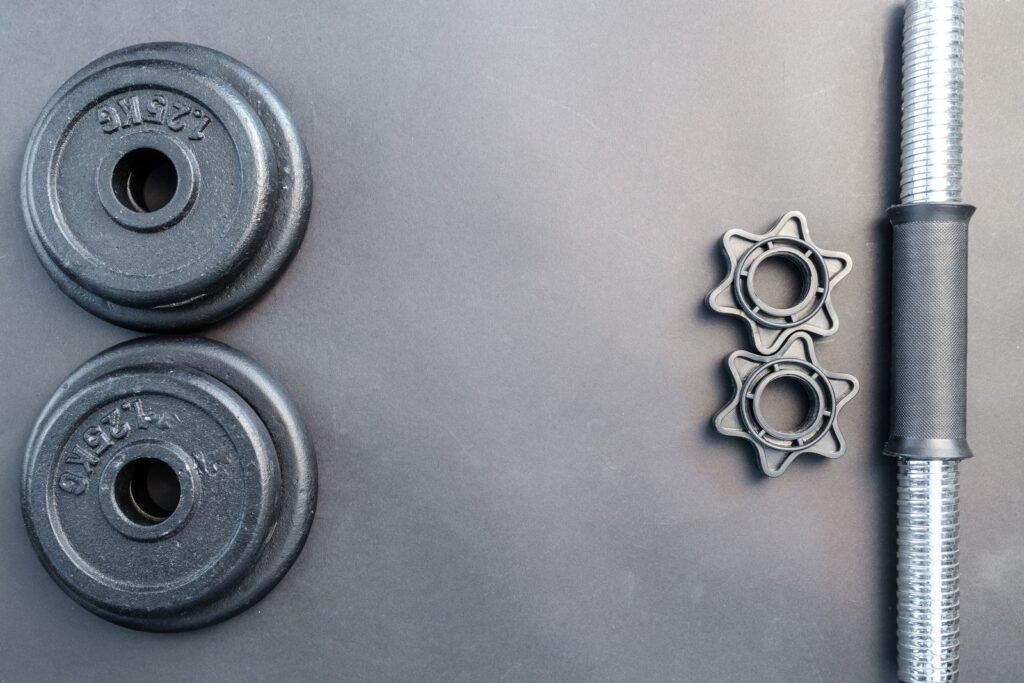
Dumbbells or barbells? It’s one of the classic gym debates, and men often wonder which builds more muscle or which they should prioritise. The reality is that both are excellent muscle-building tools with real, complementary strengths, and the “better” choice depends on your goals and situation. Rather than one being superior, they each do certain things better. This guide compares dumbbells and barbells so you can use them wisely, or better yet, use both.
The Key Principle: Both Build Muscle
First, the fundamental point. Both dumbbells and barbells effectively build muscle, because muscle grows in response to progressive tension and overload, which both provide (see progressive overload explained). Your muscles respond to sufficient challenge and progression, not to whether the resistance comes from a dumbbell or a barbell. So this isn’t “which builds muscle and which doesn’t”, both work. The debate is about their practical strengths and which suits your goals (see building muscle after 40).
Barbells: Pros and Cons
Barbells allow you to load a single bar with heavy weight, using both hands together.
Pros:
- Allow the heaviest loads. You can lift more total weight with a barbell than with dumbbells, because both arms work together and the bar is stable. This makes barbells excellent for building maximal strength and for progressive overload (adding weight is easy and incremental).
- Great for the big compound lifts. Barbells are ideal for the major strength-building movements, squats, deadlifts, bench press, overhead press, rows, which are the foundation of building muscle and strength (see best compound lifts).
- Easier to progress. Adding small increments of weight is simple and precise, making progressive overload easy to track and apply.
- Efficient. You can move a lot of weight and train major muscle groups effectively.
Cons:
- Fixed movement path. Both hands are locked to the bar, so the movement is more fixed, which some find less natural for certain movements or joints.
- Can mask imbalances. Your stronger side can compensate for your weaker side, potentially allowing muscle imbalances to develop or persist.
- Requires more equipment/setup: a bar, plates, often a rack.
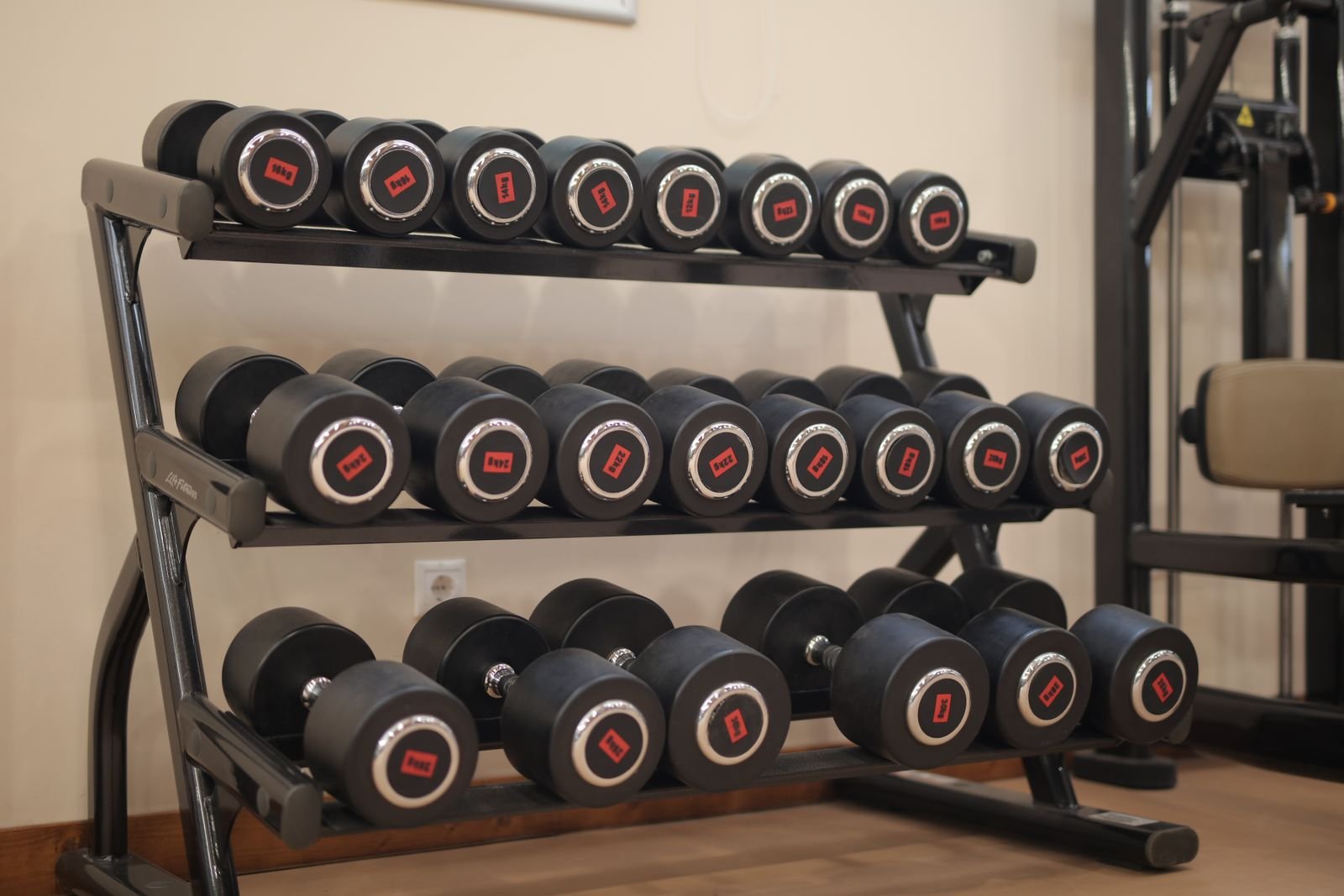
Dumbbells: Pros and Cons
Dumbbells are used individually in each hand, allowing independent movement.
Pros:
- Greater range of motion. Dumbbells often allow a larger, more natural range of motion than a barbell, which can be beneficial for muscle development and joint-friendly movement.
- Fix and prevent imbalances. Since each arm works independently, dumbbells expose and correct strength imbalances, your weaker side has to do its own work, so it can’t be carried by the stronger side. This builds more balanced development.
- More natural, joint-friendly movement. The freedom of movement lets your joints move more naturally, which some find easier on the shoulders and other joints.
- Greater exercise variety and versatility. Dumbbells enable a huge range of exercises and are great for targeting individual muscles.
- Require less equipment and space. A set of dumbbells (or adjustable ones) is more compact, good for home gyms.
- Safer to bail on. If you fail a rep, it’s often easier and safer to drop dumbbells than to get stuck under a loaded barbell.
Cons:
- Can’t load as heavy. You generally can’t lift as much total weight with dumbbells, since each arm is limited and stabilising two independent weights is harder. This can make them slightly less optimal for pure maximal strength.
- Harder to progress in small increments. Dumbbells often jump in larger weight increments, making fine progression trickier than with a barbell.
- Stability demand. The need to stabilise each dumbbell means you may handle less weight, though this also engages stabiliser muscles.
Which Should You Use?
The answer depends on your goals, but here’s practical guidance:
- For maximal strength and heavy compound lifting: barbells have the edge, they let you load heavy and progress easily on the big lifts (see best compound lifts).
- For balanced development, range of motion, joint-friendliness, and variety: dumbbells excel, and they fix imbalances.
- For home gyms or limited space/equipment: dumbbells (especially adjustable ones) are often more practical.
- For most men building muscle: use both. This is the real answer. Barbells and dumbbells complement each other, use barbells for the heavy compound foundation, and dumbbells for range of motion, balanced development, joint-friendly variety, and targeting specific muscles. A program combining both gives you the best of each.
It’s Not Really Either/Or
The dumbbells-vs-barbells framing suggests you must choose, but the best approach for building muscle usually uses both. Most effective programs include barbell compound lifts and dumbbell work, because they cover different strengths. If you can only use one (say, dumbbells at home), you can absolutely still build excellent muscle, both are highly effective. But given the choice, combining them is optimal.
And remember, whichever you use, the factors that matter most are consistency, progressive overload, adequate protein, and recovery (see progressive overload explained, how much protein men need, and sleep and muscle growth). The tool is far less important than how consistently and progressively you train with it (see bodyweight vs weights, since even bodyweight builds muscle).
Frequently Asked Questions
Are dumbbells or barbells better for building muscle?
Both build muscle effectively, since muscle responds to progressive overload, which both provide. Neither is universally better, they have complementary strengths. Barbells excel for heavy compound lifting and maximal strength; dumbbells excel for range of motion, balanced development, and variety.
Do barbells build more muscle than dumbbells?
Not necessarily, both build muscle well. Barbells let you lift heavier and progress more easily on big compound lifts, which is great for strength. But dumbbells offer greater range of motion and fix imbalances. For most men, using both is optimal.
What are the advantages of dumbbells?
Greater range of motion, fixing and preventing strength imbalances (each arm works independently), more natural joint-friendly movement, greater exercise variety, requiring less space, and being safer to bail on. They’re excellent for balanced muscle development.
What are the advantages of barbells?
Allowing the heaviest loads (both arms work together), being ideal for the major compound lifts, easier and more precise progressive overload, and efficiency for training major muscle groups. They’re excellent for building maximal strength.
Should I use dumbbells or barbells?
For most men building muscle, use both, they complement each other. Use barbells for the heavy compound foundation and dumbbells for range of motion, balanced development, and variety. If you can only use one, both are highly effective, so use what you have consistently.
The Bottom Line
The dumbbells-versus-barbells debate has a clear answer: both are excellent muscle-building tools with complementary strengths, and for most men, the best approach is using both. Barbells let you load the heaviest weight and progress easily on the big compound lifts, making them ideal for building maximal strength. Dumbbells offer greater range of motion, fix and prevent strength imbalances (since each arm works independently), allow more natural joint-friendly movement, and provide greater variety. Rather than one being superior, they each do certain things better, which is why combining them, barbells for the heavy compound foundation, dumbbells for balanced development and variety, is optimal. If you can only use one, you can still build excellent muscle with either. Ultimately, the tool matters far less than training consistently and progressively with adequate protein and recovery.
This article is for informational purposes only and does not constitute medical advice. Consult a qualified healthcare professional before starting a new exercise programme.
Sources
- Saeterbakken AH et al. A comparison of muscle activity and 1-RM strength of three chest-press exercises with different stability requirements. J Sports Sci, 2011
- Schwanbeck SR et al. Effects of Training With Free Weights Versus Machines on Muscle Mass, Strength, Free Testosterone, and Free Cortisol Levels. J Strength Cond Res, 2020
- Kohler JM et al. Muscle activation patterns while lifting stable and unstable loads on stable and unstable surfaces. J Strength Cond Res, 2010