
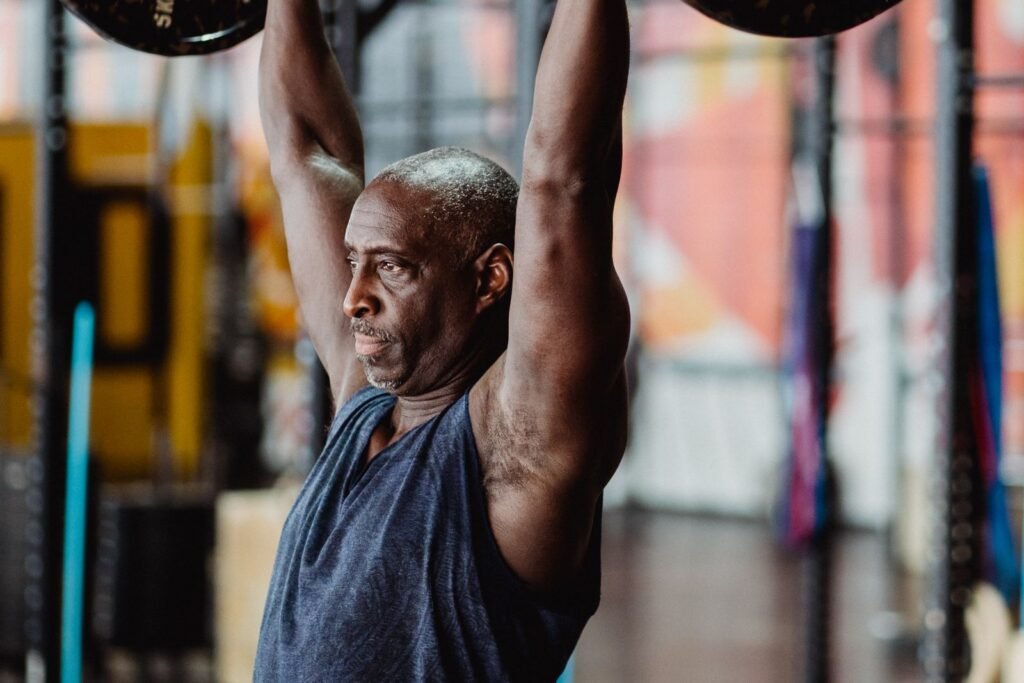
When you’re over 40 and deciding how to structure your training, one of the fundamental choices is between full-body workouts (training your whole body each session) and split routines (dividing your body across different days). Both can work well, but the considerations shift a bit after 40, when recovery matters more and time is often tighter. Understanding how they compare for older lifters helps you pick the approach that fits your body and life. This guide compares full-body versus split routines after 40.
What Each Approach Is
Full-body training: each workout trains your entire body (all major muscle groups). You typically do fewer exercises per muscle group per session but train each muscle multiple times per week. A common setup is 3 full-body sessions per week.
Split routines: you divide your body across different days, training only certain muscle groups each session. Examples include upper/lower splits (see push pull legs vs upper lower), push/pull/legs, or body-part splits. This allows more exercises/volume per muscle group per session but trains each muscle less frequently (depending on the split).
The core difference is frequency versus per-session volume: full-body trains each muscle often with less per session, while splits train each muscle less often with more per session.
Why This Matters More After 40
A few age-related factors make this choice worth considering after 40:
Recovery is slower. After 40, you recover more slowly from training (see recovery after 40). This affects how you should distribute your training, since you need adequate recovery between hard sessions for a muscle.
Frequency benefits. Research supports training each muscle group about twice a week for muscle growth (see how often to lift after 40), which both well-designed full-body and some splits (like upper/lower) can achieve.
Time and consistency. Many men over 40 have busy lives, so the approach that fits your schedule and that you’ll do consistently matters, consistency trumps the “optimal” program you won’t stick to.
Joint considerations. Spreading training out and managing volume can be easier on joints, relevant if you have any niggles (see how to avoid injury in the gym).

Full-Body After 40: Pros and Cons
Pros:
- High frequency per muscle. Training each muscle 3 times a week (with 3 full-body sessions) hits the beneficial frequency well.
- Time-efficient. You can train effectively in 3 sessions a week, good for busy schedules, with rest days between.
- Good recovery distribution. With rest days between sessions, and less volume per muscle per session, it can be easier to recover from, suiting slower recovery.
- Great for beginners and those short on time. Simple, effective, and efficient (see building muscle after 40).
- Each session is balanced. You hit everything, so missing a session doesn’t leave a muscle group untrained for long.
Cons:
- Less volume per muscle per session. You can’t do as many exercises for each muscle in one session, though the higher frequency compensates.
- Sessions can be tiring. Training the whole body in one session is demanding (though shorter overall than split volume).
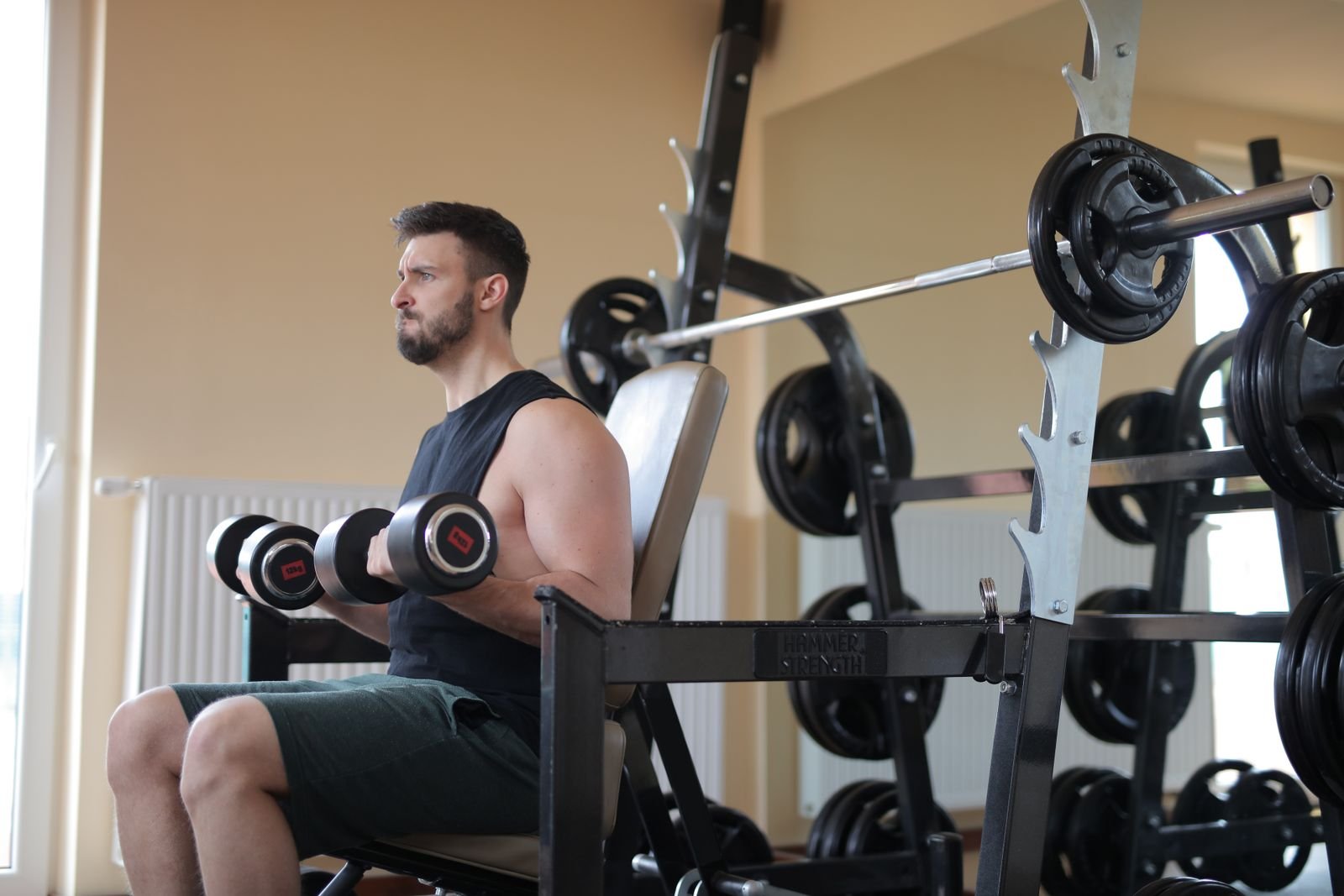
Split Routines After 40: Pros and Cons
Pros:
- More volume per muscle per session. You can do more focused work on each muscle group when you train it.
- Focused sessions. Each day targets specific areas, which some prefer and find manageable.
- Flexibility. Various splits (upper/lower, PPL) let you tailor frequency and volume (see push pull legs vs upper lower).
- Can allow more total weekly volume. For those who want and can recover from higher volume.
Cons:
- Some splits reduce frequency. Body-part splits that train each muscle only once a week are generally less optimal for muscle growth than twice (and less ideal after 40). Upper/lower splits avoid this by hitting each muscle twice.
- Can require more training days. Higher-frequency splits (like 6-day PPL) demand more days and recovery, which can be tough after 40 (see recovery after 40).
- Missing a session can leave a muscle group untrained longer.
Which Should You Choose After 40?
The practical guidance for older lifters:
- If you train 3 days a week: full-body is often ideal, it hits each muscle 3 times weekly, is time-efficient, and distributes recovery well. An excellent default for busy men over 40 (see how often to lift after 40).
- If you train 4 days a week: an upper/lower split is excellent, training each muscle twice with good recovery (see push pull legs vs upper lower). Also a great choice.
- Avoid body-part splits that train each muscle only once a week, generally less optimal, especially after 40.
- Match it to your recovery. After 40, don’t overreach on volume or frequency, prioritise a structure you can recover from (see recovery after 40).
- Prioritise what you’ll do consistently. The best structure is one that fits your schedule and life.
For many men over 40, full-body 3 days a week or an upper/lower split 4 days a week are the two best options, both hit the beneficial training frequency while respecting recovery. Either works well; choose based on your available days and preference.
The Bigger Picture
Whichever you choose, the fundamentals matter more than the specific structure: consistency, progressive overload, adequate volume (see sets per muscle group), sufficient protein (see how much protein men need), and good recovery (see sleep and muscle growth). A well-run full-body program and a well-run split both build muscle effectively after 40. Don’t agonise over the choice, pick the one that fits your recovery and schedule, apply the fundamentals, and you’ll progress. And remember to prioritise recovery, which becomes the limiting factor after 40 (see recovery after 40).
What the Frequency Research Settled
Much of the full-body versus split debate comes down to one question: how often does a muscle need training to grow? Two meta-analyses from the same research group answer it, and the second one changes the conclusion of the first.
The 2016 review compared training each muscle once, twice or three times a week. It found that twice a week produced better muscle growth than once. That became the standard advice, and it is part of why “bro splits”, which hit each muscle once a week, fell out of favour.
The 2019 follow-up had more studies to work with, and it asked a sharper question. When the total weekly work was the same, did it matter how many sessions it was spread across? It did not. With weekly volume matched, training frequency made no significant difference to muscle growth.
How to reconcile the two
Both findings hold. Training more often mostly helps because it makes it easier to do more total work, and to do it well. Ten hard sets for your chest in one session is miserable, and the last few sets are poor quality. Five sets on two different days is easy to manage.
What that means after 40
The choice between full-body and a split is less about which one builds muscle and more about which one lets you do enough quality work while recovering properly. That is where age comes in. Full-body sessions spread the load across the week in shorter doses, and many men over 40 find their joints tolerate that better than one punishing session per muscle group. A split suits men who enjoy longer, focused sessions and have the schedule for four or more days.
Pick the one you will still be doing in a year, then make sure the weekly sets per muscle add up. For how many sets that should be, see how many sets per muscle group.
Frequently Asked Questions
Is full-body or split better after 40?
Both can work well. For 3 days a week, full-body is often ideal (hitting each muscle 3 times, time-efficient, good recovery distribution). For 4 days, an upper/lower split is excellent (each muscle twice). Avoid body-part splits training each muscle only once a week. Match it to your recovery.
How many days a week should I train after 40?
Often 3 to 4 days works well, enough to train each muscle group about twice weekly (the beneficial frequency) while allowing the recovery that matters more after 40. Full-body suits 3 days; upper/lower suits 4. Don’t overreach on frequency if you’re not recovering.
Is full-body training good for older lifters?
Yes, full-body 3 days a week is often ideal after 40, it hits each muscle 3 times weekly, is time-efficient, and distributes recovery well (with rest days between). It’s simple, effective, and suits busy schedules and slower recovery.
Should I avoid body-part splits after 40?
Body-part splits that train each muscle only once a week are generally less optimal for muscle growth than training twice, and less ideal after 40. Upper/lower splits (which hit each muscle twice) or full-body are better choices for most older lifters.
What’s the best training split after 40?
For most men over 40, full-body 3 days a week or an upper/lower split 4 days a week are the two best options, both achieve the beneficial training frequency while respecting recovery. Choose based on your available days, preference, and what you’ll do consistently.
The Bottom Line
The choice between full-body and split routines after 40 comes down to matching your training structure to your recovery and schedule, since recovery becomes more of a limiting factor with age. Full-body training (3 sessions a week) is often ideal for older lifters, it hits each muscle 3 times weekly, is time-efficient, and distributes recovery well with rest days between. An upper/lower split (4 days a week) is equally excellent, training each muscle twice with good recovery.
The key is to hit the beneficial training frequency (each muscle about twice a week) while respecting recovery, which both of these achieve, and to avoid body-part splits that train each muscle only once a week, which are less optimal after 40. Whichever you choose, the fundamentals, consistency, progressive overload, adequate volume and protein, and good recovery, matter more than the specific structure. Pick the one that fits your recovery and life, and train consistently.
This article is for informational purposes only and does not constitute medical advice. Consult a qualified healthcare professional before starting a new exercise programme.
Sources
- Borde R et al. Dose-Response Relationships of Resistance Training in Healthy Old Adults: A Systematic Review and Meta-Analysis. Sports Med, 2015
- Schoenfeld BJ et al. Effects of Resistance Training Frequency on Measures of Muscle Hypertrophy: A Systematic Review and Meta-Analysis. Sports Med, 2016
- Fragala MS et al. Resistance Training for Older Adults: Position Statement From the National Strength and Conditioning Association. J Strength Cond Res, 2019
- How many times per week should a muscle be trained to maximize muscle hypertrophy? (2019).