

The deadlift is one of the best exercises for building total-body strength, but it’s also one of the most commonly blamed for lower back pain. If your back hurts after deadlifting, it’s usually a sign that something in your technique, loading, or recovery needs fixing, not that deadlifts are inherently bad for you (done properly, they strengthen your back). This guide covers why deadlifts cause lower back pain, how to tell normal soreness from a real problem, how to fix it, and when to seek help. Note upfront: for actual or persistent pain, see a professional. This is general education, not a diagnosis.
First: Soreness vs Injury
An important distinction before anything else. Not all post-deadlift back discomfort is a problem:
- Normal muscle soreness: After deadlifting, especially when new to it or after a hard session, some muscular soreness in the lower back and surrounding muscles is normal, the deadlift works these muscles hard. This is a general achy, tired-muscle feeling that eases over a day or two, similar to soreness anywhere else (see recovery after 40). This is usually fine.
- Concerning pain: Sharp, sudden, or severe pain; pain that’s localised to the spine rather than the muscles; pain that radiates down your leg (possible nerve involvement); numbness, tingling, or weakness; or pain that persists or worsens. These are not normal training soreness and warrant attention, potentially stopping and seeing a professional.
Knowing the difference matters: general muscle soreness is usually just your muscles adapting, while sharp, radiating, or persistent pain is a signal to stop and get it checked (see how to avoid injury in the gym). When in doubt, err on the side of caution.

Why Deadlifts Cause Lower Back Pain
Assuming it’s more than normal soreness, the common causes are usually fixable:
Poor form (the biggest cause). The most common culprit. Deadlifting with a rounded lower back (spinal flexion under load) instead of a neutral spine puts excessive stress on the lower back structures and is a leading cause of pain and injury. Other form issues, letting the bar drift away from your body, jerking the weight, hyperextending at the top, also contribute.
Too much weight. Loading more than you can handle with good form forces technique breakdown (usually that rounded back), causing pain. Ego-lifting is a frequent cause (see how to avoid injury in the gym).
Poor mobility. Limited hip or hamstring mobility can prevent you from getting into a good starting position with a neutral spine, forcing your back to compensate (see mobility for men over 40).
Weak supporting muscles or poor bracing. Not properly bracing your core, or weak supporting musculature, leaves your spine less protected during the lift.
Doing too much too soon. Ramping up deadlift volume or weight too quickly, without letting your body adapt, can cause pain (see progressive overload explained).
How to Fix It
To address deadlift-related back pain (once you’ve ruled out a serious injury needing professional care):
- Master proper form. This is the priority. Learn to deadlift with a neutral spine (not rounded), the bar close to your body, engaging your lats, hinging at the hips, and driving through your legs and hips. Consider having a knowledgeable coach or trainer check your form, self-assessment is hard, and form is the crux (see best compound lifts).
- Reduce the weight and rebuild. Drop the weight to something you can lift with perfect form, and rebuild gradually. Leave your ego at the door, good form with lighter weight beats heavy weight with bad form (see how to avoid injury in the gym).
- Brace your core properly. Learn to take a breath and brace your core (as if bracing for a punch) before and during the lift, this stabilises and protects your spine.
- Improve your mobility. Work on hip and hamstring mobility so you can achieve a good starting position without rounding your back (see mobility for men over 40).
- Warm up properly. Always warm up before heavy deadlifts, cold muscles and joints are more injury-prone (see how to avoid injury in the gym).
- Progress gradually. Increase weight and volume slowly, letting your body adapt (see progressive overload explained).
- Consider variations. If conventional deadlifts consistently bother your back even with good form, variations (like trap-bar deadlifts, which many find more back-friendly, or Romanian deadlifts) may suit you better while still training the same muscles.
- Strengthen your core and posterior chain. Building supporting strength helps protect your back over time.
- Allow recovery. Give your back adequate recovery between heavy deadlift sessions (see recovery after 40).
When to See a Doctor or Professional
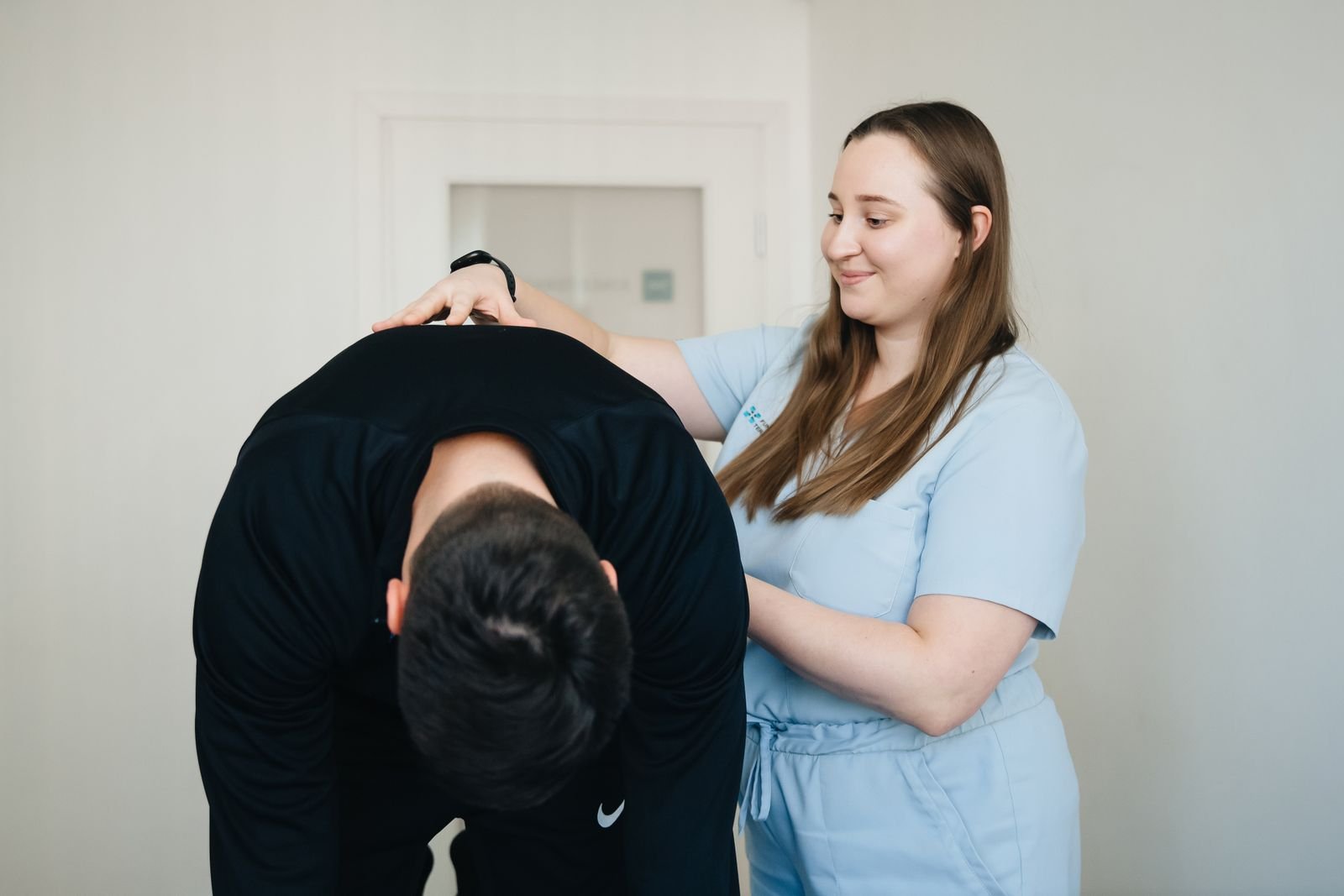
See a doctor, physiotherapist, or qualified professional if you have: sharp, severe, or sudden back pain; pain radiating down your leg; numbness, tingling, or weakness; pain that persists or worsens despite rest; or any pain you’re unsure about. Don’t try to “push through” real back pain, and don’t just self-diagnose from an article. A professional can assess whether it’s a muscular issue, a technique problem, or something needing treatment, and a physiotherapist or qualified coach can also help correct your deadlift form directly. Getting real pain properly assessed early prevents minor issues from becoming serious ones.
Can Deadlifting Help a Bad Back?
It sounds backwards, but it has been tested. A Swedish randomised trial took 70 people with recurrent mechanical low back pain, the common kind with no serious underlying cause. It split them into two groups. One trained the deadlift with progressively heavier loads. The other did low-load motor control exercises, the gentle, precise movements often prescribed for back pain. Both groups had 12 sessions over eight weeks, and both were taught how pain works.
What happened
Both groups improved, and at the long-term follow-up there was no significant difference between them. Between half and four out of five participants in each group reported less pain and less disability, both in the short term and later on. Over two years, the loaded barbell did no worse than the careful low-load approach.
The research team pointed out that both programmes included retraining movement patterns and education about pain, and that may explain much of the benefit. Deadlifting was not a magic treatment. It was simply not the danger many people assume.
What that does and does not mean for you
It does not mean you should load up a barbell during a flare-up, or ignore pain that runs down the leg, numbness, weakness or trouble controlling your bladder. Those need a professional assessment first. It also does not mean the lift is foolproof. The participants were coached, and the loads rose gradually.
What it does suggest is that a well-coached, progressively loaded hinge can be part of getting past recurring back pain, not something to avoid for life. If deadlifts hurt, the fix is usually in the technique, the load or the variation, all covered above. Giving up on lifting altogether is rarely the answer.
Frequently Asked Questions
Why does my lower back hurt after deadlifts?
Usually poor form (especially a rounded lower back under load), too much weight forcing technique breakdown, poor hip or hamstring mobility, inadequate core bracing, or doing too much too soon. Some muscular soreness is also normal, but sharp or persistent pain signals a fixable problem or injury.
Is it normal for your back to be sore after deadlifts?
Some muscular soreness in the lower back and surrounding muscles is normal, especially when new to deadlifts, an achy, tired feeling that eases in a day or two. But sharp, sudden, severe, radiating, or persistent pain is not normal soreness and warrants attention.
How do I fix deadlift back pain?
Master proper form (neutral spine, bar close, hip hinge, braced core), reduce the weight and rebuild gradually, improve hip and hamstring mobility, warm up properly, progress slowly, and consider back-friendly variations like trap-bar deadlifts. For real or persistent pain, see a professional first.
Are deadlifts bad for your back?
No, done with proper form, deadlifts strengthen your back and are one of the best strength exercises. Back pain usually signals a fixable technique, loading, or mobility issue, not that deadlifts are inherently harmful. Poor form, not the exercise itself, is the problem.
When should I see a doctor about deadlift back pain?
If you have sharp, severe, or sudden pain; pain radiating down your leg; numbness, tingling, or weakness; or pain that persists or worsens despite rest. Don’t push through real back pain, get it assessed by a doctor or physiotherapist rather than self-diagnosing.
The Bottom Line
Lower back pain from deadlifts is usually a fixable signal, not a reason to abandon the exercise, since deadlifts done properly strengthen your back. First, distinguish normal muscular soreness (an achy feeling that eases in a day or two) from concerning pain (sharp, severe, radiating, numbness, tingling, or persistent), which warrants stopping and seeing a professional. The common causes of real deadlift back pain are fixable: poor form (especially a rounded lower back), too much weight, poor mobility, and inadequate bracing. Fix it by mastering neutral-spine form, reducing weight and rebuilding, improving hip mobility, bracing properly, and progressing gradually, ideally with a coach checking your technique. And crucially, don’t push through real back pain or rely on self-diagnosis, get real or persistent pain properly assessed. Deadlift smart, and it becomes a back-strengthener rather than a back-wrecker.
This article is for informational purposes only and does not constitute medical advice. For actual, sharp, radiating, or persistent back pain, consult a qualified healthcare professional or physiotherapist rather than self-treating.
Sources
- Hartvigsen J et al. What low back pain is and why we need to pay attention. Lancet, 2018
- Owen PJ et al. Which specific modes of exercise training are most effective for treating low back pain? Network meta-analysis. Br J Sports Med, 2020
- Saraceni N et al. To Flex or Not to Flex? Is There a Relationship Between Lumbar Spine Flexion During Lifting and Low Back Pain? A Systematic Review With Meta-analysis. J Orthop Sports Phys Ther, 2020
- High load lifting exercise and low load motor control exercises for mechanical low back pain: a randomized controlled trial with 24-month follow-up.
- Individualized low-load motor control exercises versus a high-load lifting exercise in patients with low back pain.