
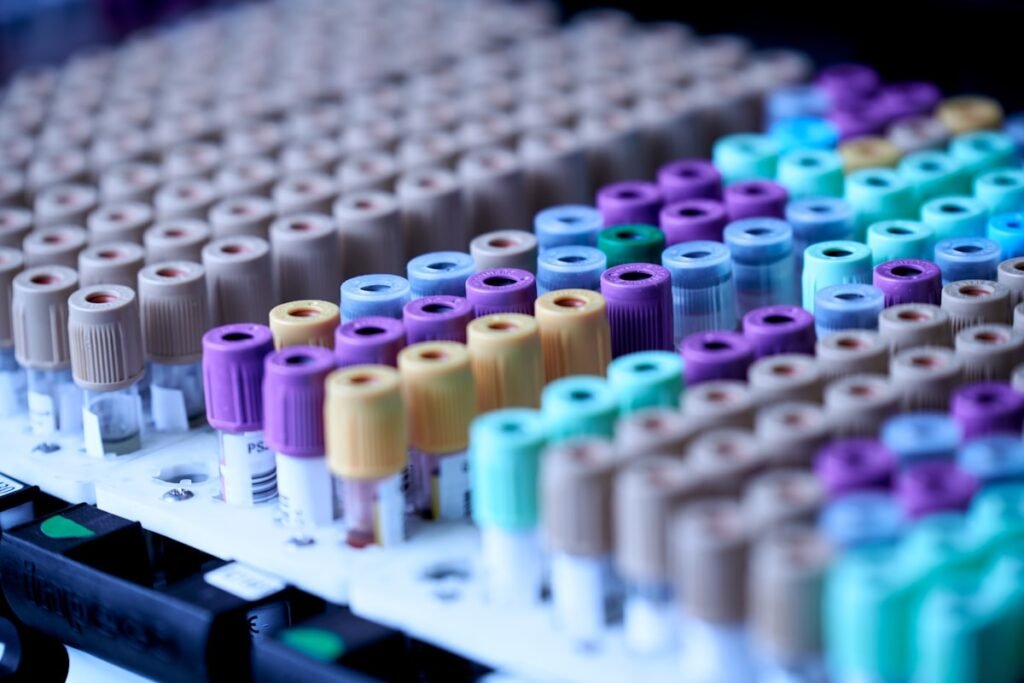
Low testosterone has become one of the most talked-about, and most misunderstood, topics in men’s health. Every symptom under the sun gets blamed on it, supplement companies exploit the anxiety, and yet clinically low testosterone is a real, diagnosable condition that quietly affects a significant share of men, especially with age. These are the signs of low testosterone that warrant a blood test. Our complete testosterone guide also explains how to get tested properly.
The challenge is that the symptoms are non-specific: tiredness, low mood, and a softer body can have a dozen causes. This guide separates the signal from the noise, the symptoms associated with low testosterone, which ones are most telling, what’s a normal part of ageing, and when to get a blood test rather than guessing.
What “Low Testosterone” Means
Testosterone is the main male sex hormone, produced mainly in the testicles. It drives the development of male characteristics and supports libido, muscle mass, bone density, mood, energy, and red blood cell production. Levels peak around age 18 to 20 and then slowly decline, a drop of roughly 1% per year is common from the 30s onward (see testosterone levels by age). Much of what men blame on this decline is driven by reversible lifestyle factors (see testosterone myths).
Clinically, healthcare providers generally consider total testosterone below 300 ng/dL as low, though some labs use a lower reference limit around 264 ng/dL. The key word is symptoms: doctors diagnose low testosterone (male hypogonadism) when low blood levels occur together with symptoms, not on a number alone. A man can have a “low-ish” number and feel fine, or symptoms with a borderline number. That’s why both halves matter.
Related: Andropause (“Male Menopause”): What It Really Is
The Sexual Signs of Low Testosterone (Most Specific)
The symptoms most strongly and specifically linked to low testosterone are sexual:
- Reduced libido: a noticeable, persistent drop in sex drive
- Erectile difficulties: trouble getting or maintaining erections (testosterone is one of several factors here)
- Fewer spontaneous erections: including a decline in morning erections, which can be an early signal
- Reduced volume of ejaculate
These tend to be the most telling because they’re less easily explained by other everyday factors. A persistent, unexplained drop in libido in particular is one of the more reliable pointers.
The Physical Signs of Low Testosterone
Low testosterone can show up across the body:
- Persistent fatigue and low energy that sleep doesn’t fully fix
- Loss of muscle mass and reduced strength, despite training
- Increased body fat, particularly around the midsection (see testosterone and belly fat)
- Decreased bone density over time, raising fracture risk
- Reduced body and facial hair
- Gynecomastia: enlarged or tender breast tissue
- Hot flashes (less common, but possible with significantly low levels)
A vicious cycle worth knowing: low testosterone promotes fat gain, and excess body fat, especially belly fat, further lowers testosterone, because fat tissue converts testosterone to estrogen. We cover that loop in our article on testosterone and belly fat.
Related: Testosterone and Belly Fat: Breaking the Vicious Cycle

The Mental and Emotional Signs of Low Testosterone
This is the cluster men most often miss or misattribute:
- Low mood or depression
- Irritability and a shorter fuse
- Reduced motivation and drive
- Difficulty concentrating or “brain fog”
- Reduced sense of wellbeing: a vague feeling of being “off”
Because these overlap so heavily with stress, poor sleep, and depression itself, they’re easy to explain away. But when they cluster with the sexual and physical symptoms above, the pattern becomes more meaningful.
What’s Normal Ageing vs What’s Not
Here’s the nuance. Some testosterone decline with age is completely normal, and not every symptom of getting older is “low T” that needs treating. About 40% of men over 45 have levels that fall below the typical reference range, yet many feel fine.
The distinction that matters: it’s not the number alone. It’s the number plus bothersome symptoms. A natural, gradual decline without troubling symptoms generally isn’t a problem to medicalise. But a clear cluster of the symptoms above, especially the sexual ones, alongside a clinically low reading, should be addressed. Don’t let “it’s just age” dismiss real symptoms, but don’t assume every dip in energy is hormonal either.
It’s also worth knowing that many things other than age suppress testosterone and are very fixable: obesity, poor sleep, chronic stress (and the high cortisol that comes with it), excessive alcohol, and undiagnosed sleep apnea. Often, addressing these lifts testosterone without any medication. We cover several in our guides on high cortisol vs low cortisol and sleep apnea symptoms in men.
When to Get Tested
Consider seeing a doctor for a testosterone test if you have a persistent cluster of these symptoms, particularly low libido, erectile changes, unexplained fatigue, and loss of muscle. A few important points about testing:
Related: When to See a Doctor About Low Testosterone
- Testosterone is measured by a blood test, done in the morning (typically before 10 AM) when levels peak.
- A diagnosis usually requires two separate low morning readings, since levels fluctuate.
- Your doctor may check both total and free testosterone, plus related markers like SHBG, since SHBG affects how much testosterone is available to your body. We explain this in our guide to free vs total testosterone.
- Avoid jumping to over-the-counter “testosterone boosters” before getting assessed, most have little evidence, and they don’t address an underlying cause.
What the Blood Test Involves
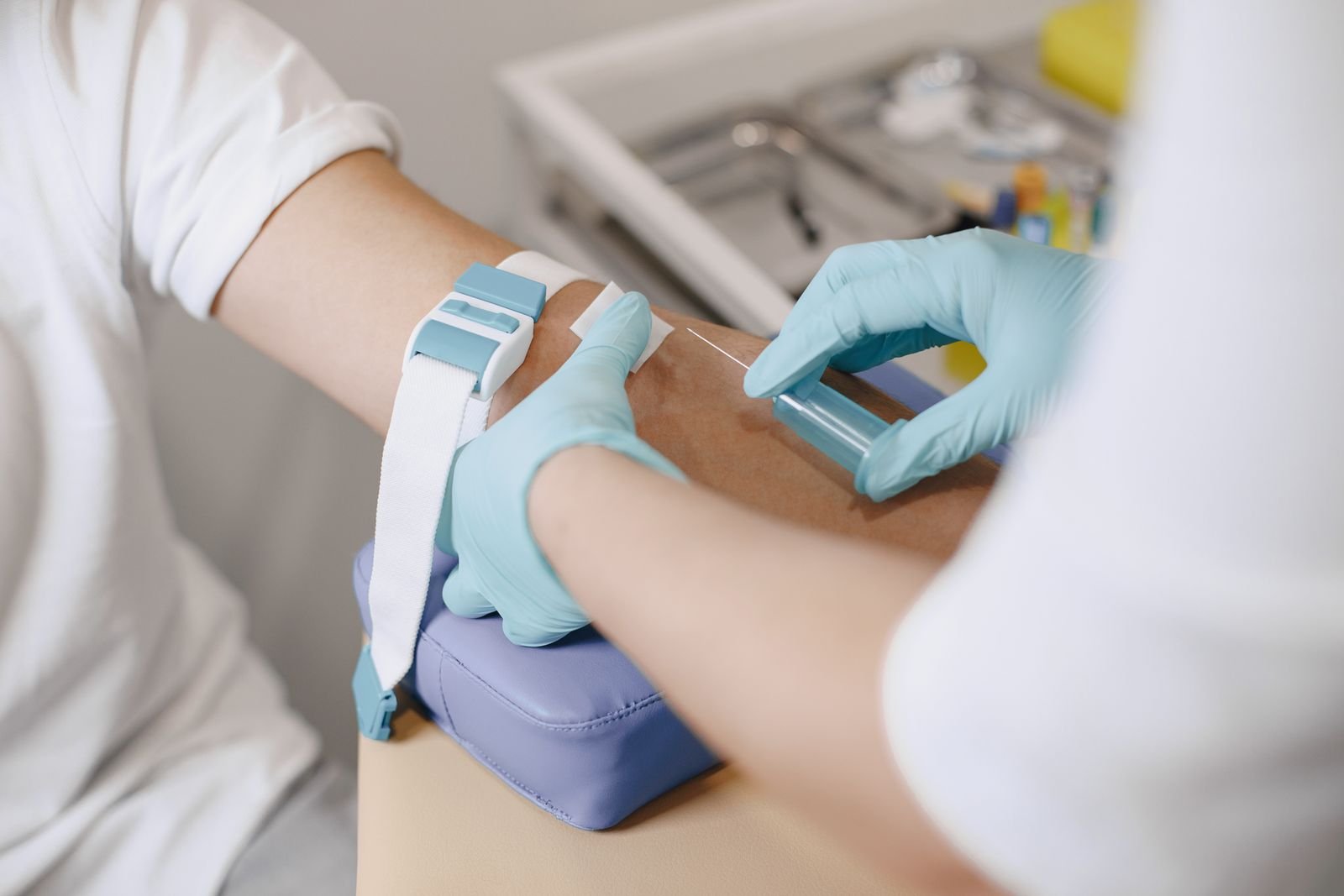
Most men picture a single blood draw and a yes or no answer. The real process is more careful than that, and knowing what to expect stops you being talked into treatment on thin evidence.
Testosterone follows a daily rhythm. It peaks in the morning and drifts down through the day, so a sample taken at 4pm can read meaningfully lower than one taken at 8am from the same man on the same day. For that reason the American Urological Association is specific: the diagnosis should rest on two separate total testosterone measurements, both taken in the early morning, ideally at the same laboratory using the same method.
The AUA uses 300 ng/dL as a reasonable cut-off for low testosterone. That number is a threshold for a conversation, not a verdict. The guideline is equally clear that diagnosis requires low readings and symptoms. A man at 280 ng/dL who feels fine is in a very different position from a man at 280 ng/dL who has lost his morning erections and cannot get through the afternoon.
If your first result comes back low, expect a second test rather than a prescription. If a clinic offers you treatment after one afternoon blood draw, that is a reason to get a second opinion.
Questions worth asking your doctor
- Was this an early morning sample, and can we repeat it?
- What was my total testosterone, and did we measure free testosterone as well?
- Have we checked LH and FSH, to see whether the signal is coming from the testes or the pituitary?
- What else could explain how I have been feeling?
What Else Causes These Symptoms
This is the part most testosterone content skips, and it matters more than anything else on this page. Fatigue, low mood, poor concentration and reduced libido are among the least specific symptoms in men’s health. Plenty of conditions produce them, several are more common than testosterone deficiency, and most are treatable.
Before you conclude that your testosterone is the problem, these deserve ruling out:
- Obstructive sleep apnoea. Testosterone is produced largely during sleep, so badly fragmented sleep lowers it directly. Sleep apnoea also produces the same daytime fatigue and brain fog. Treating the apnoea sometimes improves both.
- Thyroid problems. An underactive thyroid causes fatigue, low mood and weight gain (see thyroid symptoms in men). A TSH test is inexpensive and belongs in any sensible workup.
- Depression. Low mood, loss of interest in sex, disturbed sleep and trouble concentrating are core features of depression, and it is considerably more common than testosterone deficiency at every age.
- Type 2 diabetes and insulin resistance. Both are associated with lower testosterone and produce heavily overlapping symptoms.
- Medication. Opioids, some antidepressants, corticosteroids and several other drugs suppress testosterone or blunt libido.
- Alcohol and sustained stress. Both affect the hormonal axis, and both are easy to underestimate in yourself.
None of this means your symptoms are imaginary. It means the answer to “is it my testosterone?” is “possibly, and a proper workup will tell you.” Chasing a prescription while an untreated sleep disorder is doing the damage leaves you on lifelong therapy for a problem you never had.
FAQ: Signs of Low Testosterone
What are the first signs of low testosterone?
Often reduced libido, fewer morning erections, unexplained fatigue, and low mood or motivation. The sexual symptoms tend to be the most specific to low testosterone.
At what age does testosterone start to drop?
Levels peak around 18 to 20 and decline gradually from the 30s, at roughly 1% per year. The rate and impact vary a lot between individuals.
Is low testosterone just a normal part of ageing?
Some decline is normal, but a clear cluster of bothersome symptoms with a clinically low blood level isn’t something to simply accept. Many causes (weight, sleep, stress) are also reversible.
Can low testosterone be reversed naturally?
Often, when it’s driven by lifestyle factors, losing excess weight, improving sleep, reducing alcohol, managing stress, and treating sleep apnea can all raise levels. Age-related decline is harder to reverse without medical treatment.
Should I take a testosterone booster supplement?
Most over-the-counter boosters have weak evidence. It’s better to get properly assessed first and address underlying causes. See our guide on whether testosterone supplements work.
The Bottom Line on The Signs of Low Testosterone
The signs of low testosterone span the sexual (reduced libido, erectile changes, fewer morning erections), the physical (fatigue, lost muscle, more belly fat), and the mental (low mood, irritability, poor focus). The sexual symptoms are the most specific, and the whole picture matters more than any single complaint. Crucially, diagnosis rests on low blood levels plus symptoms, not a number alone, and many causes are reversible lifestyle factors rather than pure ageing. If the pattern fits, get a proper morning blood test before reaching for supplements. It’s the only way to know what you’re dealing with.
This article is for informational purposes only and does not constitute medical advice. Consult a qualified healthcare professional for diagnosis and treatment.
Sources
- Low Testosterone (Low T): Hypogonadism, Symptoms and Treatment, Cleveland Clinic
- Low Testosterone: Symptoms, Diagnosis and Treatment, Urology Care Foundation
- Travison TG et al. Harmonized Reference Ranges for Circulating Testosterone Levels in Men of Four Cohort Studies in the United States and Europe. J Clin Endocrinol Metab, 2017
- Bhasin S et al. Testosterone Therapy in Men With Hypogonadism: An Endocrine Society Clinical Practice Guideline. J Clin Endocrinol Metab, 2018
- Evaluation and Management of Testosterone Deficiency, AUA Guideline
- Kim SD et al. Obstructive Sleep Apnea and Testosterone Deficiency. World J Mens Health, 2019
- NIDDK: Hypothyroidism (underactive thyroid).
- NIMH: Men and Mental Health.