
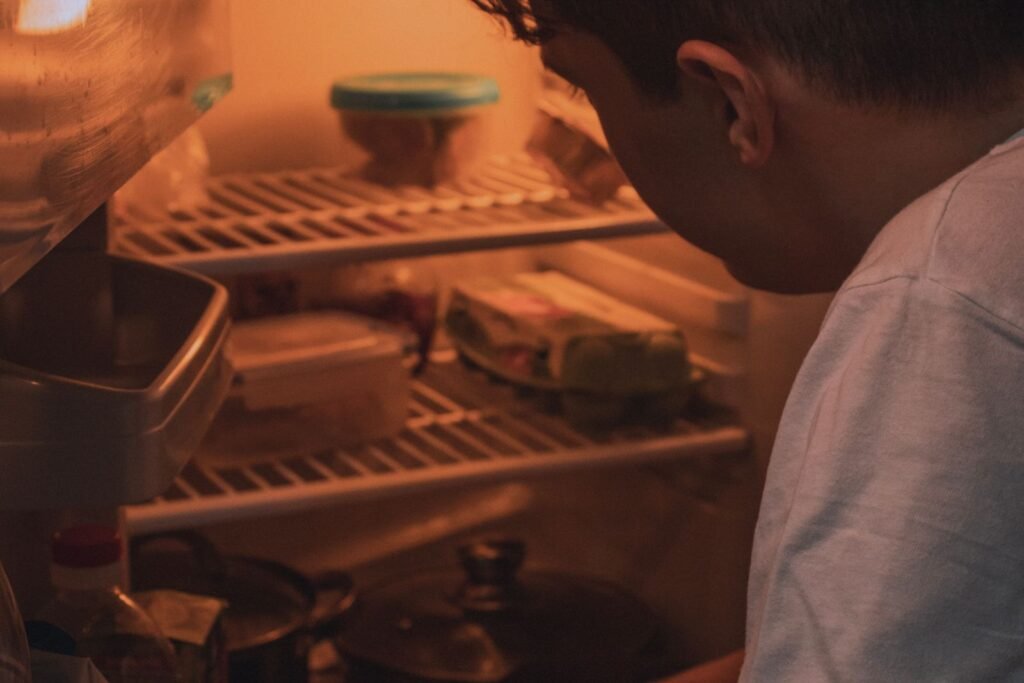
You ate well all day, then the evening hits and you find yourself raiding the fridge or snacking mindlessly in front of the TV. Late night eating is one of the most common diet-derailers for men, undoing a day of good intentions in a few hours. The good news is that it’s a very addressable habit once you understand why you do it, because late night eating usually has identifiable causes, and targeting them is more effective than relying on willpower. This guide covers why you eat late at night and how to stop.
Does Late Night Eating Actually Matter?
First, a clarification, because there’s a myth to address. The idea that eating late at night inherently causes weight gain (because “your metabolism slows at night” or food eaten late is stored differently) is largely overblown. What matters most for weight is your total daily calorie intake, not the specific timing (see calorie deficit explained and meal timing and protein timing).
However, late night eating is still a real problem for most people, not because of the timing itself, but because of what it usually involves:
- It’s often extra, unplanned calories on top of your day, easily pushing you into a surplus
- It tends to be mindless and driven by cravings, not hunger
- The foods are usually calorie-dense junk (chips, sweets, ice cream), not planned nutritious food (see sugar and men’s health)
- It can disrupt sleep if it’s heavy or close to bed (see how to increase deep sleep)
So late night eating matters mainly because it adds excess calories through mindless, poor-quality snacking, not because nighttime calories are magically worse. Fixing it is really about addressing the extra, mindless eating.

Why You Eat Late at Night
Understanding your triggers is the key to stopping. Common causes:
1. Not eating enough during the day. If you under-eat during the day (skipping meals, too-small portions, insufficient protein), you’ll be hungry at night and prone to overeating. This is a very common cause, daytime under-eating drives nighttime overeating (see how much protein men need).
2. Boredom and habit. Much late night eating is simply boredom or a habit, snacking while watching TV or scrolling, not because you’re hungry. The evening downtime becomes associated with eating.
3. Stress and emotions. Eating to cope with stress, anxiety, or emotions often happens in the evening when the day’s pressures catch up (see how to manage stress). Emotional eating is a major driver.
4. Cravings and blood sugar. Blood sugar swings from refined carbs during the day can drive evening cravings (see sugar and men’s health).
5. Tiredness. Being tired increases cravings (especially for junk) and weakens your resolve, and poor sleep drives increased appetite (see why men sleep worse after 30).
6. Lack of structure. No clear “kitchen’s closed” boundary means grazing continues all evening.
7. Free time and access. The evening is often when you’re relaxed at home with easy access to the kitchen and nothing else to do.
Identifying which of these apply to you points to the fix.

How to Stop Late Night Eating
Target the causes with these practical strategies:
1. Eat enough during the day (the biggest fix)
Since daytime under-eating drives nighttime overeating, make sure you’re eating adequate, satisfying meals during the day, with enough protein and volume to keep you full (see how much protein men need and high-protein foods for men). Often, simply eating properly during the day dramatically reduces night cravings. This is frequently the single most effective change.
2. Address the real trigger (not just the food)
If it’s boredom, find an evening activity that occupies you (a hobby, reading, a walk, see reading before bed). If it’s stress or emotion, address it directly with stress-management rather than food (see how to manage stress). Recognising that you’re eating from boredom or stress, not hunger, is powerful, then meet the real need instead.
3. Set a “kitchen’s closed” boundary
Decide on a time after which you don’t eat, and stick to it. A clear cutoff removes the all-evening grazing. Brushing your teeth after dinner can reinforce the “done eating” signal.
4. Don’t keep junk food accessible
You can’t mindlessly eat what isn’t there. Keep tempting junk out of the house, or at least out of easy reach. If you want an evening snack, have planned, healthier options available (see best diet for men over 40).
5. Plan an evening snack if needed
If you want an evening snack, plan a reasonable, satisfying one (like protein or fruit) into your daily calories, rather than mindlessly grazing. A planned snack you account for is fine; unplanned mindless eating is the problem.
6. Stay busy and change the routine
Break the TV-and-snack association, do something with your hands, change your evening routine, or relocate away from the kitchen. Disrupting the habit loop helps.
7. Prioritise sleep
Since tiredness drives cravings and weakens resolve, and poor sleep increases appetite, good sleep reduces night eating (see why men sleep worse after 30). And going to bed rather than staying up snacking helps directly.
8. Stay hydrated
Sometimes thirst masquerades as hunger, having water can reduce perceived cravings (see how much water should men drink).
What a Controlled Trial Showed About Timing
Most arguments about late eating come down to calories. If you eat the same amount, does the clock matter? A carefully controlled trial published in Cell Metabolism in 2022 suggests it does, and the mechanisms help explain why late eating is so hard to control.
Adults with overweight or obesity lived under two schedules, in random order. They ate the same meals, with the same calories, the same sleep and the same activity. The only difference was timing: in one schedule, the meals were moved several hours later in the day.
What changed on the late schedule
- Hunger went up. The balance of hunger hormones shifted, with more ghrelin, which drives appetite, relative to leptin, which signals fullness.
- Energy expenditure went down during waking hours, and core body temperature over the day fell.
- Fat tissue behaved differently. Gene activity in fat samples moved in a direction consistent with storing more fat and breaking down less.
Why that matters
Each change is small on its own. Together they point the same way: eating later makes you hungrier, you burn slightly less, and your body leans toward storing what you eat. That fits what many men notice. Late eating tends to snowball, because the hungrier you are in the evening, the more you want to eat.
The trial was small and short, so it does not prove that late eating causes weight gain over years. It does suggest that moving more of your food earlier in the day, with a proper breakfast and lunch, is a sensible lever. It may also make the evening easier to manage, because you arrive at it less hungry.
Frequently Asked Questions
Does eating late at night cause weight gain?
Not inherently, the “nighttime calories are worse” idea is largely overblown; total daily calories matter most. But late night eating still causes weight gain in practice because it’s usually extra, mindless calories from calorie-dense junk on top of your day, pushing you into a surplus.
Why do I crave food late at night?
Common causes include not eating enough during the day (driving real nighttime hunger), boredom and habit, stress and emotional eating, blood sugar swings, tiredness (which increases cravings), lack of a clear eating cutoff, and easy kitchen access during relaxed evening downtime.
How do I stop eating late at night?
Eat enough during the day (the biggest fix), address the real trigger (boredom or stress) rather than the food, set a “kitchen’s closed” cutoff, keep junk out of reach, plan a reasonable snack if needed, stay busy, prioritise sleep, and stay hydrated. Target the cause, not just willpower.
Why do I eat when I’m not hungry at night?
Usually boredom, habit, or emotional eating, snacking while watching TV or coping with stress, rather than real hunger. Recognising that you’re eating from boredom or stress, not hunger, lets you meet the real need (occupation or stress relief) instead of eating.
Is a late night snack bad?
Not necessarily, a planned, reasonable snack (like protein or fruit) accounted for in your daily calories is fine. The problem is unplanned, mindless grazing on calorie-dense junk that adds excess calories. Plan your snack rather than eating mindlessly, and it’s not an issue.
The Bottom Line
Late night eating is a common diet-derailer, but it’s a very addressable habit once you understand it. Contrary to myth, nighttime calories aren’t inherently worse, total daily intake is what matters most for weight. Late night eating causes problems because it’s usually extra, mindless calories from calorie-dense junk on top of your day, not because of the timing itself. And it usually has identifiable triggers: most commonly not eating enough during the day (which drives real nighttime hunger), plus boredom, stress and emotional eating, tiredness, and easy kitchen access.
The fixes target these causes: eat enough satisfying, protein-rich food during the day (often the single biggest fix), address the real trigger like boredom or stress directly rather than with food, set a “kitchen’s closed” cutoff, keep junk out of reach, plan a reasonable snack if you want one, and prioritise sleep. Target the cause rather than relying on willpower, and late night eating becomes far easier to stop.
This article is for informational purposes only and does not constitute medical advice. If you struggle with disordered or compulsive eating patterns, please consult a qualified healthcare professional. Support is available.
Sources
- Allison KC et al. Proposed diagnostic criteria for night eating syndrome. Int J Eat Disord, 2010
- Teixeira GP et al. Role of chronotype in dietary intake, meal timing, and obesity: a systematic review. Nutr Rev, 2022
- Flanagan A et al. Chrono-nutrition: From molecular and neuronal mechanisms to human epidemiology and timed feeding patterns. J Neurochem, 2021
- Late isocaloric eating increases hunger, decreases energy expenditure, and modifies metabolic pathways in adults with overweight and obesity, Cell Metabolism (2022).