
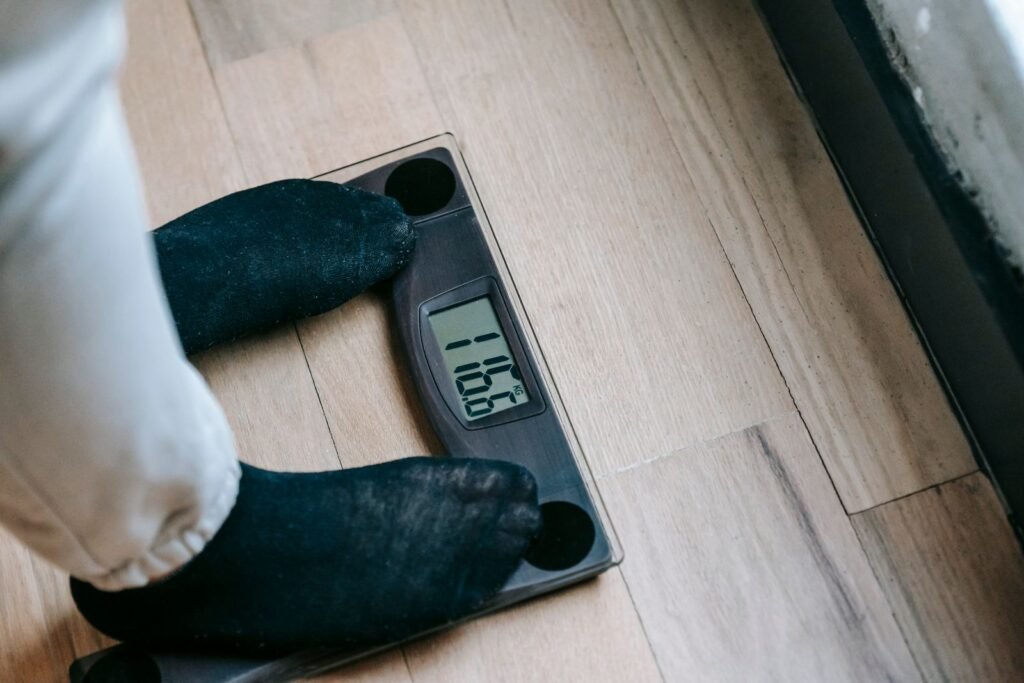
You were losing steadily, then the scale stopped moving. Nothing changed, or so it seems, yet the number has been stuck for two, three, four weeks. This is one of the most common and most demoralising experiences in fat loss, and it’s also one of the most misunderstood. A plateau is not a sign that your body is broken or that you’ve hit a genetic wall. It’s a predictable physiological response, and once you understand why it happens, breaking it becomes a matter of adjustment rather than willpower. A weight loss plateau almost always has a cause, and usually a fixable one.
This guide explains what a real plateau is (versus a false one), the four mechanisms that cause it, and the specific changes that get the scale moving again.
First, Is It Actually a Plateau?
Before changing anything, be sure you’ve stalled. Body weight fluctuates by 1 to 2 kg (2 to 4 lb) day to day from water, glycogen, sodium, and what’s in your gut. A single week of no change is noise, not a plateau. Two weeks with no downward trend in your weekly average is a reasonable threshold; three weeks is definitive.
Weigh yourself daily under the same conditions (morning, after the bathroom, before eating) and compare weekly averages rather than individual readings. Many “plateaus” are simply one high reading being compared against one low one. Also check other measures: if your waist is shrinking or your clothes fit differently while the scale holds, you may be losing fat while gaining muscle, which is not a plateau at all. The waist-to-height ratio is a useful cross-check here.
Why Weight Loss Stalls: The Four Mechanisms
1. Your maintenance calories dropped. This is the big one. A lighter body burns fewer calories. If you started at 100 kg eating 2,200 calories and are now 90 kg, that same 2,200 might now be your maintenance rather than a deficit. The calorie deficit that worked at the start shrinks as you lose weight, and eventually disappears.
2. Adaptive thermogenesis. Beyond the effect of simply weighing less, the body reduces energy expenditure in a deficit: non-exercise movement drops (you fidget less, sit more), and resting metabolic rate falls slightly more than body size alone would predict. Research on this “metabolic adaptation” suggests it accounts for roughly 50 to 150 calories a day in most people, more in aggressive diets. It is real, but it is smaller than most people assume, and it does not make fat loss impossible.
3. Tracking drift. Studies consistently find that people under-report intake by 20 to 50%, and the drift gets worse over time. Portions creep up, “small” additions go uncounted, and weekend eating undoes weekday deficits. This is not a character flaw; it is how almost everyone tracks after the initial novelty wears off.
4. Water retention masking fat loss. New training, higher sodium, higher carbohydrate intake, poor sleep, and elevated stress all cause water retention that can hide a kilogram or more of real fat loss. Elevated cortisol in particular promotes fluid retention, which is why a stressful few weeks often coincide with a stalled scale.

How to Break a Weight Loss Plateau
Once you’ve confirmed a real plateau, work through these in order. Most men need only the first two.
Recalculate and reduce. Your deficit has shrunk. Drop intake by 100 to 200 calories a day, or add the equivalent in activity. Small adjustments are better than dramatic cuts, which accelerate muscle loss and adaptation.
Audit your tracking for one careful week. Weigh food, log everything including oils, sauces, drinks, and weekend meals. Most men find the plateau explains itself at this step.
Increase daily movement, not just workouts. Step count is the easiest lever on total energy expenditure. Adding 2,000 to 3,000 steps a day can restore a meaningful deficit without touching food.
Prioritise protein and lifting. Keeping protein high and continuing resistance training preserves muscle, which keeps your metabolic rate from falling further. Losing muscle in a deficit makes future plateaus more likely. Our guide to building muscle in a deficit covers how.
Fix sleep and stress. Short sleep raises hunger hormones and cortisol, and increases water retention. Getting enough sleep is one of the most underrated plateau-breakers.
Consider a diet break. If you’ve been in a deficit for 12 weeks or more, one to two weeks at maintenance calories can reset hunger, restore training performance, and partially reverse adaptation. Research on intermittent dieting suggests it produces similar or better fat loss over time with less muscle loss. This is not a cheat week; it is eating at your calculated maintenance.
What Doesn’t Work
Slashing calories dramatically tends to backfire: it accelerates muscle loss, increases adaptation, and is rarely sustained. “Metabolism-boosting” supplements have negligible effect. Switching diets (keto to fasting to low-fat) only helps if the new approach happens to create a bigger deficit, which our guide to intermittent fasting for men explains. And no, your metabolism hasn’t suddenly slowed with age; that myth has been well and truly tested.
FAQ: Weight Loss Plateau
Some quick answers on weight loss plateau:
How long does a weight loss plateau last?
Left unaddressed, indefinitely, because the cause (a shrunken deficit) doesn’t fix itself. With the adjustments above, most men see movement within two to three weeks.
Is a plateau a sign of starvation mode?
No. “Starvation mode” as popularly described, where the body refuses to lose fat, does not exist. Metabolic adaptation is real but modest (roughly 50 to 150 calories a day) and never eliminates fat loss in a real deficit.
Should I eat more to break a plateau?
A planned diet break at maintenance for one to two weeks can help if you’ve been dieting for months. Simply eating more without a plan will not. When you finish dieting for good, the same idea applies: return to maintenance in steps (see reverse dieting).
Can building muscle cause a plateau on the scale?
Yes, especially for men new to lifting. Fat loss and muscle gain can offset on the scale while body composition improves. Use waist measurements and body fat estimates alongside weight.
The Bottom Line on Weight Loss Plateau
The bottom line on weight loss plateau: A stall almost always means your deficit has quietly disappeared, through weight loss itself, modest metabolic adaptation, tracking drift, or water retention masking real progress. Confirm it’s real with two to three weeks of weekly averages, then reduce intake slightly or add movement, audit your tracking carefully, protect muscle with protein and lifting, and fix sleep. If you’ve been dieting for months, a short diet break at maintenance often does more than pushing harder. Plateaus are normal; they’re a signal to adjust, not to quit.
Related: Why Am I Not Losing Weight? 10 Reasons Men Stall (and How to Fix Each)
This article is for informational purposes only and does not constitute medical advice. Consult a qualified healthcare professional before making significant changes to your diet, especially if you have health conditions.
Sources
- Harvard Health Publishing on why weight loss plateaus happen.
- Mayo Clinic guidance on getting past a weight-loss plateau.
- Müller MJ et al. Changes in Energy Expenditure with Weight Gain and Weight Loss in Humans. Curr Obes Rep, 2016
- Byrne NM et al. Intermittent energy restriction improves weight loss efficiency in obese men: the MATADOR study. Int J Obes (Lond), 2018