
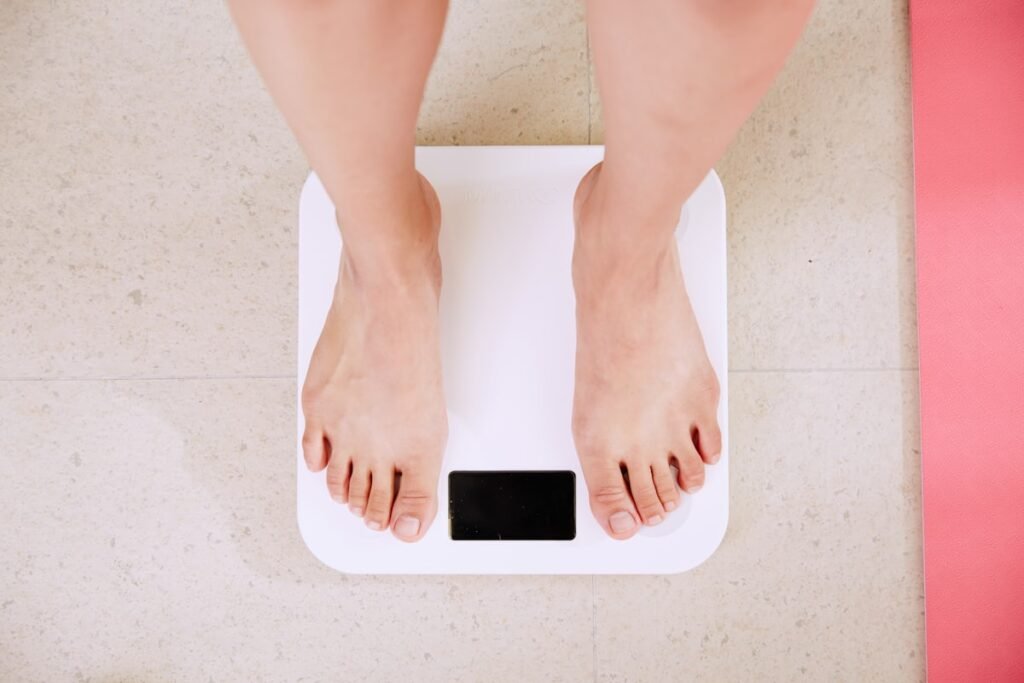
The bathroom scale is one of the most misleading tools in your house. It tells you what you weigh, but not what you’re made of, and those are very different questions. A muscular man and a soft, sedentary man can weigh exactly the same. Body fat percentage is the number that distinguishes them, and knowing a healthy body fat percentage for men is a far better gauge of health and fitness than weight or BMI alone.
This guide lays out what counts as a healthy body fat percentage for men by age, what each range looks like, how to measure it without a lab, and why the location of your fat matters as much as the amount.
Why Body Fat Percentage Beats BMI
BMI (body mass index) is quick and useful at a population level, but it has a glaring flaw for individuals: it can’t tell muscle from fat. A lean, muscular man often gets labelled “overweight” by BMI because muscle is dense and heavy. Meanwhile, a man at a “normal” BMI can carry a surprising amount of fat and little muscle, sometimes called “skinny fat.”
Body fat percentage cuts through that. It tells you what slice of your total weight is fat versus everything else (muscle, bone, organs, water). That makes it a much more direct read on health risk, fitness, and how you look. Research links higher body fat percentage in men to insulin resistance, cardiovascular disease, and even lower testosterone, so it’s not just an aesthetic number.
Healthy Body Fat Percentage for Men by Age
A man’s healthy body fat range shifts slightly upward with age, reflecting natural changes in muscle mass and metabolism. Drawing on guidelines from the American Council on Exercise and body-composition data, here are general healthy ranges for men:
| Category | Body Fat % (general) |
|---|---|
| Essential fat (minimum to live) | 2 to 5% |
| Athletic | 6 to 13% |
| Fit / Healthy | 14 to 19% |
| Acceptable / Average | 20 to 24% |
| Obese | 25%+ |
By age, the healthy target rises gradually:
| Age | Healthy target (approx.) |
|---|---|
| 20s | 10 to 18% |
| 30s | 12 to 19% |
| 40s | 13 to 21% |
| 50s | 14 to 22% |
| 60+ | 13 to 24% |
A few notes on these numbers: there’s no single agreed-upon “perfect” figure, ranges vary slightly between sources, and obesity thresholds for men also climb a little with age (from around 25% in your 20s to roughly 30% by 60+). For most men, a body fat percentage somewhere in the 12 to 20% range is the practical sweet spot: low disease risk, visible fitness, and sustainable to maintain.
What Each Level Looks Like
Numbers are abstract, so here’s the visual translation for men:
- ~16 12%: Clearly lean and athletic. Visible abs, vascularity in the arms, defined shoulders. Sustainable for dedicated trainers but tight to maintain.
- ~15%: Flat waist, faint upper-ab outline, some arm vascularity. Athletic and sustainable, a realistic goal for many men.
- ~20%: Softer midsection, little to no ab definition, but not obese. This is average and still compatible with acceptable health markers.
- ~25%+: A noticeably protruding belly, waist approaching or exceeding hip width. This is where cardiometabolic risk climbs.
- ~30%: Overweight to obese, with fat accumulating around the midsection, and a waist typically larger than the hips.
One useful reference point: visible abs typically emerge around 10 to 14% body fat in younger men, and 12 to 16% in men over 40.
Why Fat Location Matters
Here’s something the percentage alone misses: where you store fat matters enormously. The dangerous kind is visceral fat: the deep fat packed around your abdominal organs, distinct from the “pinchable” subcutaneous fat just under the skin.
Visceral fat is metabolically active in a bad way: it pumps out inflammatory compounds and is strongly linked to heart disease, type 2 diabetes, and metabolic syndrome, far more so than subcutaneous fat. Two men at the same body fat percentage can have very different risk profiles depending on how much of that fat is visceral. The good news is that visceral fat tends to respond well to exercise and diet.
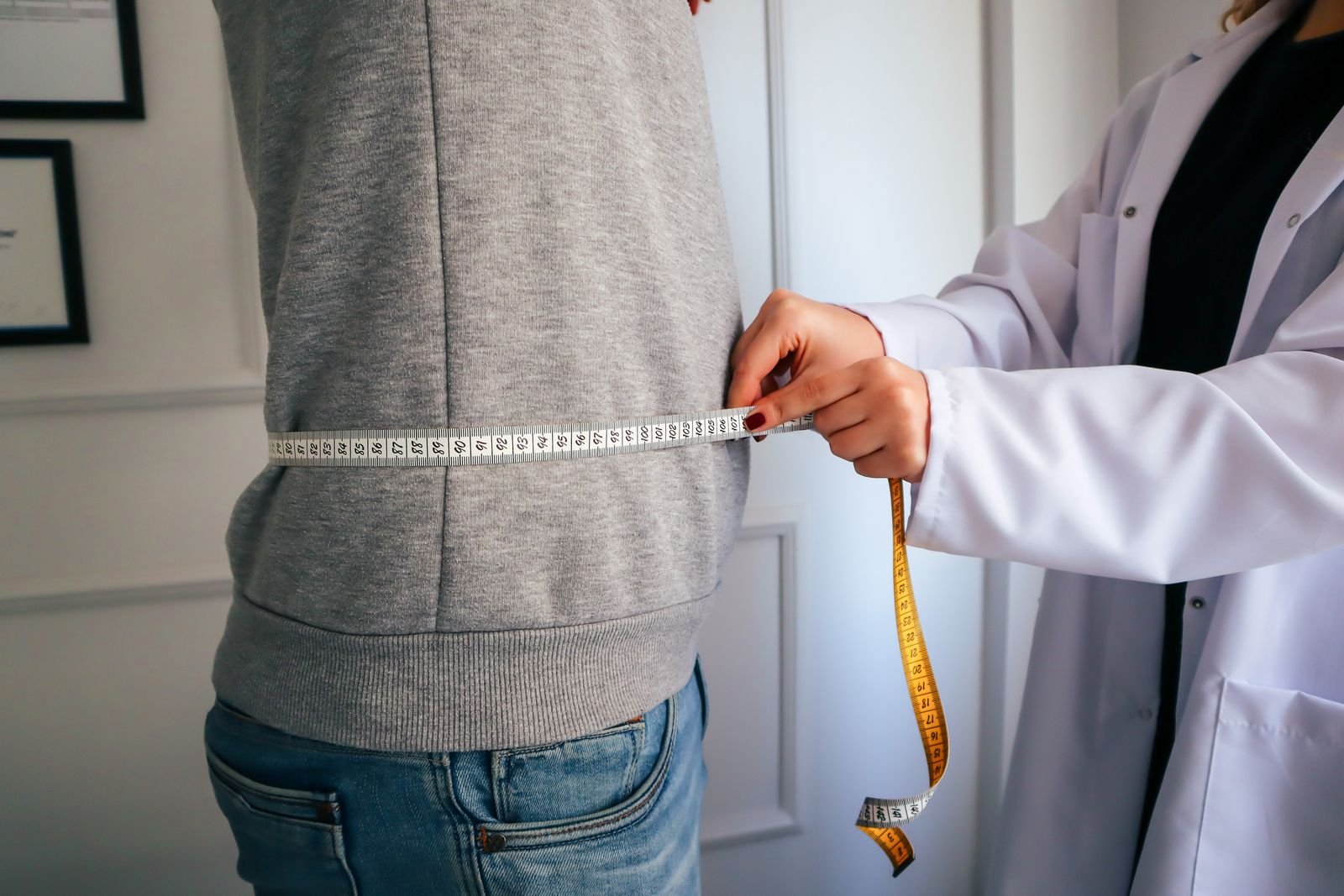
This is why your waist measurement is such a useful companion to body fat percentage: it’s a quick proxy for the dangerous belly fat, which we cover in detail in our guide to waist-to-height ratio.
How to Measure Your Body Fat
No method is perfect at home, but several are useful for tracking trends:
- DEXA scan: the gold-standard for accuracy. A full-body scan breaks down fat, muscle, and bone, and even shows visceral fat. Radiation exposure is tiny (roughly equivalent to eating a few bananas). Best for periodic check-ins, not weekly.
- Bioelectrical impedance (smart scales / handheld devices): sends a tiny current through the body. Convenient and cheap, but accuracy varies with hydration. Best used for trends over time rather than absolute numbers.
- Skinfold calipers: pinch-test at specific sites, plugged into a formula. Inexpensive but depends heavily on technique; consistency matters.
- Tape-measure formulas: using waist, neck, and height measurements (like the US Navy method) to estimate body fat. Surprisingly decent and completely free.
The practical advice: pick one method you can repeat consistently, measure under the same conditions each time (e.g. first thing in the morning), and track the trend rather than obsessing over any single reading. A consistent method showing a downward trend tells you more than a one-off “accurate” number.
How to Improve Your Body Composition
Shifting body fat down a category comes from the same fundamentals:
- Lift weights 2 to 3x per week to preserve and build muscle, which keeps your metabolism up and improves the muscle-to-fat ratio
- Maintain a moderate calorie deficit (around 15 to 20%) to lose roughly a pound a week without sacrificing muscle
- Eat enough protein: roughly 0.8 to 1 g per pound of target bodyweight, to support muscle and satiety
- Add cardio, including zone 2 work, to support fat loss and cardiovascular health
- Reassess every 4 to 6 weeks: body recomposition is slow; aggressive crash approaches tend to cost you muscle
Remember body recomposition is possible: by lifting and eating enough protein, you can lose fat while gaining muscle, so your scale weight might barely move while your body fat percentage drops. That’s exactly why the scale alone misleads.
How Far Off Your Scale Might Be
Most men who know their body fat percentage got it from a bathroom scale or a gym machine using bioelectrical impedance. That means a small current sent through the body. It is convenient. It is also less precise than the display suggests.
The size of the error
When researchers compared two widely used impedance devices against a DXA scan, a common reference method, the devices missed body fat percentage by an average of about 3.4 and 3.9 percentage points. They also tended to read body fat lower than DXA, and lean mass higher. In practice, a man whose scale says 18 percent could plausibly be anywhere from about 15 to 22 percent.
At the individual level the agreement is weaker still. Studies have found wide limits of agreement, especially in people carrying more body fat. The average error can look acceptable while one particular person’s reading is well off.
Why the reading moves day to day
Impedance devices estimate fat from how easily the current passes through you, and water conducts it well. So hydration, a recent meal, a hard workout or a few drinks the night before can all shift the reading, even though your body fat has not changed. Older single-frequency devices are the most affected.
How to get useful numbers anyway
Treat the absolute figure as a rough estimate and focus on the trend. Measure under the same conditions every time: first thing in the morning, after using the toilet, before eating or drinking, and before exercise. Average a week of readings rather than reacting to one. And pair it with a tape measure at the waist, which is cheap and more stable, and in many ways more meaningful. The fat around your middle is the fat that matters most for health.
FAQ: Healthy Body Fat Percentage for Men
What is a healthy body fat percentage for men?
For most men, somewhere in the 12 to 20% range balances low health risk, visible fitness, and sustainability. The healthy target rises slightly with age.
Is 20% body fat bad for a man?
No. 20% sits at the high end of average. You’ll likely have a softer midsection with little ab definition, but it’s not obese and can come with acceptable health markers. Many men aim a little lower for better metabolic health.
At what body fat percentage do abs show?
Typically around 10 to 14% in younger men, and 12 to 16% in men over 40. Genetics affect where and how abs appear.
What’s the most accurate way to measure body fat?
A DEXA scan is the practical gold standard. For home use, pick one consistent method (smart scale, calipers, or tape-measure formula) and track the trend rather than chasing a perfect single number.
Can I lose fat without losing weight?
Yes. It’s called body recomposition. Combining resistance training with adequate protein lets you build muscle while losing fat, so your weight may stay stable while body fat percentage falls.
The Bottom Line on Healthy Body Fat Percentage for Men
Body fat percentage tells you what the scale can’t: what you’re made of. For men, a healthy range sits roughly between 12% and 20%, climbing slightly with age, and where you carry the fat (especially dangerous visceral belly fat) matters as much as the total. Don’t chase a perfect lab number; pick a measurement method you can repeat, track the trend, and shift it with the proven fundamentals of lifting, adequate protein, a moderate deficit, and consistent cardio. It’s one of the most revealing health metrics a man can follow.
This article is for informational purposes only and does not constitute medical advice. Consult a qualified healthcare professional for personalised assessment.
Sources
- Harvard Health, What is considered a healthy body fat percentage as you age.
- Gallagher D et al. Healthy percentage body fat ranges: an approach for developing guidelines based on body mass index. Am J Clin Nutr, 2000
- Jackson AS et al. Generalized equations for predicting body density of men. Br J Nutr, 1978
- American Council on Exercise (ACE) body composition categories.
- Neeland IJ et al. Visceral and ectopic fat, atherosclerosis, and cardiometabolic disease: a position statement. Lancet Diabetes Endocrinol, 2019
- High precision but systematic offset in a standing bioelectrical impedance analysis compared with DXA.
- Reliability, biological variability, and accuracy of multi-frequency bioelectrical impedance analysis.