
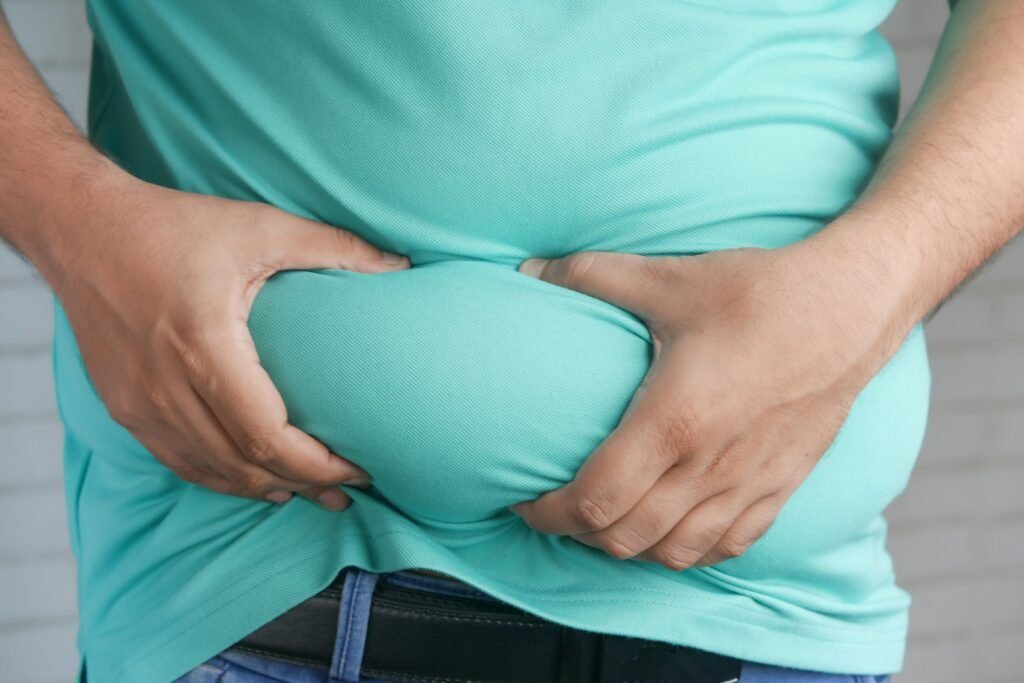
Not all belly fat is created equal. The soft fat you can pinch around your waist is mostly harmless. But there’s another kind, hidden deeper, that you can’t pinch at all, and it’s one of the most dangerous fat deposits in the male body. It’s called visceral fat, and understanding it changes how you think about that midsection entirely. That deeper fat is visceral fat, and in men it carries most of the real risk.
This guide explains what visceral fat is, why it’s so much more dangerous than other fat, how to tell if you’re carrying too much, and how to lose it.
This guide covers why visceral fat in men is so harmful and the habits that reduce it.
What Visceral Fat in Men Is
Your body stores fat in two main ways:
- Subcutaneous fat sits just under the skin, the “pinchable” fat on your belly, arms, and legs. It’s largely inert and not especially harmful.
- Visceral fat is stored deep in the abdominal cavity, packed around your internal organs, the liver, pancreas, and intestines. You can’t pinch it; a man with a hard, protruding “beer belly” often has a lot of it.
Men are particularly prone to storing visceral fat compared with pre-menopausal women, which is why the classic male “apple-shaped” belly is so common. And it’s exactly this deep fat that drives the health risks.
Why It’s So Dangerous
Here’s what makes visceral fat different: it’s not just sitting there. It’s metabolically active in a harmful way. It behaves almost like an organ, secreting inflammatory compounds and hormones that disrupt your body. This is why it’s strongly linked to serious conditions:
Related: Chronic Inflammation and Aging: What ‘Inflammaging’ Means for Men
- Heart disease: visceral fat raises cardiovascular risk significantly
- Type 2 diabetes: it drives insulin resistance
- High blood pressure (see blood pressure by age for men)
- Metabolic syndrome: the cluster of conditions that often travel together
- Lower testosterone: visceral fat converts testosterone to estrogen, worsening hormone balance (see testosterone and belly fat)
- Chronic inflammation throughout the body
Two men can carry the same total body fat but have very different health risks depending on how much of it is visceral. This is why waist size matters more than the number on the scale.
How to Tell If You Have Too Much
You don’t need a scan to get a useful read. The simplest, most practical measures:
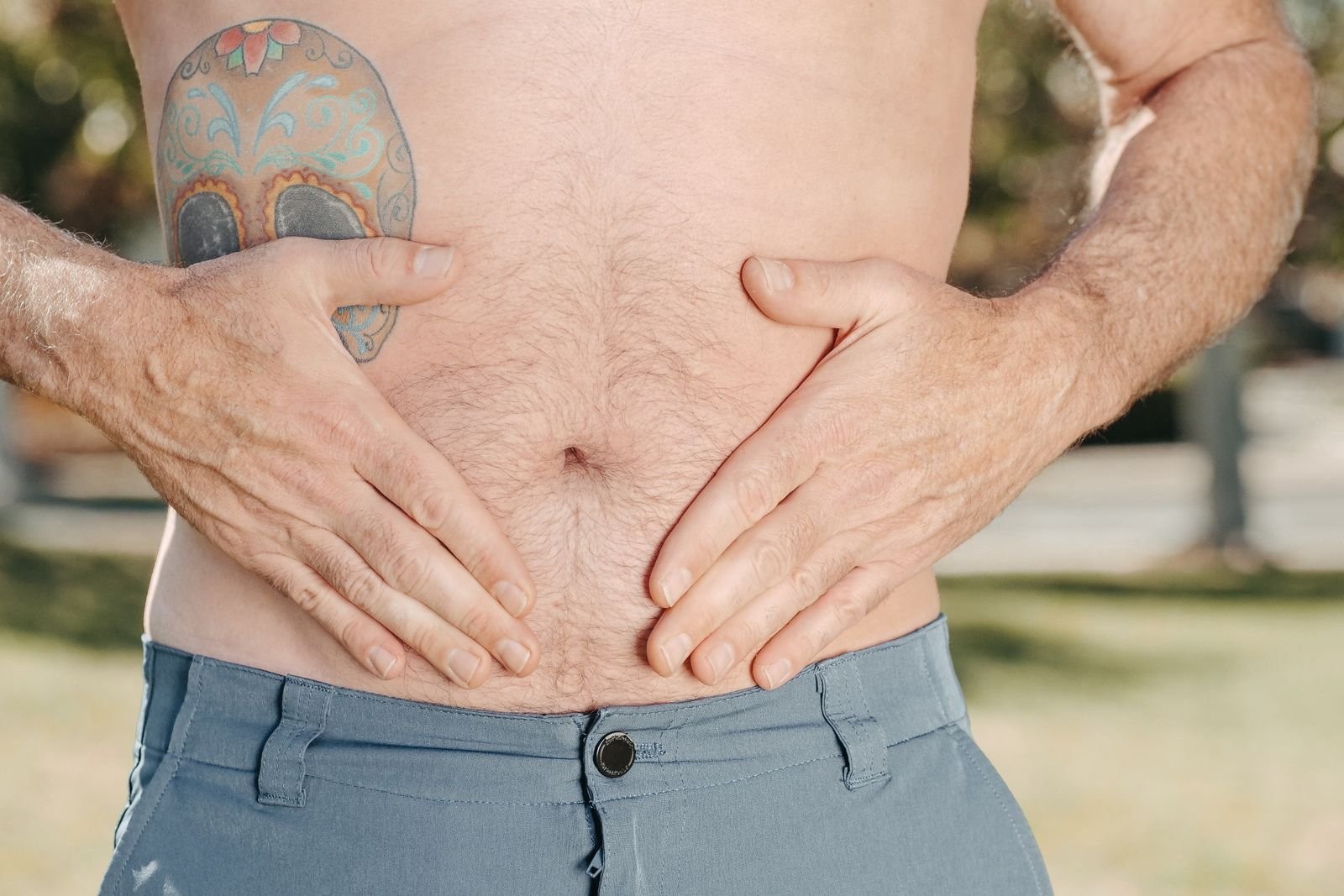
Waist circumference. A waist of 40 inches (102 cm) or more in men is a recognised marker of excess visceral fat and elevated health risk. Measure at the navel, tape horizontal, without sucking in.
Waist-to-height ratio. Even better, keep your waist under half your height (a ratio below 0.5). This accounts for your frame and is a strong predictor of the risk visceral fat carries (see waist-to-height ratio).
The pinch test, informally. If your belly is hard and protruding rather than soft and pinchable, more of it may be visceral.
For precise measurement, a DEXA scan or MRI can quantify visceral fat directly, but for most men the waist measurements give all the practical information needed.
How to Lose Visceral Fat in Men
Visceral fat tends to respond well to lifestyle change, often faster than stubborn subcutaneous fat. The deep fat is metabolically active, which makes it harmful, but also means it’s readily mobilised for energy when you create the right conditions. The approach:
1. Create a moderate calorie deficit
Overall fat loss reduces visceral fat, and you can’t spot-reduce it, but the good news is visceral fat is often the first to go (see calorie deficit explained).
2. Exercise, both cardio and strength
- Aerobic exercise (including zone 2 cardio) is particularly effective at reducing visceral fat.
- Resistance training preserves muscle and improves the body composition that keeps visceral fat off (see building muscle after 40).
3. Prioritise protein and whole foods
High protein supports fat loss and muscle retention (see how much protein men need), while cutting refined sugar and ultra-processed food helps (see sugar and men’s health).
4. Cut back on alcohol
Alcohol is strongly linked to visceral fat accumulation, the “beer belly” is a real phenomenon (see alcohol and belly fat).
5. Fix sleep and stress
Poor sleep and chronically high cortisol both promote visceral fat storage specifically, making these underrated levers (see high cortisol vs low cortisol and why men sleep worse after 30).
FAQ: Visceral Fat in Men
Some quick answers on visceral fat in men:
What is visceral fat?
The deep fat stored around your abdominal organs, as opposed to subcutaneous fat under the skin. It’s metabolically active and far more dangerous to health than pinchable fat.
Why is visceral fat so dangerous?
It secretes inflammatory compounds and disrupts hormones, driving heart disease, type 2 diabetes, high blood pressure, metabolic syndrome, and lower testosterone. It behaves almost like a harmful organ.
How do I know if I have too much visceral fat?
A waist of 40 inches or more, or a waist-to-height ratio above 0.5, signals excess visceral fat. A hard, protruding belly (rather than soft and pinchable) is another sign. Scans can measure it precisely.
How do I lose visceral fat?
A moderate calorie deficit, regular cardio and resistance training, high protein, less alcohol and sugar, and good sleep. Encouragingly, visceral fat often responds faster to these than subcutaneous fat.
Can you lose visceral fat fast?
It often responds relatively quickly to lifestyle change because it’s metabolically active and readily used for energy. You can’t spot-reduce it, but it’s frequently the first fat to go in a deficit.
The Bottom Line on Visceral Fat in Men
The bottom line on visceral fat in men: Visceral fat, the deep belly fat packed around your organs, is one of the most dangerous fat deposits in the male body, driving heart disease, diabetes, high blood pressure, and lower testosterone. Men are especially prone to it, and it’s the real reason waist size matters more than bodyweight. Check yourself with a simple waist measurement (under 40 inches, or under half your height) and, if it’s high, attack it with the proven fundamentals: a moderate calorie deficit, cardio and strength training, high protein, less alcohol, and better sleep. The best news? Because visceral fat is so metabolically active, it often responds faster to your efforts than any other fat on your body.
This article is for informational purposes only and does not constitute medical advice. Consult a qualified healthcare professional for assessment of your health risks.
Sources
- Neeland IJ et al. Visceral and ectopic fat, atherosclerosis, and cardiometabolic disease: a position statement. Lancet Diabetes Endocrinol, 2019
- Research on visceral fat, inflammation, and cardiometabolic risk in men.
- Studies on waist circumference, waist-to-height ratio, and visceral fat.
- Research on exercise and visceral fat reduction.