

If you’re past 30 and wondering whether you can still do anything about your testosterone besides watch it slide, the answer is yes, just not in the way the supplement ads want you to believe. If your goal is to naturally support testosterone after 30, the real answer isn’t a pill. It’s a short list of unglamorous habits that move the needle: sleep, body fat, resistance training, alcohol, and stress. None of that sells easily, which is exactly why it gets buried under louder marketing. This guide puts those levers in order, tells you how much each one is worth, and sets expectations you can trust. If you want the full background first, start with our complete guide to testosterone.
We’ve already covered the biggest testosterone myths and looked specifically at whether testosterone booster supplements actually work (short version: mostly not). This article is the practical companion to both: the lifestyle playbook, ranked by how much each piece matters.
Can You Naturally Support Testosterone After 30? Setting Realistic Expectations
Start here, because it will save you from disappointment later. Testosterone in men declines gradually starting around your 30s, on the order of about 1% per year on average. That pattern is documented by Cleveland Clinic and reflected in longitudinal population data. That decline is normal physiology, not a disease, and it isn’t uniform. Some men in their 60s test higher than some men in their 30s (see our full testosterone levels by age chart for what “normal” looks like at each stage).
Here’s the framing: the lifestyle factors in this guide won’t turn back the clock or make you a different biological age. What they can do is prevent or reverse the extra decline that comes from carrying excess fat, sleeping badly, drinking heavily, and running on chronic stress. All of that suppresses testosterone independent of aging. For a lot of men, that “extra” decline is bigger than the age-related part. Fixing it won’t make you 22 again, but it can meaningfully move you back toward the top of your own normal range. That’s a realistic, achievable goal, and it’s worth chasing on its own terms, even without a dramatic before-and-after number.
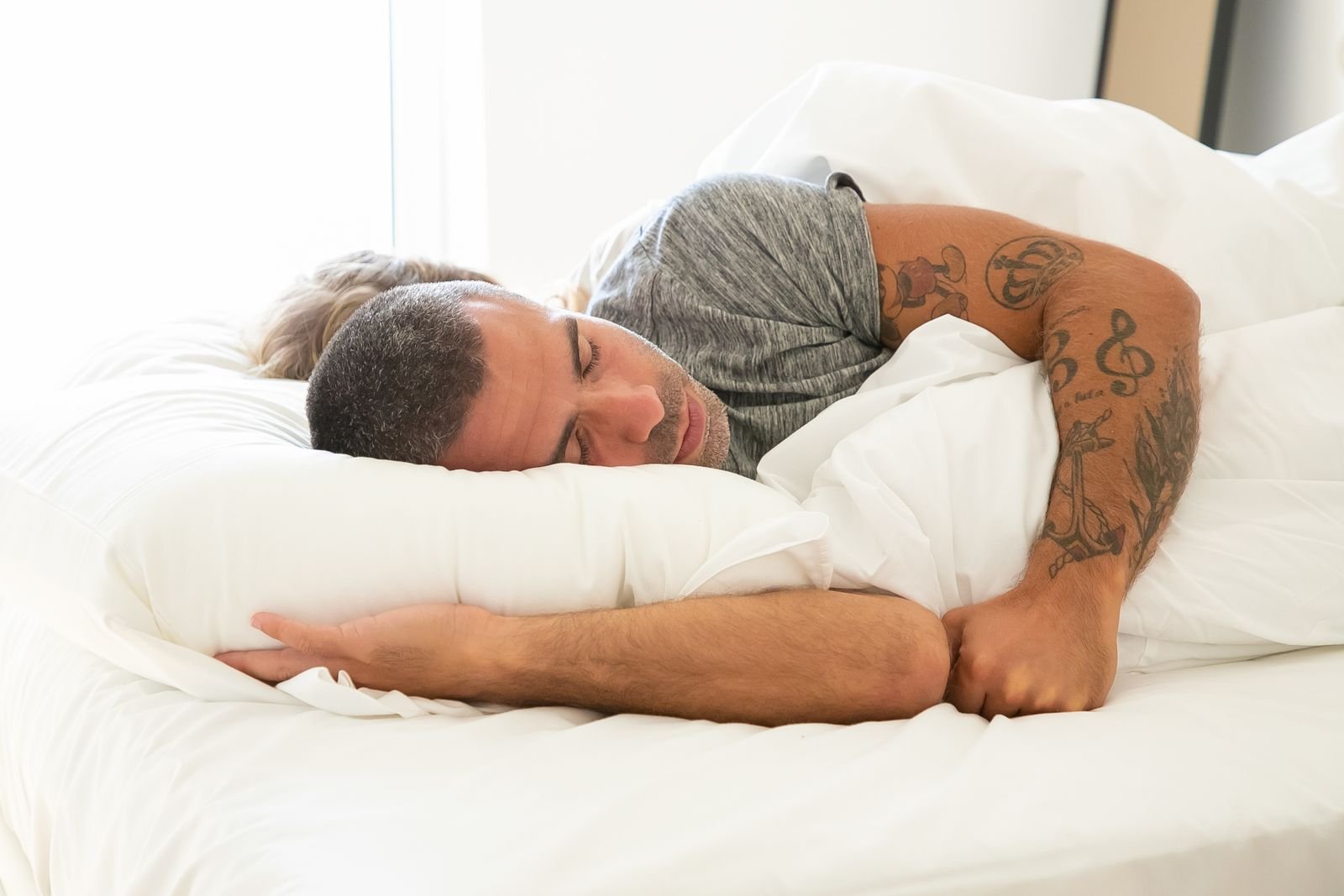
Sleep: The Most Direct Way to Naturally Support Testosterone After 30
If you only fix one thing, make it this. Testosterone is produced in pulses tied to your sleep cycle. The bulk of the day’s release happens during deep sleep, concentrated in the first few sleep cycles of the night. Cut sleep short and you cut that production window short too.
The clearest evidence comes from a controlled study in young, healthy men published in JAMA. Restricting sleep to five hours a night for just one week dropped daytime testosterone levels by 10 to 15%. Researchers compared that effect to aging 10 to 15 years in terms of the hormonal hit. A later systematic review and meta-analysis of sleep restriction and testosterone confirmed the broader pattern. Cutting sleep, especially down toward four to five hours, reliably lowers serum testosterone. More modest, shorter-term restriction shows smaller or less consistent effects. The Sleep Foundation’s review of the sleep-testosterone connection reaches the same conclusion. Poor sleep quantity and quality are linked to lower testosterone, and men with untreated sleep apnea in particular tend to run low.
The fix isn’t exotic. It’s the standard sleep-hygiene list, just taken seriously instead of treated as optional:
- Protect 7 to 9 hours most nights, not just on weekends.
- Keep a consistent wake time, even on days off, it anchors your whole sleep cycle.
- Get real morning light and dim the lights in the evening, both help set your circadian rhythm.
- Get screened for sleep apnea if you snore heavily, wake up gasping, or feel exhausted despite “enough” hours in bed. Apnea is a common, under-diagnosed testosterone suppressor that no amount of willpower fixes.
- Watch the nightcap: alcohol before bed wrecks the deep-sleep stages where testosterone is produced (more on alcohol below).
Of every lever in this article, sleep has the fastest, most directly demonstrated effect on your actual testosterone number. It’s also completely free.
Body Composition: The Biggest Lever to Naturally Support Testosterone After 30
If sleep is the fastest lever, body fat is probably the biggest one over time. Fat tissue, especially visceral fat around your midsection, contains an enzyme called aromatase that converts testosterone into estrogen. Carry more of that fat, and more of your testosterone gets converted away rather than staying testosterone. It’s a big enough effect that obesity is one of the most common reversible causes of low testosterone that doctors see, alongside sleep apnea and chronic disease.
The encouraging half of this equation: it runs both directions. Weight loss studies in men with obesity consistently show testosterone rising as body fat comes down, sometimes substantially, particularly in men who were significantly overweight to begin with. You don’t need to reach an athlete’s body fat percentage to see a benefit; even a modest, sustained reduction in excess weight measurably helps.
This is also where diet earns its place if your goal is to naturally support testosterone after 30, since diet’s job is mostly about body fat, not magic ingredients. Diet earns its place in the conversation not through any single “testosterone food,” but through its effect on your weight and metabolic health. We’ve covered the specific foods and patterns worth building your plate around in our guide to foods that boost testosterone. The short version: no food does the work of a calorie deficit. But a diet built around whole foods, adequate protein, and less sugar and alcohol makes staying lean far easier to sustain.
Practically, this means lose fat if you’re carrying excess, and prioritize protein and whole foods to make that sustainable. Don’t expect a supplement or a single meal swap to substitute for actually changing your body composition. This is slower than sleep, changes play out over months, not days, but the payoff tends to be larger and more durable.
Resistance Training: Where It Helps and Where It Doesn’t
Lifting weights is good for your testosterone, but it pays to be precise about how. A hard set of squats or deadlifts triggers a short, acute spike in circulating testosterone that lasts for maybe half an hour to an hour afterward. That acute spike gets a lot of gym-forum attention, but on its own it isn’t what changes your baseline, resting level.
What matters for your long-term number is what regular resistance training does over months. It builds and preserves muscle mass, and muscle mass is metabolically linked to healthier testosterone levels. It also helps you lose and keep off body fat, which loops back to the aromatase effect above. The research on whether short-term training programs raise resting testosterone in older men specifically is mixed. A systematic review of short-term exercise training found inconsistent effects on basal testosterone in older men, an important caveat. The benefit of training is real, but it’s mostly indirect. It works through body composition, muscle, insulin sensitivity, and sleep quality, rather than a direct hormonal switch you flip in the gym.
For the specifics of which lifts and how to structure your week, we go into detail in our guide to the best exercises to boost testosterone. The short version: heavy compound lifts (squats, deadlifts, presses, rows) done a few times a week, in a moderate rep range, with real effort on the last few reps of each set.
One caution worth repeating because it surprises people: more training is not automatically better. Chronic overtraining without adequate recovery raises cortisol, and sustained high cortisol suppresses testosterone, which is exactly the opposite of the goal. Training hard and recovering properly beats training constantly.

Alcohol: The Quiet Suppressor
Alcohol’s relationship with testosterone is one of the more consistent findings in this whole space, and it isn’t in your favor at any meaningful volume. Reviews of the evidence on alcohol and testosterone synthesis in men describe several mechanisms working against you at once. Alcohol is directly toxic to the Leydig cells in your testes that produce testosterone, and it disrupts the hormonal signaling chain that tells your testes to produce it in the first place. Heavy drinking is also strongly linked to weight gain, which layers the body-fat problem on top.
Occasional, moderate drinking is a smaller concern than sustained heavy use; some small studies have even found a brief, modest rise in testosterone after a single low dose of alcohol. But that’s not the pattern that matters for most men. Regular heavy drinking, and especially binge drinking, is reliably associated with lower testosterone over time. It also compounds with poor sleep, since alcohol before bed is one of the most effective ways to wreck the deep sleep stages covered above.
If you want to naturally support testosterone after 30, the practical takeaway isn’t necessarily zero alcohol forever. It’s a clear look at your actual weekly volume, and cutting back if “a couple of drinks most nights” is your normal. Of all the levers here, this might be the one men most underestimate, because a beer or two doesn’t feel like a health decision in the moment.
Stress and Cortisol: The Underrated Suppressor
Cortisol, your primary stress hormone, and testosterone are in a real tug-of-war inside your body. When cortisol is chronically elevated, from work stress, poor sleep, overtraining, or just an unrelenting pace of life, it takes a toll. It actively suppresses the signaling pathway your brain uses to tell your testes to produce testosterone. Research on stress hormones has shown this isn’t just a correlation, cortisol can directly blunt testosterone’s effects at the cellular level, on top of suppressing its production.
This is why stress management belongs on the same list as sleep and training, even though it feels softer and less measurable. Chronic, low-grade stress that never resolves is a very different thing from the short bursts of stress that come with a hard workout or a busy week. It’s the chronic kind that does the damage. Men under sustained occupational or psychological stress, tracked in studies of prolonged training and work stress, show measurable increases in cortisol alongside drops in testosterone.
Nothing here is exotic: enough sleep (again), regular exercise, time outdoors, real downtime away from work and screens, and social connection all nudge cortisol down. If you’re dealing with a period of unmanageable stress or symptoms of burnout, address it directly. Get professional support if needed, rather than trying to out-train or out-supplement it.
What About Supplements?
Given how this article is framed, it pays to be direct: this guide deliberately doesn’t cover supplements in depth, because we already have. Most over-the-counter “testosterone boosters” don’t meaningfully raise testosterone in men who aren’t deficient in anything. Popular ingredients like tribulus have weak evidence, and proprietary blends often hide underdosed ingredients behind marketing. The exceptions are narrow. Correcting an actual deficiency in vitamin D, zinc, or magnesium can help if you’re low in one of them. Ashwagandha also has reasonable evidence, mostly through reducing stress and cortisol rather than directly raising testosterone. If you want the full ingredient-by-ingredient breakdown, see our look at whether testosterone booster supplements actually work. The short version for this guide: get the fundamentals above right first. They do more, for free, than anything on a supplement shelf.
How to Naturally Support Testosterone After 30: The Order That Works
If you want a simple hierarchy, ranked by a rough combination of how strong the evidence is and how much impact it tends to have:
- Fix your sleep first. It’s the fastest-acting, most directly demonstrated lever, and it makes everything else on this list easier.
- Lose excess body fat if you’re carrying it. Probably the single biggest lever over the medium term, thanks to the fat-to-estrogen conversion problem.
- Lift weights regularly. Mostly an indirect effect through muscle and body composition, but a real and durable one.
- Cut back on regular heavy drinking. An easy, underrated win that also protects your sleep.
- Get a handle on chronic stress. Slower and harder to measure, but it removes a real, ongoing suppressor.
- Only then consider supplements, and only to correct an actual, tested deficiency.
Do the first two or three consistently for a few months. Barring an underlying medical issue, most men see a real difference, in energy, body composition, and mood, and often in the number itself if they get tested before and after.
Frequently Asked Questions
Can you actually raise testosterone naturally after 30, or is decline inevitable?
Some decline with age is normal and can’t be fully stopped. But much of what looks like “age-related” low testosterone in a given man is really the reversible stuff on top of it. Think excess fat, poor sleep, heavy drinking, chronic stress. Fixing those can meaningfully raise your levels back toward the top of your personal range, even if it won’t erase aging itself.
What’s the single fastest way to naturally support testosterone after 30?
Sleep. A week of significantly shortened sleep has been shown to drop testosterone by 10 to 15% in controlled studies, and the effect reverses as sleep normalizes. No other lever on this list acts as quickly.
Do I need to lose a lot of weight to see a difference?
No. You don’t need to reach single-digit body fat. Studies on weight loss and testosterone generally show meaningful improvement with modest, sustained fat loss. That’s especially true for men who started with excess weight, well short of an extreme physique.
Does lifting weights really boost testosterone, or is that a gym myth?
It’s real, but mostly indirect. A hard lifting session causes a short-lived spike that isn’t the main story. The bigger, more durable benefit comes from building muscle and losing fat over months of consistent training, not from the temporary post-workout hormone bump.
Is an occasional drink really a problem?
Occasional, moderate drinking isn’t the main concern, some research even shows a small, brief rise in testosterone after a single low dose. The problem is regular heavy drinking, which directly damages testosterone-producing cells and reliably lowers levels over time, on top of wrecking sleep.
Should I try a testosterone booster supplement instead of doing all this?
Most testosterone booster supplements don’t meaningfully raise testosterone in men who aren’t deficient in something specific. They’re not a shortcut around sleep, body composition, training, alcohol, and stress. They’re a distant sixth on the list, useful only for correcting a real, tested deficiency. See our full breakdown of whether testosterone boosters work for the ingredient-level detail.
The Bottom Line
You can naturally support testosterone after 30, but the plain version looks nothing like a supplement label. It’s fixing your sleep, losing excess body fat if you have it, training consistently, drinking less, and getting a handle on chronic stress. Roughly, in that order of impact. None of it is fast, and none of it will fully undo the effects of age, some decline is normal and expected. But for most men, the reversible losses stacked on top of normal aging are bigger than the aging itself. That part is within your control. Get the fundamentals right for a few months before you spend another dollar on a bottle that promises to do it for you.
This article is for informational purposes only and does not constitute medical advice. If you have symptoms of low testosterone, such as persistent fatigue, low libido, or unexplained muscle loss, talk to a qualified healthcare professional. Get properly tested rather than self-diagnosing or self-treating.
Sources
- Effect of 1 Week of Sleep Restriction on Testosterone Levels in Young Healthy Men, JAMA
- The Link Between Sleep and Testosterone, Sleep Foundation
- Sleep Restriction and Testosterone Concentrations in Young Healthy Males, National Institutes of Health (PMC)
- Testosterone Therapy for Hypogonadism, Endocrine Society Clinical Practice Guideline
- Testosterone Therapy: Potential Benefits and Risks as You Age, Mayo Clinic
- Why Are Testosterone Levels Declining?, Cleveland Clinic
- Lifestyle Strategies to Help Prevent Natural Age-Related Decline in Testosterone, Harvard Health Publishing
- Short-Term Exercise Training Inconsistently Influences Basal Testosterone in Older Men, Frontiers in Physiology
- The Effects of Alcohol on Testosterone Synthesis in Men: A Review, PubMed
- Stress-Induced Cortisol Release Depresses the Secretion of Testosterone, National Institutes of Health (PMC)