
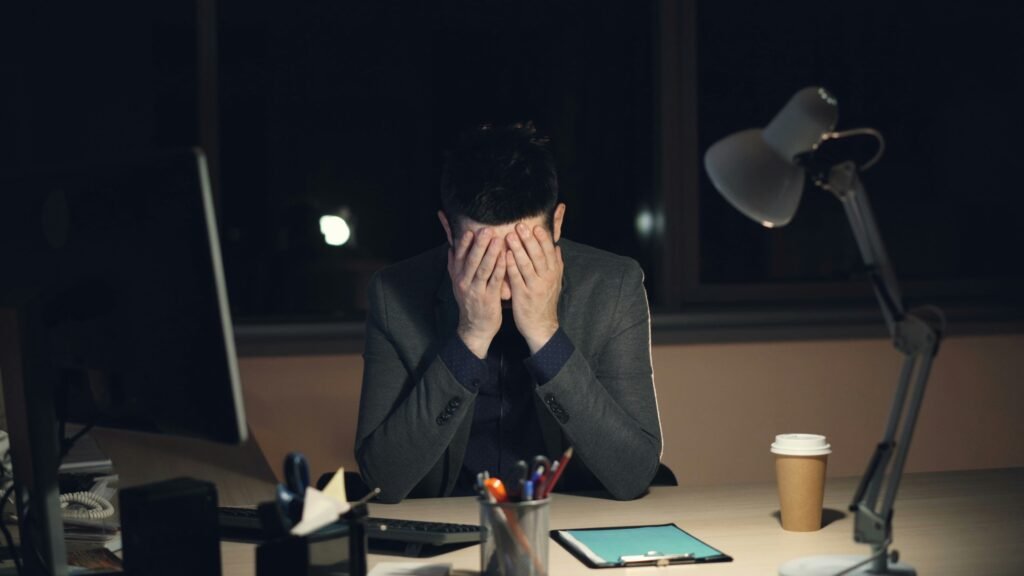
Burnout doesn’t announce itself. It creeps up gradually, a growing exhaustion, a creeping cynicism, a sense of running on empty that no weekend seems to fix. For men especially, it’s easy to push through and mislabel as “just being busy” or “just tired,” until it becomes a real problem affecting work, relationships, and health. Recognising burnout for what it is, and understanding it’s recoverable, makes a real difference.
This guide covers the signs of burnout, how it develops, and how to recover from it.
Below, we cover how burnout in men tends to show up and the steps that help recovery.
Burnout Symptoms: What Burnout Is
Burnout is a state of chronic physical and emotional exhaustion, typically resulting from prolonged, unrelenting stress, most often work-related, though it can stem from any sustained demand (caregiving, financial pressure, or juggling too much for too long). It’s now recognised as an occupational phenomenon, characterised by three core dimensions:
- Exhaustion: feeling depleted, drained, running on empty
- Cynicism or detachment: growing negativity, disengagement, or distance from your work and the people around you
- Reduced effectiveness: feeling less capable, less productive, and less accomplished
Burnout is more than ordinary tiredness. Being tired is fixed by rest; burnout is a deeper depletion that a good night’s sleep or a weekend off doesn’t resolve. That’s the key distinction, when the usual rest stops recharging you, it may be burnout rather than simple fatigue.
Burnout Symptoms: Why Men Often Miss Them
Men are particularly prone to pushing through burnout unrecognised. The tendency to equate worth with productivity, to see rest as weakness, and to not examine one’s emotional state means burnout often gets ignored until it’s severe. Men may also, as with other stress and mental health issues, experience it as irritability, withdrawal, or physical symptoms rather than acknowledged exhaustion (see chronic stress symptoms). The “just work harder” instinct, the very thing that often causes burnout, also prevents men from addressing it.

Burnout Symptoms: The Signs to Watch For
Burnout shows up across several areas:
Physical:
- Chronic fatigue and depletion that rest doesn’t fix
- Sleep problems (paradoxically, exhaustion with poor sleep)
- Frequent headaches, muscle tension, or getting sick often
- Changes in appetite
Emotional and mental:
- Cynicism, negativity, or a sense of dread about work
- Detachment or emotional numbness
- Irritability and a short fuse (see anxiety symptoms in men)
- Loss of motivation and a sense of pointlessness
- Difficulty concentrating (see brain fog causes)
- Feeling ineffective or like nothing you do matters
Behavioural:
- Withdrawing from responsibilities and people
- Declining performance despite working the same or harder
- Using alcohol or other substances to cope (see alcohol and belly fat)
- Neglecting self-care
If several of these have built up over weeks or months, and rest isn’t fixing them, burnout is a real possibility.
The Stages of Burnout and Its Symptoms
Burnout typically develops gradually through a progression:
1. The honeymoon / high drive: often starting with enthusiasm and taking on a lot
2. Onset of stress: some days harder than others, early physical and emotional signs
3. Chronic stress: a marked increase in stress, persistent symptoms, decreased motivation
4. Burnout: symptoms become critical; exhaustion, cynicism, and reduced function are entrenched
5. Habitual burnout: burnout symptoms become so embedded they feel like a permanent part of life
The value of knowing the stages is catching it early. Burnout is far easier to recover from in the earlier stages, before it becomes entrenched, which is why recognising the early signs matters.
How to Recover From Burnout
Recovery is possible, but it requires more than a weekend off, it requires addressing the underlying causes and replenishing:
1. Acknowledge it and address the source
Recovery starts with recognising burnout and accepting that pushing harder won’t fix it. Then look at the source, the unrelenting demand driving it. Sustainable recovery usually requires reducing the load, not just recovering enough to endure more of it. This might mean boundaries, delegating, saying no, or bigger changes.
2. Prioritise proper rest and recovery
Real rest, not just collapsing in front of screens. Sufficient sleep is foundational (see how to increase deep sleep), along with proper downtime that replenishes rather than numbs.
3. Reconnect with what matters
Burnout drains meaning. Reconnecting with relationships (see men and loneliness), interests outside work, and a sense of purpose helps refill the tank.
4. Move your body and manage stress
Exercise is a powerful buffer against burnout and stress, and broader stress-management practices help (see how to manage stress). Just avoid turning exercise into another source of pressure.
5. Set boundaries going forward
Recovery without changing what caused it leads straight back to burnout. Building sustainable boundaries, around work hours, availability, and commitments, is what makes recovery last.
6. Seek support
Talk to someone, a partner, friend, or professional. If burnout has tipped into depression or feels overwhelming, professional help is warranted (see depression in men). You don’t have to push through it alone.
FAQ: Burnout Symptoms
What are the signs of burnout?
Chronic exhaustion that rest doesn’t fix, cynicism or detachment, reduced effectiveness, plus physical symptoms (headaches, poor sleep, getting sick), irritability, loss of motivation, and withdrawal. It’s more than ordinary tiredness.
How is burnout different from stress?
Stress is often about too much pressure; burnout is the depletion that results from prolonged, unrelenting stress, a state of being empty and disengaged. Crucially, ordinary rest fixes tiredness but doesn’t resolve burnout.
How do you recover from burnout?
By acknowledging it, addressing the underlying source (usually reducing the load, not just enduring it), prioritising proper rest and sleep, reconnecting with meaning and relationships, exercising, setting boundaries, and seeking support. It takes more than a weekend off.
Can burnout cause physical symptoms?
Yes, chronic fatigue, sleep problems, headaches, muscle tension, getting sick more often, and appetite changes are common. Burnout affects the body as well as the mind.
When should I get help for burnout?
If burnout is severe, persistent, affecting your health or relationships, or has tipped into depression or feeling overwhelmed, seek professional support. Earlier is better, as burnout is easier to recover from before it becomes entrenched.
The Bottom Line on Burnout Symptoms
The bottom line on burnout symptoms: Burnout is a state of chronic exhaustion, cynicism, and reduced effectiveness that builds gradually from unrelenting stress, and crucially, it’s more than tiredness, because ordinary rest doesn’t fix it. Men are especially prone to pushing through it unrecognised, until it seriously affects work, relationships, and health. The good news is it’s recoverable, especially when caught early: acknowledge it, address the source rather than just enduring more, prioritise proper rest and sleep, reconnect with meaning, and set sustainable boundaries. Pushing harder is what causes burnout, recovering requires the opposite, and there’s real strength in recognising that.
This article is for informational purposes only and does not constitute medical advice. This is a sensitive topic. If you’re struggling with burnout, your mental health, or feeling overwhelmed, please reach out to a qualified professional or someone you trust. Support is available.
Sources
- World Health Organization, Burn-out an “occupational phenomenon”.
- PMC, Understanding the burnout experience: recent research and its implications for psychiatry, on the three dimensions and stages of burnout.
- ScienceDirect, Interventions to alleviate burnout symptoms and support return to work: a systematic review and meta-analysis, on burnout recovery and prevention.