
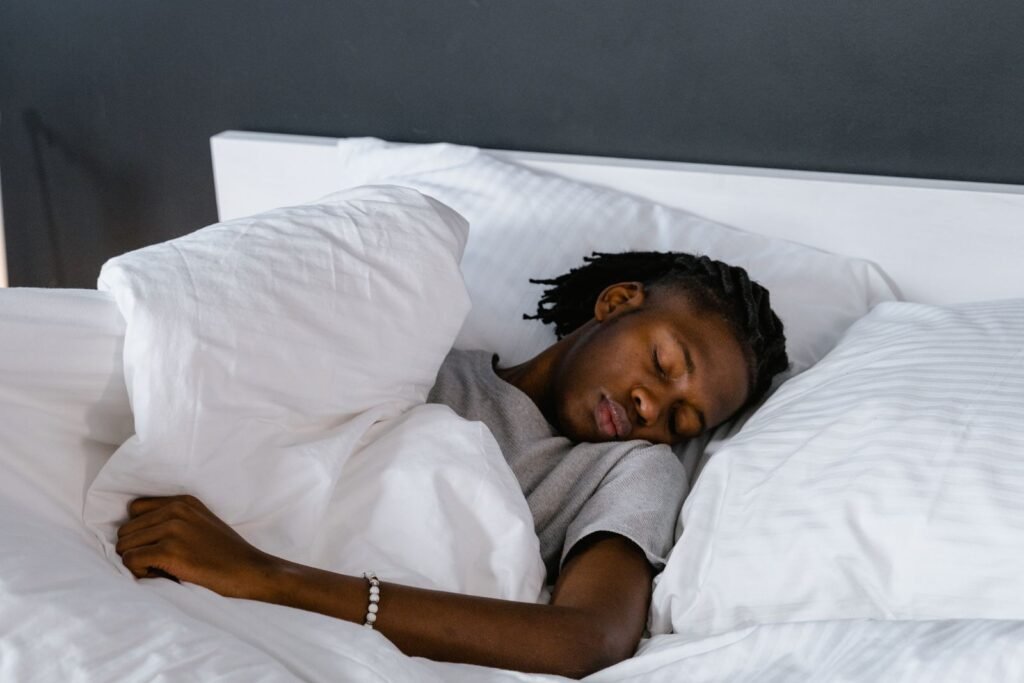
You probably don’t think much about how you sleep, you just fall into whatever position feels natural. But your sleep position affects things like snoring, back and neck pain, and even breathing, and some positions are better for certain issues than others. While the “best” position depends partly on your individual situation, understanding the tradeoffs helps you make a smart choice, especially if you’re dealing with pain or snoring. This guide breaks down back, side, and stomach sleeping for men. If a partner’s snoring is what keeps you awake, see sleep divorce.
Does Sleep Position Actually Matter?
First, a caveat: for a healthy person without specific issues, sleep position is a relatively minor factor, comfort and good sleep quality matter more (see how to increase deep sleep). Don’t lose sleep (literally) obsessing over it.
But position becomes relevant if you have specific problems: back or neck pain, snoring or sleep apnea, acid reflux, or similar. In those cases, the right position can help and the wrong one can worsen things. So the “best” position isn’t universal, it depends on what, if anything, you’re trying to address.
Side Sleeping
Side sleeping is the most common position, and generally considered one of the best for most people.
Pros:
- Reduces snoring and helps with sleep apnea. Sleeping on your side (rather than your back) helps keep your airway open, reducing snoring and often lessening the severity of sleep apnea. This is a real benefit (see sleep apnea symptoms in men). It has far better support than taping your mouth at night (see mouth taping for sleep).
- Good for acid reflux, especially the left side, which can reduce reflux.
- Generally spine-friendly, with proper support, side sleeping can maintain reasonable spinal alignment.
Cons:
- Can cause shoulder or hip pressure/pain on the side you sleep on.
- May contribute to some neck issues if your pillow doesn’t support proper alignment.
Tips: Use a pillow that keeps your head aligned with your spine (not too high or low), and a pillow between your knees can help keep your hips and lower back aligned. For side sleeping, proper pillow support matters.
Back Sleeping
Back sleeping (supine) has real benefits and one significant drawback.
Pros:
- Good for spinal alignment: sleeping on your back can keep your spine, neck, and head in neutral alignment, which is often good for back and neck health (with proper support).
- Even weight distribution: no pressure points from lying on a shoulder or hip.
- Can reduce some types of pain when properly supported.
Cons:
- Worsens snoring and sleep apnea. This is the big one. Sleeping on your back allows your tongue and soft tissues to fall backward and obstruct your airway, worsening snoring and sleep apnea. If you snore or have apnea, back sleeping is generally the worst position (see sleep apnea symptoms in men).
- May worsen acid reflux for some.
Tips: If you sleep on your back, a supportive pillow that maintains neutral neck alignment helps, and a small pillow under your knees can support your lower back. But if you snore or have apnea, consider switching to your side.
Stomach Sleeping
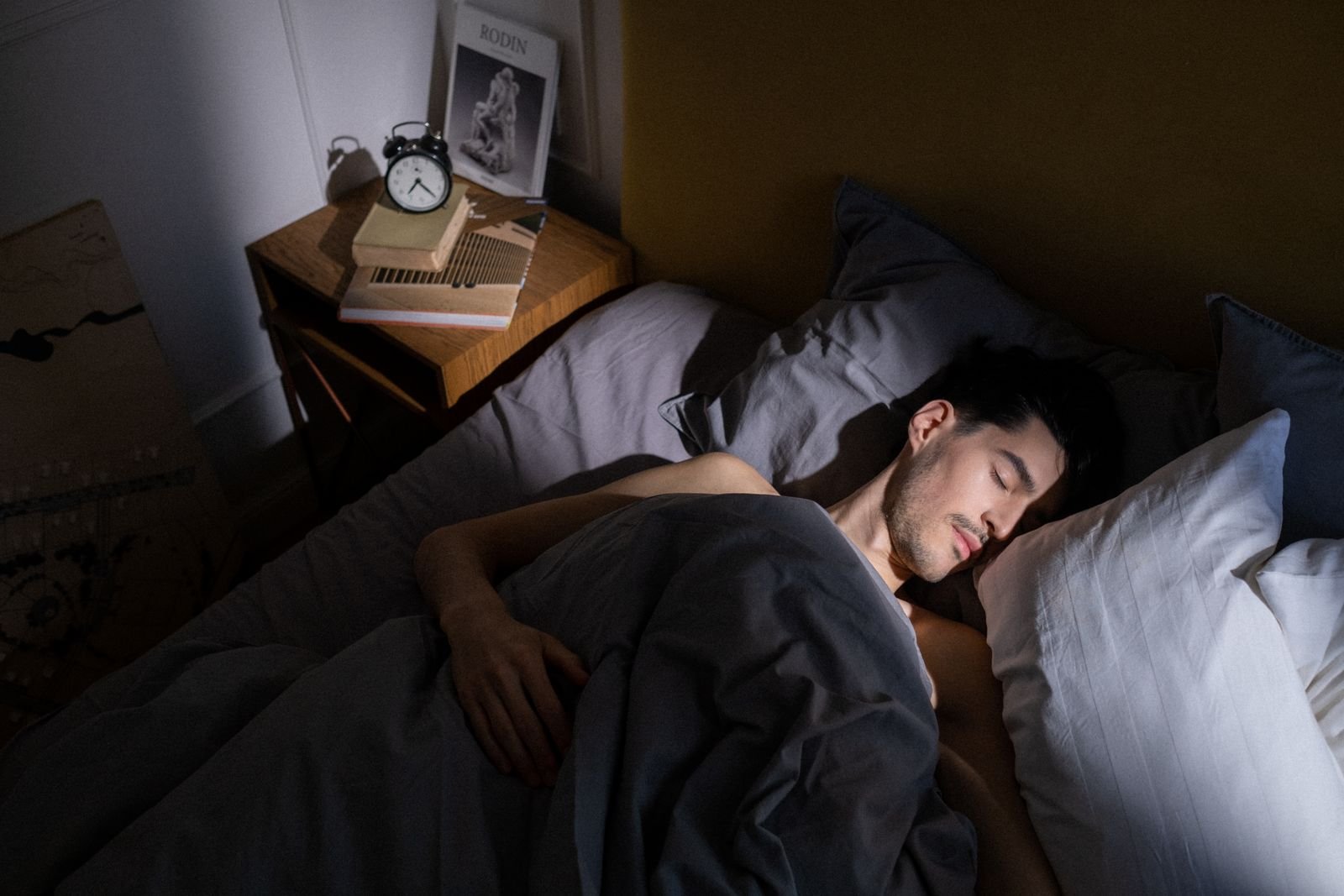
Stomach sleeping (prone) is generally considered the least ideal position for most people.
Pros:
- Can reduce snoring, since it keeps the airway more open than back sleeping.
- Some people simply find it comfortable.
Cons:
- Hard on the neck. To breathe, you have to turn your head to one side, which twists and strains your neck for hours, a common cause of neck pain and stiffness.
- Can strain the lower back: it tends to flatten the natural curve of your spine and can cause lower back discomfort.
- Generally the worst for spinal alignment.
Tips: If you sleep on your stomach and want to continue, use a very thin pillow (or none) to reduce neck strain, and a pillow under your pelvis can help your lower back. But if you have neck or back pain, this is the position most worth changing.
The Best Position for Common Issues
Matching position to your situation:
- If you snore or have sleep apnea: side sleeping is best; avoid back sleeping (see sleep apnea symptoms in men).
- If you have back or neck pain: back or side sleeping with proper support is generally best; avoid stomach sleeping (and see how to avoid injury in the gym and mobility for men over 40 for addressing the underlying issues too).
- If you have acid reflux: side sleeping (often left side), and avoiding lying flat right after eating.
- If you have no specific issues: the best position is simply whatever is comfortable and gives you good sleep, though side or back sleeping are solid defaults.
Can You Change Your Sleep Position?
If you want to switch (say, from back to side to reduce snoring), it takes some effort since you naturally move in your sleep. Techniques include starting the night in the desired position, using pillows to prop yourself or prevent rolling, and some people use positional aids (like a pillow or device that discourages back sleeping). It takes consistency, but you can gradually shift your default position with practice.
Frequently Asked Questions
What’s the best sleep position?
It depends on your situation. Side sleeping is generally best for most people, especially for reducing snoring and sleep apnea. Back sleeping is good for spinal alignment but worsens snoring. Stomach sleeping is generally least ideal. Without specific issues, choose what’s comfortable.
Which sleep position is best for snoring and sleep apnea?
Side sleeping, it helps keep your airway open, reducing snoring and often lessening sleep apnea severity. Back sleeping is the worst for snoring and apnea, since the tongue and soft tissues fall back and obstruct the airway.
Is stomach sleeping bad?
It’s generally considered the least ideal position. It strains your neck (you must turn your head to breathe) and can strain your lower back and spinal alignment. If you have neck or back pain, it’s the position most worth changing.
What’s the best sleep position for back pain?
Back or side sleeping with proper support is generally best, keeping your spine in neutral alignment. A pillow under the knees (back sleeping) or between the knees (side sleeping) helps. Avoid stomach sleeping, which strains the lower back.
Can I change my sleep position?
Yes, with effort and consistency, since you naturally move in your sleep. Start the night in the desired position, use pillows to prop yourself or prevent rolling, and consider positional aids. It takes practice, but you can gradually shift your default.
The Bottom Line
Your sleep position matters more than you might think, though for a healthy person without specific issues, comfort and sleep quality matter more than optimising position. Where it counts is if you have particular problems: side sleeping is best for most people and especially good for reducing snoring and sleep apnea, back sleeping offers good spinal alignment but worsens snoring and apnea, and stomach sleeping is generally least ideal, straining the neck and lower back. Match your position to your situation, side sleeping if you snore or have apnea, back or side with support for back pain, and avoid stomach sleeping if you have neck or back issues. If you have no specific problems, simply sleep in whatever comfortable position gives you good rest, with side or back sleeping as solid defaults.
This article is for informational purposes only and does not constitute medical advice. Consult a qualified healthcare professional for persistent pain, snoring, or sleep problems.
Sources
- Joosten SA et al. Supine position related obstructive sleep apnea in adults: pathogenesis and treatment. Sleep Med Rev, 2014
- Skarpsno ES et al. Sleep positions and nocturnal body movements based on free-living accelerometer recordings: association with demographics, lifestyle, and insomnia symptoms. Nat Sci Sleep, 2017
- Randerath WJ et al. Non-CPAP therapies in obstructive sleep apnoea. Eur Respir J, 2011