
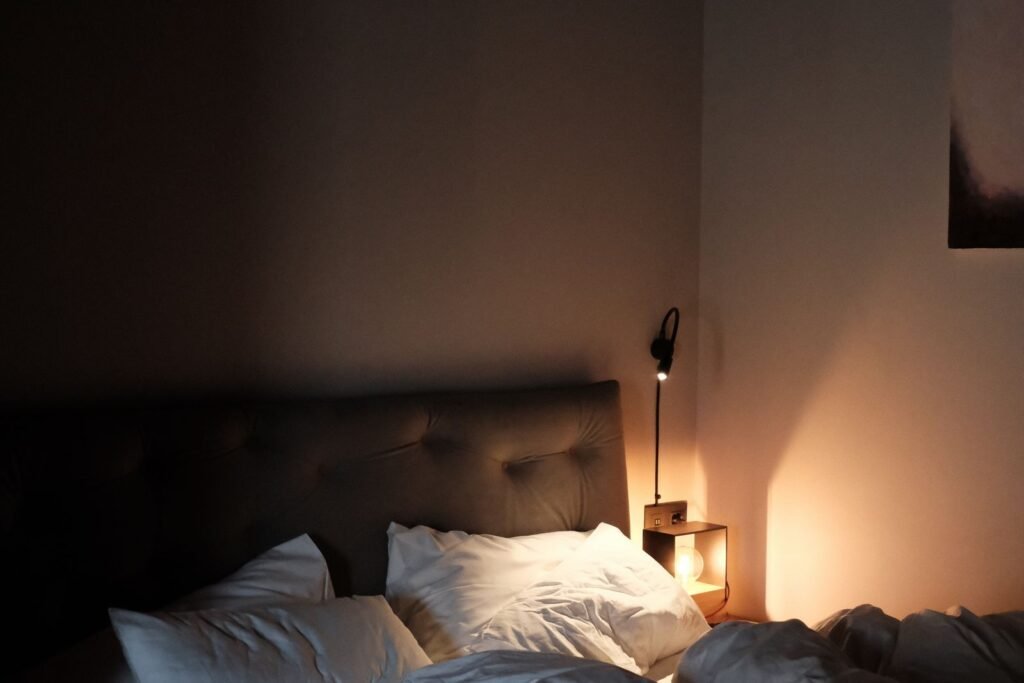
“Sleep divorce”, the practice of couples choosing to sleep in separate beds or rooms, has shed its taboo and gained mainstream attention as more people discover it improves their sleep. Despite the dramatic name, it has nothing to do with relationship trouble; it’s a practical choice about sleep quality. For men whose sleep is disrupted by a partner (or whose partner is disrupted by them), it helps to understand it without the stigma. This guide covers what a sleep divorce is, the real pros and cons, and how to approach it.
What a “Sleep Divorce” Is
Let’s clear up the misleading name first. A “sleep divorce” simply means choosing to sleep separately, either in separate beds in the same room, or in separate rooms, to get better sleep. It has nothing to do with the relationship failing or a lack of intimacy. It’s a practical arrangement about optimising sleep, not a statement about the couple’s closeness.
The dramatic term generates attention (and some unnecessary anxiety), but the reality is mundane and sensible: two people who sleep better apart choosing to do so, while remaining a perfectly happy, connected couple. Many couples who try it wish they’d done so sooner.
Why Couples Consider It
Sleeping with a partner, while emotionally nice, can harm sleep quality for a range of reasons:
- Snoring: a partner’s snoring is a major, common sleep disruptor (see sleep apnea symptoms in men, since loud snoring can signal apnea worth checking)
- Different schedules: one person coming to bed or waking at a different time disturbs the other
- Movement and restlessness: tossing, turning, and getting up disrupt a partner’s sleep
- Temperature preferences: people often disagree on the ideal room and bed temperature, and temperature matters a lot for sleep (see best temperature for sleep)
- Different sleep needs or chronotypes: a night owl and an early bird, or a light sleeper and a heavy one, can clash
- Blanket stealing, phone use, TV: the everyday frictions of sharing a bed
The result is that many people sleep worse with a partner than alone, accumulating sleep debt night after night, often without fully realising the partner is the cause. Given how foundational sleep is to health (see how to increase deep sleep), that’s a real problem worth solving.
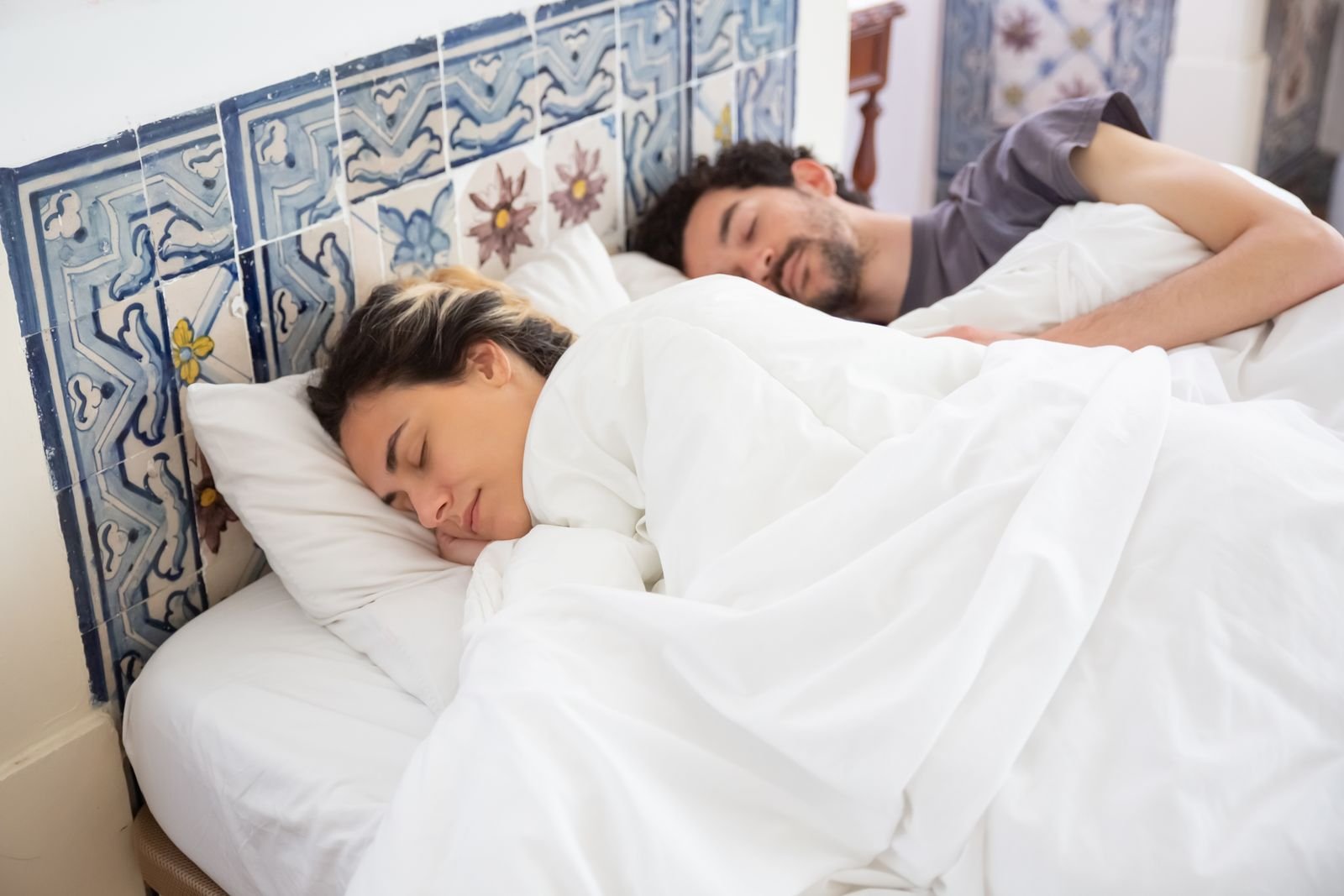
The Real Benefits
For couples where sharing a bed harms sleep, sleeping separately can deliver real benefits:
Better sleep quality. The obvious one, without a partner’s snoring, movement, or schedule disrupting you, many people sleep more deeply and wake more refreshed. Given sleep’s impact on everything, energy, mood, testosterone, recovery (see sleep and testosterone). This is significant.
Improved mood and less resentment. Poor sleep causes irritability, and lying awake resenting a snoring partner breeds tension. Better sleep often means a better mood and, ironically, a better relationship.
Each person gets their ideal setup. Separate sleeping lets each person have their preferred temperature, mattress firmness, lighting, and schedule.
Potentially a better relationship. This is the counterintuitive part: many couples find that sleeping separately improves their relationship, because both partners are better rested, less irritable, and not harbouring sleep-related resentment. Well-rested people are simply better partners.
The Downsides and Considerations
It’s not right for everyone, and there are real considerations:
- Loss of physical closeness and intimacy at bedtime: the shared wind-down, cuddling, and spontaneous intimacy of a shared bed. This matters to many couples and is the main tradeoff.
- It can feel unromantic or trigger worry, especially given the stigma, though this is largely about perception.
- Practical factors: it requires space (a spare room or room for two beds), which not everyone has.
- It may not be necessary, if sleep disruption is mild or fixable another way (below), a full separation might be overkill.
The intimacy consideration is real, but it’s addressable, couples who sleep separately can still prioritise physical closeness intentionally, and many find their intimacy is better when both are well-rested rather than exhausted and irritable.
How to Approach It
If sleep disruption from sharing a bed is a problem, here’s a sensible approach:
- Communicate openly and without stigma. Frame it as a practical sleep solution, not a relationship statement. Make sure both partners understand it’s about sleep quality, not closeness.
- Try fixing the specific issue first. Sometimes the disruption has a targeted fix: treating a partner’s snoring (which may signal sleep apnea worth evaluating, see sleep apnea symptoms in men), separate blankets, a bigger or better mattress, addressing temperature (see best temperature for sleep), earplugs, or aligning schedules. A full separation isn’t always needed.
- Consider partial arrangements. Some couples sleep together on some nights and apart on others, or start the night together and separate later. It doesn’t have to be all-or-nothing.
- Protect intimacy intentionally. If you do sleep separately, make a point of maintaining physical closeness and connection in other ways and times.
- Judge by results. If sleeping separately leaves both of you better rested, happier, and getting along better, it’s working, regardless of the stigma.
Frequently Asked Questions
What is a sleep divorce?
Choosing to sleep separately from your partner, either in separate beds or rooms, to get better sleep. Despite the name, it has nothing to do with relationship problems: it’s a practical choice about sleep quality, not a statement about the couple’s closeness.
Is sleeping separately bad for a relationship?
Not necessarily, and it can help. Many couples find sleeping separately improves their relationship because both partners are better rested, less irritable, and free of sleep-related resentment. Well-rested people tend to be better partners.
Why do couples sleep in separate beds?
Common reasons include a partner’s snoring, different schedules, movement and restlessness, conflicting temperature preferences, and different sleep needs, all of which can harm sleep quality. Many people sleep worse with a partner than alone.
What are the downsides of a sleep divorce?
The main tradeoff is losing the physical closeness and intimacy of a shared bed at night. It can also feel unromantic due to stigma, and requires the space for separate sleeping. But intimacy can be maintained intentionally in other ways.
Should we try fixing sleep issues before sleeping separately?
Often yes. Sometimes the disruption has a targeted fix, treating snoring (which may signal sleep apnea), separate blankets, a better mattress, addressing temperature, or aligning schedules. Partial arrangements are also an option. A full separation isn’t always necessary.
The Bottom Line
A “sleep divorce”, choosing to sleep separately from your partner, has shed its taboo for good reason: for couples where sharing a bed harms sleep (through snoring, different schedules, movement, or temperature clashes), sleeping apart can improve both partners’ sleep quality and, counterintuitively, their relationship, since well-rested people are less irritable and better partners. Despite the dramatic name, it’s a practical sleep choice, not a relationship failure. The main tradeoff is the physical closeness of a shared bed, which is real but can be maintained intentionally. Before a full separation, it’s worth trying targeted fixes for the specific disruption, and partial arrangements are an option. Ultimately, judge by results: if sleeping separately leaves you both better rested and happier, it’s working, and there’s no shame in prioritising the sleep your health depends on.
This article is for informational purposes only and does not constitute medical advice. If a partner’s loud snoring is the issue, consider that it can signal sleep apnea worth evaluating by a qualified healthcare professional.
Sources
- Drews HJ et al. Bed-Sharing in Couples Is Associated With Increased and Stabilized REM Sleep and Sleep-Stage Synchronization. Front Psychiatry, 2020
- Troxel WM et al. Marital quality and the marital bed: examining the covariation between relationship quality and sleep. Sleep Med Rev, 2007
- Troxel WM. It’s more than sex: exploring the dyadic nature of sleep and implications for health. Psychosom Med, 2010