
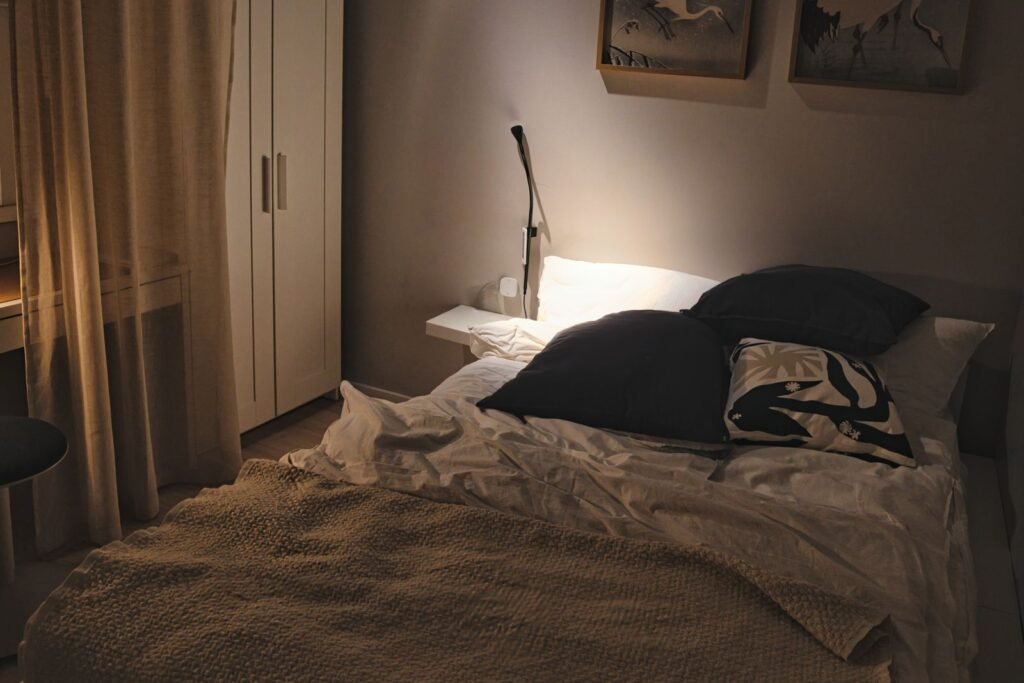
Of all the sleep variables people obsess over, room temperature is one of the most impactful and most underrated. Get it wrong, too warm especially, and you’ll toss, turn, and sleep poorly no matter what else you do. Get it right, and you remove one of the most common hidden barriers to deep, quality sleep. The catch is that the ideal sleep temperature is cooler than most people keep their bedrooms. This guide covers the best temperature for sleep, why your body needs it, and how to achieve it.
The Ideal Sleep Temperature
The research is fairly consistent: the best bedroom temperature for sleep for most people is around 60 to 67°F (roughly 16 to 19°C), cooler than many people keep their homes. Somewhere in the mid-60s Fahrenheit (around 18°C) is often cited as ideal.
That can feel surprisingly cool, but there’s a good physiological reason your body sleeps better in a cooler room, and understanding it explains why an overly warm bedroom is such a common sleep-wrecker.
Why Your Body Needs to Be Cool
Here’s the key mechanism. As part of initiating sleep, your core body temperature naturally drops. This drop is a signal to your body that it’s time to sleep: it’s part of how your circadian rhythm triggers sleepiness. Your body sheds heat (partly through your skin and extremities) to lower its core temperature as you fall asleep and move through the night.
A cool room facilitates this process, helping your body offload heat and reach the lower core temperature that supports sleep. A warm room fights it, if your environment is too hot, your body struggles to shed the necessary heat, making it harder to fall asleep, and harder to stay in deep sleep. This is why you toss and turn on hot nights and why a stuffy, warm bedroom leads to restless, fragmented sleep (see how to increase deep sleep).
So temperature isn’t a minor comfort preference. It’s directly tied to the physiological process of sleep. Getting it right removes a real barrier; getting it wrong actively works against your sleep.
Signs Your Room Is Too Warm
You might have a temperature problem if you experience:
- Difficulty falling asleep, feeling too warm
- Waking during the night feeling hot or sweaty (see waking up at 3am)
- Kicking off the covers
- Restless, fragmented sleep on warmer nights
- Waking unrefreshed after a night in a stuffy room
Many people don’t connect their poor sleep to their room being too warm, but it’s one of the most common and fixable causes.
How to Get the Temperature Right
Practical ways to achieve a sleep-friendly temperature:
- Set your thermostat cooler at night: aim for the low-to-mid 60s°F (around 16 to 19°C). If that’s a big change, lower it gradually and see what feels right for you.
- Use breathable bedding: natural, breathable materials (cotton, linen) help regulate temperature better than heat-trapping synthetics.
- Dress lightly for bed, or sleep with fewer layers, so you’re not trapping heat.
- Improve airflow: a fan or cracked window improves circulation and helps shed heat. A fan also provides cooling and gentle background noise.
- Take a warm shower or bath before bed: this sounds counterintuitive, but the subsequent drop in body temperature as you cool down afterward can promote sleepiness, mimicking the natural core temperature drop.
- Cool down before bed: avoid things that raise body temperature right before sleep, like intense exercise (see recovery after 40) or a hot room.
- Manage warm partners or pets: sharing a bed adds heat; breathable bedding and good airflow help. Some couples go further and sleep apart (see sleep divorce).
- Address night sweats, if you consistently overheat despite a cool room, note that persistent night sweats can occasionally have other causes worth discussing with a doctor.
The individual sweet spot varies a little, some people prefer slightly warmer or cooler, so use the mid-60s°F as a starting point and adjust to what gives you the best sleep. The key principle: err on the cooler side, since too warm is the more common problem.
Frequently Asked Questions
What’s the best temperature for sleep?
Around 60 to 67°F (roughly 16 to 19°C) for most people, with the mid-60s°F (around 18°C) often cited as ideal. This is cooler than many keep their bedrooms, but it supports the natural drop in core body temperature that sleep requires.
Why do I sleep better in a cooler room?
Because your core body temperature naturally drops to initiate and maintain sleep, and a cool room helps your body shed heat to reach that lower temperature. A warm room fights this process, making it harder to fall and stay asleep.
Is my bedroom too warm for sleep?
Signs include difficulty falling asleep feeling warm, waking hot or sweaty, kicking off covers, restless sleep on warm nights, and waking unrefreshed after a stuffy room. Too warm is one of the most common and fixable causes of poor sleep.
Does a warm shower before bed help sleep?
Yes, counterintuitively. The drop in body temperature as you cool down after a warm shower or bath can promote sleepiness, mimicking the natural core temperature drop that triggers sleep. It’s a useful pre-bed habit.
How do I keep my bedroom cool for sleep?
Set the thermostat to the low-to-mid 60s°F, use breathable bedding, dress lightly, improve airflow with a fan or open window, take a warm shower before bed, and avoid raising your body temperature right before sleep. Err on the cooler side.
The Bottom Line
Room temperature is one of the most impactful and underrated factors in sleep quality, and the ideal is cooler than most people realise: around 60 to 67°F (16 to 19°C), with the mid-60s°F often best. The reason is physiological, your core body temperature naturally drops to initiate and maintain sleep, and a cool room helps your body shed the heat to reach that state, while a warm room actively fights it, causing restless, fragmented sleep. If you struggle with falling asleep, wake up hot, or sleep worse on warm nights, your room may simply be too warm. Set your thermostat cooler, use breathable bedding, improve airflow, and try a warm shower before bed. Err on the cooler side, since too warm is the far more common problem, and you’ll remove one of the most common hidden barriers to deep, quality sleep.
This article is for informational purposes only and does not constitute medical advice. Consult a qualified healthcare professional for persistent sleep problems or unexplained night sweats.
Sources
- Okamoto-Mizuno K et al. Effects of thermal environment on sleep and circadian rhythm. J Physiol Anthropol, 2012
- Harding EC et al. The Temperature Dependence of Sleep. Front Neurosci, 2019
- Kräuchi K et al. Functional link between distal vasodilation and sleep-onset latency? Am J Physiol Regul Integr Comp Physiol, 2000