

Saw palmetto is the best-selling prostate supplement in the world, taken by millions of men for the urinary symptoms of an enlarged prostate. It’s been used for this purpose for decades, has a plausible-sounding mechanism, and comes with confident marketing. So it may surprise you to learn that the best modern evidence largely fails to support it. This guide gives you the up-to-date picture on whether saw palmetto works.
Here is what the best trials show about saw palmetto for prostate symptoms.
Saw Palmetto for Prostate: What It Is
Saw palmetto (Serenoa repens) is an extract from the berries of a small palm native to the southeastern United States. Its berries contain fatty acids, plant sterols, and other compounds. It’s marketed primarily for the urinary symptoms of benign prostatic hyperplasia (BPH), the enlarged prostate that affects most men with age (see early signs of an enlarged prostate).

The Proposed Mechanism (Why It Should Work in Theory)
The theory is reasonable. Saw palmetto is thought to weakly inhibit 5-alpha-reductase, the enzyme that converts testosterone into DHT, the androgen that drives prostate growth (see what is DHT). This is the same mechanism targeted by prescription BPH drugs like finasteride. If saw palmetto meaningfully blocked this enzyme in prostate tissue, it would theoretically shrink the prostate and ease urinary symptoms.
So on paper, it’s targeting the right pathway. The problem is whether it does so effectively in real men at typical doses.
Saw Palmetto for Prostate: What the Evidence Shows
Here’s where the full picture diverges sharply from the marketing. The best modern evidence indicates saw palmetto provides little or no benefit over placebo for BPH symptoms.
- A 2023 Cochrane review, the gold standard of evidence synthesis, analysed 27 randomised controlled trials (over 4,600 men) and concluded that saw palmetto, taken alone, provides little or no benefit for BPH symptoms compared to placebo.
- The National Center for Complementary and Integrative Health (NCCIH) concurs that saw palmetto is “probably not helpful” for the urinary symptoms of an enlarged prostate.
- Several large, well-designed NIH-funded trials found it no more effective than placebo.
There’s some nuance: a number of smaller and older studies, particularly from Europe, reported modest improvements, which is part of why the belief persists. But the pattern is clear, the larger and more rigorous the trial, the more the benefit tends to disappear. The weight of the best evidence simply doesn’t support saw palmetto as an effective standalone treatment for BPH.
Is It Safe?
Yes, this is the one clear positive. Saw palmetto is generally well-tolerated and safe, with only mild side effects reported (occasional digestive upset or headache). It’s also not associated with increased prostate cancer risk. So it’s not harmful; it just doesn’t appear to work well for its main marketed purpose. As one summary put it: it’s safe, it’s not a scam exactly, but the clinical evidence consistently fails to show meaningful benefit beyond placebo.
What This Means for You
If you’re considering saw palmetto for prostate symptoms, here’s the practical takeaway:
- Don’t rely on it as a treatment for real BPH symptoms: the evidence says it probably won’t help meaningfully.
- See a doctor for actual urinary symptoms rather than self-treating with a supplement. Effective options exist, including prescription medications that work, and evaluation rules out other causes (see prostate cancer vs BPH).
- If you still want to try it: it’s safe, so there’s little harm beyond the cost and the risk of delaying effective treatment. Just have realistic expectations and don’t let it substitute for proper care.
- Be skeptical of “prostate health” supplement blends generally, many are built around saw palmetto or similarly weak-evidence ingredients, marketed with confidence the science doesn’t support.
The broader lesson mirrors what we see across supplements: plausible mechanism plus confident marketing doesn’t equal proven benefit. For prostate symptoms, the move is medical evaluation and evidence-based treatment, supported by a healthy diet (see foods for prostate health).
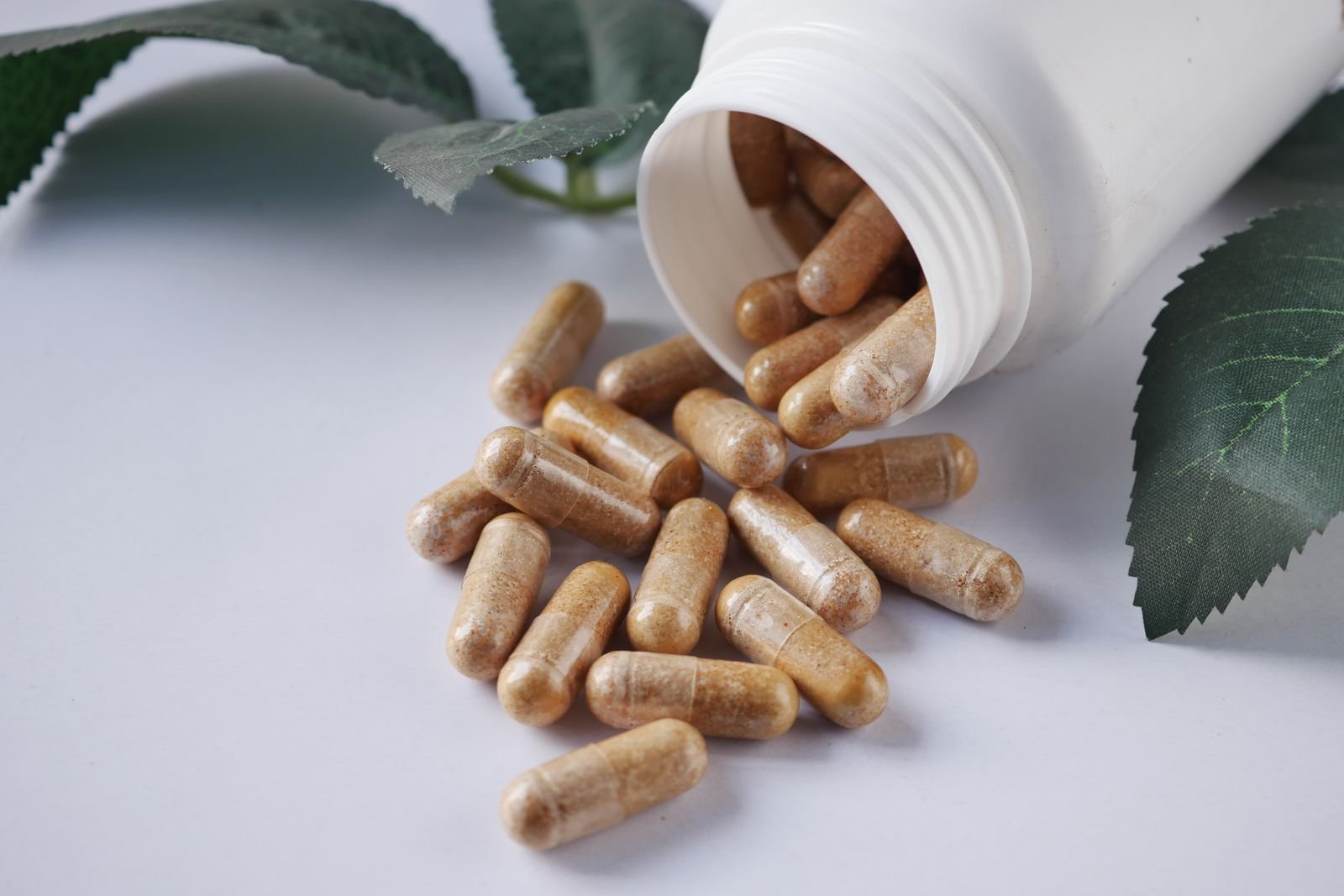
What the Controlled Trials Found
Saw palmetto is among the most widely taken supplements by men over fifty, and it is also one of the few that has been put through properly designed trials. The results are consistent enough to be worth stating plainly.
The main trial
A randomised, placebo-controlled trial published in the New England Journal of Medicine enrolled men aged over 49 with moderate to severe symptoms of benign prostatic hyperplasia. Participants took either 160 mg of saw palmetto extract twice daily or a placebo, for a full year.
Saw palmetto showed no benefit over placebo. Not a small benefit, not a benefit in some measures. No difference.
A later trial, CAMUS, escalated the dose to see whether more would do what the standard dose had not. A 2023 review pulling together 27 studies reached the same conclusion: taken on its own, saw palmetto provides little or no benefit for BPH symptoms.
Why so many men are sure it works
This is the interesting part, and it is not that those men are imagining things. Benign prostatic hyperplasia symptoms do fluctuate week to week on their own. Trials of urinary symptoms also show unusually large placebo responses, which means men on a dummy capsule reliably report real improvement.
Put those together and personal experience becomes an unreliable guide for this specific condition. You will have good months and bad months whatever you take, and whatever you happened to start taking before a good month gets the credit.
The more useful move
If urinary symptoms are bothering you enough to be buying supplements for them, that is a reason to see a doctor rather than a reason to try a different brand. There are treatments for BPH with solid evidence behind them. There is also the fact that urinary symptoms occasionally point to something other than an enlarged prostate, and that possibility should be ruled out rather than medicating over.
FAQ: Saw Palmetto for Prostate
Does saw palmetto work for an enlarged prostate?
The best modern evidence says largely no. A 2023 Cochrane review of 27 trials found saw palmetto provides little or no benefit over placebo for BPH symptoms, and the NCCIH considers it “probably not helpful.”
Why do people think saw palmetto works?
It has a plausible mechanism (weak 5-alpha-reductase inhibition), decades of traditional use, and some smaller/older studies reported modest benefits. But larger, rigorous trials consistently fail to show benefit over placebo.
Is saw palmetto safe?
Yes, it’s generally well-tolerated and safe, with only mild side effects. It’s not associated with increased cancer risk. The issue isn’t safety. It’s that it doesn’t appear to work well for its main purpose.
Should I take saw palmetto for prostate symptoms?
It probably won’t help meaningfully, and relying on it risks delaying effective treatment. See a doctor for real symptoms, proven medications and proper evaluation are the better path. If you try it anyway, it’s safe but keep expectations low.
What actually works for BPH symptoms?
Prescription medications (alpha-blockers, 5-alpha-reductase inhibitors) have real evidence, and a doctor can assess which is appropriate. Lifestyle measures and evaluation to rule out other causes also matter far more than saw palmetto.
The Bottom Line on Saw Palmetto for Prostate
The bottom line on saw palmetto for prostate: Saw palmetto is the world’s most popular prostate supplement, but the best modern evidence, including a 2023 Cochrane review of 27 trials and NCCIH’s assessment, indicates it provides little or no benefit over placebo for the urinary symptoms of an enlarged prostate. Its mechanism is plausible in theory, but it doesn’t translate to real results at typical doses. It’s safe, so it won’t harm you, but relying on it risks delaying treatment that works. If you have prostate or urinary symptoms, see a doctor for proper evaluation and evidence-based treatment rather than a supplement the science doesn’t support.
This article is for informational purposes only and does not constitute medical advice. Consult a qualified healthcare professional about prostate symptoms rather than relying on supplements.
Sources
- Serenoa repens for the treatment of lower urinary tract symptoms due to benign prostatic enlargement, Cochrane Review (2023)
- Saw Palmetto: Usefulness and Safety, NCCIH
- Is Saw Palmetto Effective? Cleveland Clinic
- Can Saw Palmetto Treat an Enlarged Prostate? Harvard Health Publishing
- Saw palmetto extract is not effective for benign prostatic hyperplasia: the one-year randomised placebo-controlled trial.
- NCCIH: Saw Palmetto, Usefulness and Safety.