
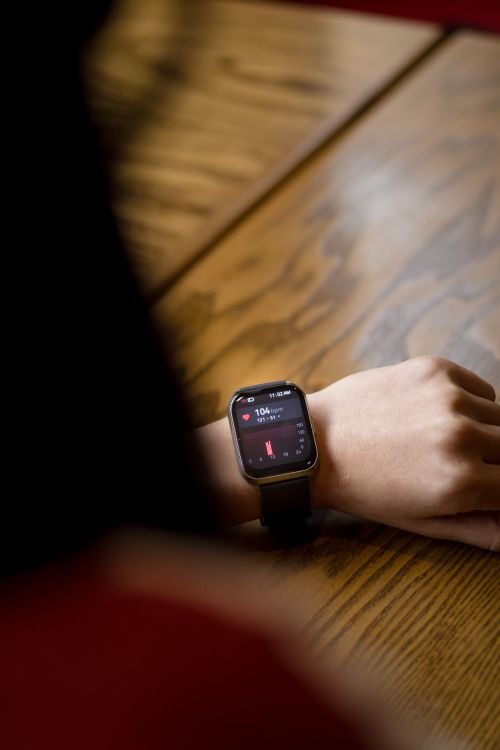
If you wear an Apple Watch, WHOOP, Garmin, or Oura, you’ve probably stared at your HRV number first thing in the morning and wondered: what’s a good HRV for men by age, anyway? It’s one of the most checked (and least understood) numbers in the whole wearable-health world.
Here’s the plain version, written for a regular guy who trains, works, and sleeps imperfectly, not for an elite athlete. We’ll cover what HRV is, what counts as a good number for men by age, why your readings bounce around so much, and the things that move it.
What HRV Is
HRV stands for heart rate variability: the variation in time between consecutive heartbeats. That sounds backwards at first. You’d think a healthy heart beats like a metronome, perfectly even. It doesn’t, and that’s the point.
The tiny, constant fluctuations between beats are controlled by your autonomic nervous system: the system running things you don’t consciously control. It has two branches: the sympathetic (“fight or flight”) and the parasympathetic (“rest and digest”). When you’re recovered and relaxed, the parasympathetic side is active and your beat-to-beat timing varies more, meaning a higher HRV. When you’re stressed, under-recovered, or ill, the sympathetic side dominates and the timing becomes more uniform, meaning a lower HRV.
So in general terms: higher HRV reflects better recovery and nervous-system flexibility; lower HRV suggests stress or fatigue. It’s become one of the most useful day-to-day readouts of how well your body is coping.
Good HRV for Men by Age
The single most important thing to understand before looking at any chart: HRV is deeply individual. Two equally healthy men the same age can have wildly different numbers based on genetics, fitness, and physiology. There’s no universal “good” score. That said, population data gives useful reference points.
Based on large datasets from fitness trackers, here are rough average HRV values for men by age (measured in milliseconds):
| Age range | Average HRV (men) |
|---|---|
| 20s | ~60 ms |
| 30s | ~49 ms |
| 40s | ~37 ms |
| 50s | ~32 ms |
| 60s | ~31 ms |
A few things jump out of that table:
- HRV declines with age, and it drops most steeply between 20 and 40, then flattens out. This is normal physiology, not a personal failing.
- The decline isn’t a straight line: it levels off considerably after the 40s.
- Men tend to have slightly higher HRV than women until around age 50, after which the difference largely disappears.
One important nuance: averages are skewed by outliers. A small number of people with very high HRV pull the average up, so the most common value tends to be lower than the average. Across large datasets, the most common HRV for men sits around 40 ms, so if your number looks lower than the “average” above, you may still be completely normal. Almost nobody lands much below 15.

Why Your HRV Jumps Around So Much
If you track daily, you’ll notice your HRV swings (sometimes dramatically) from one morning to the next. This is normal and expected. Your daily reading is influenced by a long list of factors:
- Sleep: quantity and quality both matter enormously
- Alcohol: one of the most reliable HRV-crushers; a couple of drinks can tank your overnight number
- Training load: a hard session lowers HRV the next morning as your body recovers (this is the system working correctly)
- Stress: psychological stress shows up here, sometimes before you consciously feel it
- Illness: HRV often drops a day or two before you feel symptoms, making it an early warning signal
- Hydration and even your environment
Because of all this noise, a single day’s reading tells you very little. The value of HRV is in the trend over weeks, and in spotting your own patterns, not in comparing one morning to the next, and definitely not in comparing your number to another man’s.
How to Measure It Properly
To get readings you can compare over time, consistency is everything:
- Measure at the same time each day: ideally first thing in the morning, before you get out of bed. Morning readings, taken before the day’s inputs pile up, are the most comparable.
- Many wearables measure automatically overnight, which is even better because it removes user error and captures a long, undisturbed window.
- Your body position affects the reading, so keep it consistent.
- Focus on your personal baseline and trend, not isolated numbers.
The goal isn’t to hit someone else’s number. It’s to know your normal range, and to notice when you’re consistently above or below it.

How to Improve Your HRV
The encouraging part: HRV is responsive. The same habits that improve your overall health tend to raise it. In rough order of impact:
Prioritise sleep. This is the biggest lever for most men. Consistent sleep and wake times, and enough hours, do more for HRV than almost anything else.
Cut back on alcohol. If you want a single experiment that demonstrates HRV’s sensitivity, compare your reading after an alcohol-free night to one after two or three drinks. The difference is often stark.
Train, but recover. Regular aerobic exercise builds the cardiovascular base that supports higher HRV. Endurance work in particular tends to help. But chronic hard training without recovery does the opposite, keeping HRV suppressed. The recovery is not optional; it’s where the adaptation happens.
Manage stress actively. Slow breathing, time outdoors, prayer or meditation, and proper downtime all nudge your nervous system toward the parasympathetic side that drives higher HRV.
Don’t smoke. Smoking measurably harms autonomic function and HRV.
Watch the basics: hydration, not eating heavily right before bed, and a consistent routine all contribute.
None of these are exotic. HRV rewards the unglamorous fundamentals, which is part of what makes it such a revealing metric.
HRV Is One Number Among Several
It’s powerful, but HRV is most useful read alongside the other markers that track your cardiovascular health and recovery. Your resting heart rate tells a closely related story, since both reflect how your autonomic nervous system is coping, and they often move together. Your VO2 max captures your aerobic fitness ceiling, the engine underneath a healthy HRV. And further out, even your grip strength has emerged as a surprising predictor of long-term health. No single number defines you; the picture they paint together is what matters. If you track HRV every morning, it helps to understand these companions too.
A Note on Not Obsessing
One real risk with daily HRV tracking is that it becomes a source of stress itself, which, ironically, can lower the very number you’re anxious about. A single low reading is not a verdict on your health. It might just mean you slept badly, had a drink, or trained hard yesterday. Use HRV as a gentle long-term guide to your recovery and habits, not as a daily exam to pass or fail.
FAQ: Good HRV for Men by Age
What is a good HRV for a man in his 30s?
The average for men in their 30s is around 49 ms, though the most common value sits lower. Anywhere in a broad range can be healthy: what matters most is your personal baseline and trend, not a single target.
Why is my HRV so much lower than my friend’s?
HRV is highly individual, driven by genetics, fitness, and physiology. Large differences between two healthy men are completely normal. Comparing absolute numbers between people isn’t meaningful; compare yourself to your own baseline instead.
Is a higher HRV always better?
Generally a higher HRV reflects better recovery and nervous-system flexibility. But the most useful thing is your own trend over time. A number that’s good for a 60-year-old might be below average for a fit 25-year-old.
Why does my HRV drop after drinking or a hard workout?
Both place a recovery demand on your body, shifting your nervous system toward the stress side and lowering HRV the next morning. For training, that’s the system working correctly. For alcohol, it’s a reliable and well-documented effect.
How often should I check my HRV?
Daily measurement is fine for spotting trends, but don’t read too much into any single day. Look at the pattern over weeks. Measuring at the same time each morning makes your readings comparable.
The Bottom Line on a Good HRV for Men by Age
A “good” HRV for men depends heavily on age and, even more, on the individual. As a rough guide, averages run from around 60 ms in your 20s down to the low 30s by your 60s, with the steepest decline between 20 and 40, all of it normal. But the real value of HRV isn’t in hitting a number from a chart; it’s in learning your own baseline and watching the trend. Sleep well, go easy on alcohol, train with real recovery, and manage your stress, and your HRV will tend to follow. Just don’t let the number itself become one more thing to stress about.
This article is for informational purposes only and does not constitute medical advice. If you have concerns about your heart health or persistent changes in your readings, consult a qualified healthcare professional.
Sources
1. WHOOP, Average HRV by Age and Gender; Normal HRV Range. 2. Mindbodygreen, A Heart Rate Variability Chart by Age. 3. Marathon Handbook, Good Heart Rate Variability by Age and Sex. 4. Research on HRV, autonomic function, and age-related decline (peer-reviewed sources).