
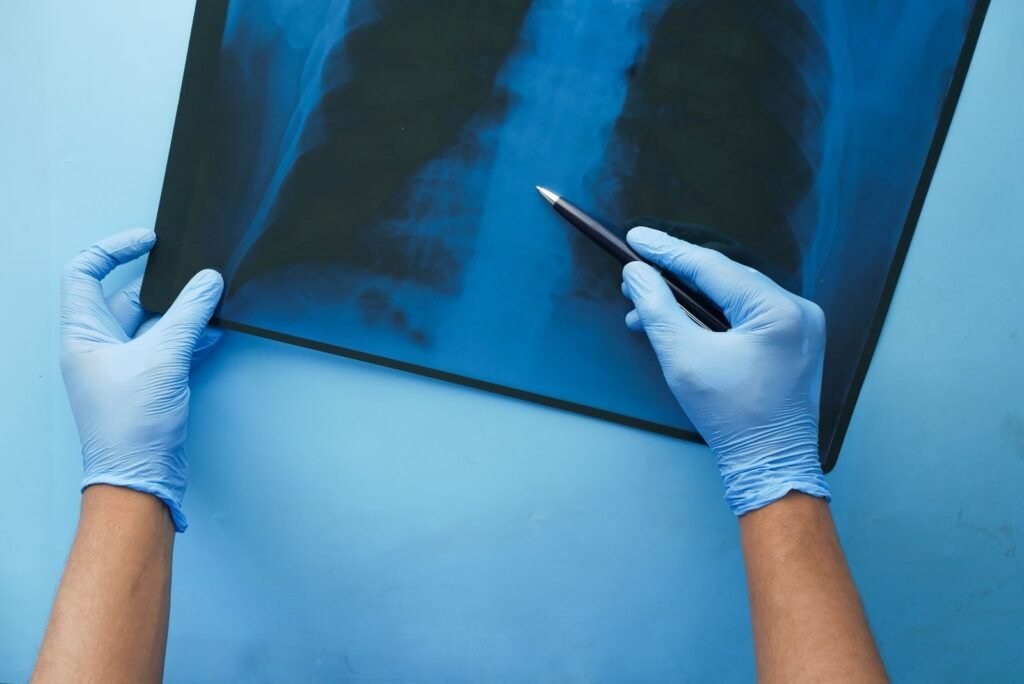
Lung cancer screening uses a quick, low-dose CT scan to look for lung cancer before it causes symptoms, when it is far easier to treat. Lung cancer is the leading cause of cancer death in the US, and most cases are found late. Screening is not for everyone, though. It is aimed at people with a heavy smoking history, and like any test it has downsides as well as benefits.
This guide covers who qualifies, how to work out your pack-years, what the major trials found and what to expect from the scan itself. If you still smoke, quitting remains the most important step, and our guide on how to quit smoking ranks the methods that work best.
In this guide
Lung cancer screening: who should get scanned
The US Preventive Services Task Force (USPSTF) updated its recommendation in 2021. It recommends a yearly low-dose CT scan for adults who meet all three of these criteria:
- Aged 50 to 80
- A smoking history of at least 20 pack-years
- Currently smoke, or quit within the past 15 years
Screening should stop once someone has not smoked for 15 years, or if they develop a health problem that substantially limits life expectancy or their ability or willingness to have lung surgery.
The American Cancer Society (ACS) updated its own guideline in 2023. It uses the same age range and pack-year threshold but drops the 15-year rule. Under the ACS guideline, people who formerly smoked and meet the age and pack-year criteria stay eligible however long ago they quit.
| Criterion | USPSTF (2021) | American Cancer Society (2023) |
|---|---|---|
| Age | 50 to 80 | 50 to 80 |
| Smoking history | 20 pack-years or more | 20 pack-years or more |
| Former smokers | Quit within the past 15 years | Eligible regardless of when they quit |
| How often | Every year | Every year |
Both guidelines lowered the starting age from 55 and the threshold from 30 pack-years, so many more people now qualify than a few years ago. Both also stress a shared decision with your doctor, and quit support for anyone who still smokes.

How to work out your pack-years
A pack-year is a way of measuring how much you have smoked over your lifetime. One pack-year equals smoking an average of 20 cigarettes, or one pack, a day for a year.
The formula is simple:
Packs smoked per day × years smoked = pack-years
Some worked examples:
| Smoking history | Calculation | Pack-years | Meets the 20 pack-year threshold? |
|---|---|---|---|
| 1 pack a day for 20 years | 1 × 20 | 20 | Yes |
| Half a pack (10 cigarettes) a day for 30 years | 0.5 × 30 | 15 | No |
| Half a pack a day for 40 years | 0.5 × 40 | 20 | Yes |
| 1.5 packs (30 cigarettes) a day for 14 years | 1.5 × 14 | 21 | Yes |
| 2 packs a day for 10 years | 2 × 10 | 20 | Yes |
If your smoking changed over time, work out each period separately and add them up. For example, 10 years at half a pack a day (5 pack-years) followed by 15 years at a pack a day (15 pack-years) gives 20 pack-years in total. A rough estimate is fine; the aim is to give your doctor a realistic picture.
What the lung cancer screening trials show
Two large randomised trials form the backbone of the evidence.
NLST (US, 2011). The National Lung Screening Trial enrolled 53,454 people aged 55 to 74 with at least 30 pack-years of smoking. It compared three yearly low-dose CT scans with chest X-rays. The CT group had 20% fewer lung cancer deaths. A later analysis with longer follow-up put the reduction at 16%.
NELSON (Netherlands and Belgium, 2020). This trial enrolled 15,792 people aged 50 to 74, most of them men, and compared CT screening with no screening. After 10 years, there were 181 lung cancer deaths in the screened group and 242 in the unscreened group, about 24% fewer among men.
The benefit comes from finding cancers earlier. Early-stage lung cancer can often be treated with surgery, while cancer found after symptoms appear has usually spread. The USPSTF notes, though, that screening does not prevent most lung cancer deaths, which is why stopping smoking remains essential.
The downsides of screening
The USPSTF judged the benefits of lung cancer screening to outweigh the harms for people at high risk, but the harms matter and should be part of the conversation with your doctor:
- False positives. Many scans show small spots (nodules) that turn out not to be cancer. In the NLST, around a quarter of people had a false-positive result in each of the first two rounds. Most are sorted out with a follow-up scan, but some lead to biopsies or surgery.
- Invasive procedures. In the NLST, false positives led to an invasive procedure in 1.7% of people screened, and complications in 0.1%.
- Overdiagnosis. Some cancers found by screening would never have caused harm. Modelling suggests around 6% of screen-detected lung cancers fall into this group.
- Radiation. A single low-dose CT scan gives roughly 0.65 to 2.36 mSv of radiation. For comparison, average yearly background radiation in the US is about 2.4 mSv. Over many years of screening, the small added risk counts, which is why screening is limited to people at higher risk.
- Incidental findings. The scan can pick up other things, such as calcium in the heart arteries, emphysema or an aortic aneurysm. Some of these are useful to know about; others lead to more tests.
Newer reporting systems, such as Lung-RADS from the American College of Radiology, aim to reduce unnecessary follow-up by grading nodules more consistently.
What happens during the scan
A low-dose CT scan is quick and painless. You lie on your back on a table that slides through a ring-shaped scanner, and you are asked to hold your breath for a few seconds while the images are taken. There are no needles or dyes, and the scan itself is over in a few minutes.
Screening works best at a centre with experience in lung cancer screening, where radiologists use standard systems to report nodules and there is a clear plan for follow-up.
Understanding your results
Most results fall into one of three broad groups:
- Normal or a clearly harmless finding. You return for your next yearly scan.
- A small nodule that needs watching. You may have a repeat scan sooner, often after a few months, to see whether it changes.
- A suspicious finding. You will be referred for further tests, such as a PET scan or a biopsy.
A nodule is very common and does not mean you have cancer. Ask your doctor what category your result falls into and what the next step is.
If the report mentions calcium in your heart arteries, follow that up too. Our guide to the coronary calcium score explains what it means for your heart risk.
If you do not qualify
Screening is designed for people without symptoms. Whether or not you qualify, see a doctor promptly if you notice symptoms such as a cough that does not go away, coughing up blood, chest pain, unexplained weight loss or breathlessness. Our list of symptoms men should not ignore covers other warning signs.
If you smoke but do not yet meet the criteria, the best way to lower your risk is to stop. According to the WHO, lung cancer risk falls to about half that of a smoker around 10 years after quitting. Our quit smoking timeline sets out the other changes along the way. For the full set of checks to plan for at each age, see our men’s health checklist by age.
Frequently asked questions
Who should get lung cancer screening?
The USPSTF recommends a yearly low-dose CT scan for adults aged 50 to 80 with a smoking history of at least 20 pack-years who currently smoke or quit within the past 15 years. The American Cancer Society uses the same age and pack-year criteria but does not set a limit on years since quitting.
What is a pack-year?
One pack-year is smoking an average of one pack (20 cigarettes) a day for a year. Multiply the packs you smoked per day by the number of years you smoked to get your total.
How often should you get a lung cancer screening scan?
Both the USPSTF and the American Cancer Society recommend screening once a year for people who qualify.
Is lung cancer screening safe?
The scan uses a low dose of radiation and takes only a few minutes. The main downsides are false-positive results, which can lead to more tests, and overdiagnosis. For people at high risk, the benefits are judged to outweigh these harms.
Does a nodule on my scan mean I have cancer?
No. Lung nodules are common and most are not cancer. Your doctor may suggest a repeat scan to check whether it changes, or further tests if it looks suspicious.
The bottom line
Lung cancer screening with a yearly low-dose CT scan lowers the risk of dying from lung cancer in people with a heavy smoking history. If you are 50 to 80 and have smoked 20 pack-years or more, talk to your doctor about whether screening suits you. Work out your pack-years before the appointment, and ask about the downsides as well as the benefits. Screening finds cancer earlier, but quitting smoking does the most to prevent it.
This article is for general information and is not medical advice. Screening rules and availability vary by country, so speak to your doctor about what applies to you.
Sources
- US Preventive Services Task Force: Lung Cancer Screening, final recommendation (2021)
- American Cancer Society: Updated lung cancer screening guideline (2023)
- National Lung Screening Trial Research Team. Reduced lung-cancer mortality with low-dose computed tomographic screening. NEJM, 2011
- de Koning HJ et al. Reduced lung-cancer mortality with volume CT screening in a randomized trial (NELSON). NEJM, 2020
- World Health Organization: Tobacco, health benefits of smoking cessation