
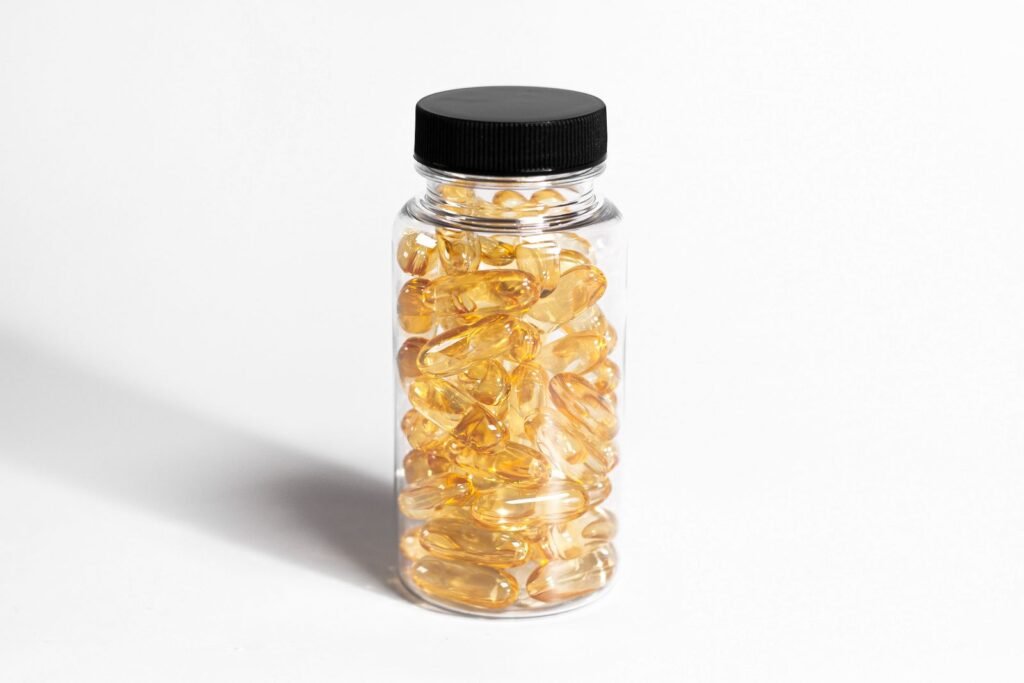
Omega-3 fatty acids (from fish oil and similar sources) are among the more worthwhile supplements for men, supporting heart, brain, and overall health, especially if you don’t eat much fatty fish. But fish oil supplements vary enormously in quality, dose, and value, and the label can be misleading if you don’t know what to look for. This guide gives you a clear framework for choosing a good omega-3 supplement, decoding the numbers, and avoiding low-quality products.
Why Omega-3s Matter (Briefly)
Omega-3 fatty acids, particularly EPA and DHA (found in fish oil), support cardiovascular health, brain function, and overall health, and most people get too little (see omega-3 for men). If you don’t eat fatty fish (salmon, mackerel, sardines) regularly, a supplement is a sensible way to get adequate omega-3s. So for many men, omega-3 is one of the more worthwhile supplements (see the men’s supplement stack). The key is choosing a quality one, since this is a category where quality varies.

The Most Important Thing: EPA and DHA Content
Here’s the key insight for buying fish oil: what matters is the actual EPA and DHA content, not the total “fish oil” amount. This is where labels mislead. A product might advertise “1,000 mg of fish oil,” but the actual EPA and DHA (the beneficial omega-3s) might be only a fraction of that, the rest is other fats.
So when choosing:
- Look at the EPA and DHA amounts specifically, not just the total fish oil. Add up the EPA + DHA per serving: that’s the meaningful number (see how to read a supplement label).
- Compare products on EPA + DHA per serving and per dollar. This is the real value metric. A “1,000 mg fish oil” capsule with only 300 mg EPA+DHA is weaker than it sounds.
- Higher-concentration products give you more EPA and DHA per capsule, meaning fewer capsules for the same dose, often better value despite a higher per-bottle price.
This single point, focusing on EPA + DHA rather than total fish oil, is the most important thing in choosing a good omega-3 supplement.
What Else to Look For
Beyond EPA/DHA content:
1. Freshness and quality (important for fish oil). Fish oil can go rancid (oxidize), which is bad. Look for a fresh, quality product, from a reputable brand, ideally third-party tested for purity and freshness (oxidation). A rancid fish oil smells strongly fishy or off, quality products minimize this. Third-party testing (for purity, freshness, and contaminants) is especially valuable here.
2. Purity (low contaminants). Fish can contain contaminants like mercury and other pollutants, so quality fish oil is purified/molecularly distilled to remove these. Reputable, tested brands ensure low contaminant levels, worth checking.
3. The form (triglyceride vs ethyl ester). Fish oil comes in different chemical forms. The triglyceride (or re-esterified triglyceride) form is generally better absorbed than the ethyl ester form, though both work. If specified, the triglyceride form is a slight plus, but don’t over-obsess, the EPA/DHA content and quality matter more.
4. Alternatives if you don’t want fish oil. If you’re vegan/vegetarian or dislike fish oil, algae-based omega-3 is a good plant-based alternative that provides DHA (and some EPA) directly, since fish get their omega-3s from algae originally. It’s a legitimate option.
5. A reputable, tested brand. As always, buy from an established brand, ideally third-party tested, given how much quality varies in this category (see when supplements are a waste of money).
What Dose to Look For
For dosing:
- Common general recommendations are around 250 to 1,000 mg of combined EPA + DHA per day for general health, with some people (or specific goals) using more. Focus on the EPA + DHA number, not total fish oil.
- Check how many capsules provide your target dose: some low-concentration products require several capsules for a meaningful EPA+DHA dose.
- You also get omega-3s from food: fatty fish a couple of times a week can meet your needs, so a supplement fills the gap if you don’t eat much fish (see omega-3 for men).
What to Ignore
To avoid low-quality or overpriced products:
- Ignore the total “fish oil” number in isolation: focus on EPA + DHA content, which is what matters.
- Ignore cheap, low-concentration products where you’d need many capsules for a real dose (unless the per-dose cost still works out).
- Ignore rancid or low-quality fish oil: quality and freshness matter here; a reputable tested brand is worth it.
- Ignore extravagant health claims: omega-3 is beneficial but not a miracle; get a quality product at a sensible dose.
The Label Arithmetic Almost Everyone Gets Wrong
The single most common mistake when buying fish oil is reading the biggest number on the bottle as though it were the dose of the thing you want. It is not, and the gap is larger than most men assume.
Two different numbers
A bottle saying 1000 mg fish oil is telling you the weight of the oil in the capsule. The omega-3 content is a fraction of that, and the EPA and DHA content is a fraction again.
For a sense of scale, the capsule used in the VITAL trial contained 840 mg of omega-3 per gram of oil, of which 460 mg was EPA and 380 mg DHA. That is a well-concentrated product. Plenty of cheaper retail capsules sit at around 300 mg of combined EPA and DHA per 1000 mg capsule, meaning roughly a third of what the bottle’s headline number implies.
How to work out what you are taking
Turn the bottle around and find the EPA and DHA figures on the supplement facts panel. Add them together. That number, multiplied by the serving size, is your real daily dose. Everything on the front of the bottle is packaging.
Then check the serving size specifically, because this is where the arithmetic gets quietly generous. A panel showing an attractive EPA and DHA total for a serving of three capsules is describing three capsules, not the one you were planning to take.
What that means in practice
If you want to match the intake used in the major primary-prevention research, you are looking at somewhere around 800 to 1000 mg of combined EPA and DHA daily. With a concentrated product that is one or two capsules. With a cheap one it can be three or four, which changes the cost comparison entirely and often reverses it.
Work in milligrams of EPA plus DHA per day and compare products on cost per gram of that, not cost per bottle or cost per capsule. It is the only comparison that means anything, and it takes about a minute.
Frequently Asked Questions
How do I choose a good fish oil supplement?
Focus on the EPA and DHA content (not the total “fish oil” amount), which is what matters, comparing products on EPA + DHA per serving and per dollar. Also prioritise freshness and purity (a reputable, ideally third-party-tested brand), and consider the better-absorbed triglyceride form. Algae oil is a good vegan alternative.
What do EPA and DHA mean on a fish oil label?
EPA and DHA are the beneficial omega-3 fatty acids in fish oil. This is the number that matters, not the total “fish oil” amount, since a product might advertise a high total fish oil but contain only a fraction as actual EPA and DHA. Add up EPA + DHA per serving to gauge a product’s real strength.
How much omega-3 should I take?
Common general recommendations are around 250 to 1,000 mg of combined EPA + DHA per day for general health (focus on EPA + DHA, not total fish oil). You also get omega-3s from fatty fish, so a supplement fills the gap if you don’t eat much fish. Check how many capsules provide your target dose.
Is algae oil as good as fish oil?
Algae-based omega-3 is a good plant-based alternative, it provides DHA (and some EPA) directly, since fish originally get their omega-3s from algae. It’s a legitimate option for vegans, vegetarians, or those who dislike fish oil, providing the beneficial omega-3s without the fish source.
Does fish oil quality matter?
Yes, significantly. Fish oil can oxidize (go rancid), which is bad, and fish can contain contaminants like mercury, so quality fish oil is purified and fresh. This is a category where quality varies, so a reputable, ideally third-party-tested brand (for purity and freshness) is worth choosing.
The Bottom Line on Fish Oil
Choosing a fish oil or omega-3 supplement comes down to one key insight: focus on the actual EPA and DHA content, not the total “fish oil” amount, because labels mislead, and a “1,000 mg fish oil” product might contain only a fraction as beneficial omega-3s. Add up the EPA + DHA per serving and compare products on that per dollar: that’s the real value metric, and higher-concentration products often give better value.
Beyond content, quality matters in this category: fish oil can oxidize (go rancid) and fish can carry contaminants, so choose a fresh, purified product from a reputable, ideally third-party-tested brand. The better-absorbed triglyceride form is a slight plus, and algae-based omega-3 is a good vegan alternative. Aim for a sensible dose (commonly around 250 to 1,000 mg of EPA + DHA daily), and remember you also get omega-3s from fatty fish. Omega-3 is one of the more worthwhile supplements for men, so it’s worth choosing a quality one by focusing on what matters.
This article is for informational purposes only and does not constitute medical advice. Consult a qualified healthcare professional before taking supplements, especially if you take blood thinners.
Sources
- NIH Office of Dietary Supplements, Omega-3 Fatty Acids
- Nicholls SJ et al. Effect of High-Dose Omega-3 Fatty Acids vs Corn Oil on Major Adverse Cardiovascular Events in Patients at High Cardiovascular Risk: The STRENGTH Randomized Clinical Trial. JAMA, 2020
- Albert BB et al. Oxidation of marine omega-3 supplements and human health. Biomed Res Int, 2013
- Recent Clinical Trials Shed New Light on the Cardiovascular Benefits of Omega-3 Fatty Acids: the composition of the capsule used in VITAL.