
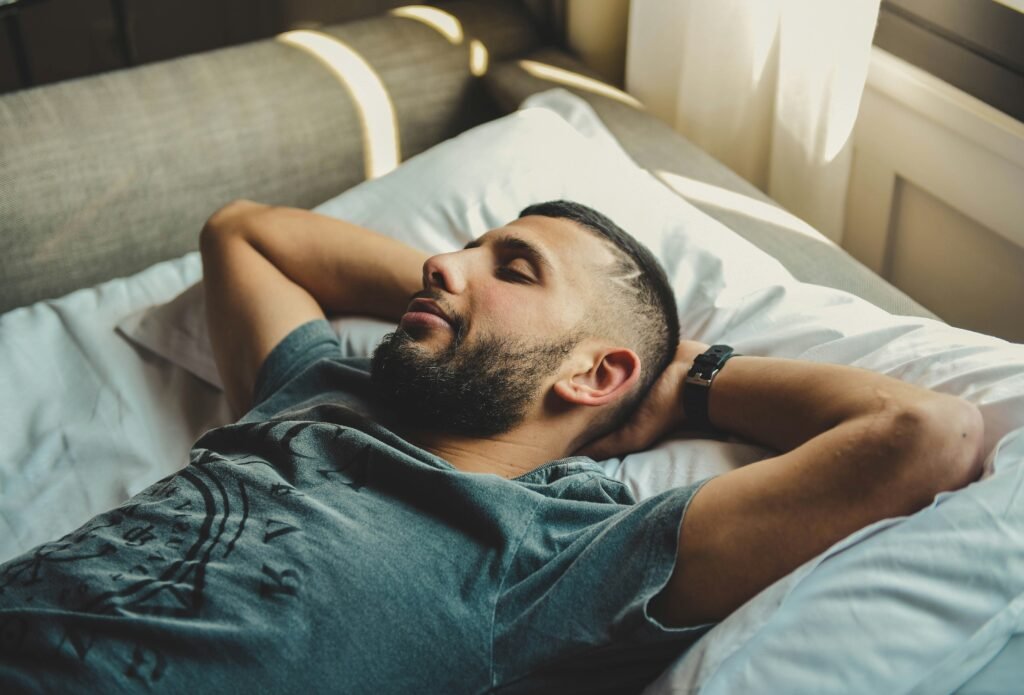
If you’re trying to get a straight answer on men sleep problems, here’s what the evidence actually shows. Somewhere in your thirties, sleep quietly stops being automatic. The nights you used to crash hard and wake up genuinely refreshed become rarer. You wake more often, lie awake earlier, feel less restored, and you can’t always point to why. This isn’t your imagination, and it isn’t only stress. Men’s sleep genuinely changes with age, and understanding why is the first step to reclaiming it.
This guide is the hub for everything about men’s sleep: what changes after 30, why it matters more than most men realise, and the levers that actually work. Each section links to a deeper guide if you want the full detail.
This guide breaks down men sleep problems: what the evidence says, what is worth doing, and what is worth skipping.
What Actually Changes After 30: Men Sleep Problems Explained
Several shifts converge as men age, and they compound:
Less deep sleep. The amount of slow-wave (deep) sleep, the most physically restorative stage, naturally declines with age. Since deep sleep is concentrated early in the night and drives physical recovery and hormone release, losing it means waking less restored even after a full night. (See how to increase deep sleep.)
More fragmented sleep. Men tend to wake more often through the night as they age, and those awakenings break up the continuous sleep cycles you need.
A shifting body clock and lighter sleep. Sleep architecture changes, with more time in lighter stages and less in the deep, uninterrupted rest of your twenties.
Rising rates of sleep disorders. Sleep apnea in particular becomes far more common in men with age and weight gain, and it’s frequently undiagnosed (see sleep apnea symptoms in men).
Life, stacked on biology. On top of these biological shifts come the realities of your thirties and beyond, career pressure, young children, financial stress, and the chronic high cortisol that comes with them, all of which degrade sleep further.
Why Men’s Sleep Matters More Than They Think
Here’s what makes sleep non-negotiable for men specifically: it’s not just about feeling rested. Sleep is when your body does its most important maintenance, and skimping has measurable consequences.
Testosterone is made during sleep. This is the big one. Most testosterone is produced during deep and REM sleep, and the research is stark, one week of five-hour nights can drop a young man’s testosterone by 10–15%, equivalent to aging a decade. We cover this fully in sleep and testosterone. If you care about your hormones, energy, libido, or muscle, sleep is foundational.
Recovery and muscle. Growth hormone peaks during deep sleep, making it essential for recovery from training and maintaining muscle as you age.
Metabolism and weight. Poor sleep disrupts appetite hormones and promotes fat gain, especially the belly fat that further lowers testosterone.
Mood, focus, and stress. Sleep loss frays mood, impairs concentration, and raises cortisol, feeding a cycle that makes everything harder.
Long-term health. Chronic poor sleep is linked to cardiovascular disease, metabolic problems, and cognitive decline.
In short: nearly every other men’s health goal, testosterone, muscle, fat loss, mood, longevity, runs partly through sleep. It’s the foundation under the foundation.
The Levers That Actually Work for Men Sleep Problems
The encouraging news is that men’s sleep is highly responsive to the right changes. Here’s the hierarchy, from biggest impact down.
1. Protect Your Sleep Schedule
Consistent sleep and wake times, even on weekends, are the single most powerful, best-evidenced thing you can do. It anchors your body clock and improves sleep architecture more than any supplement. For many men over 30, the real problem is simply a too-late, too-variable bedtime.
2. Get the Environment Right
- Cool room: 60–67°F (15–19°C), since your core temperature must drop to enter deep sleep.
- Dark and quiet: block light, reduce noise, limit screens before bed.
These basics have stronger evidence than any pill. (Detailed in how to increase deep sleep.)
3. Fix the Obvious Saboteurs
- Alcohol: feels like a sleep aid but suppresses deep and REM sleep. One of the highest-impact things to cut back.
- Late caffeine: with its 5–6 hour half-life, an afternoon coffee still degrades your deep sleep. Cut off ~8 hours before bed.
- Late heavy meals and doomscrolling: both disrupt sleep onset and quality.
4. Manage Stress and Cortisol
Chronically high cortisol, common in busy men over 30, directly fragments sleep. A genuine wind-down routine, breathing, and stress management help. (See high cortisol vs low cortisol in men.)
5. Rule Out Sleep Apnea
If you snore loudly, wake gasping, or feel exhausted despite a full night in bed, get assessed. Sleep apnea is common, often silent, and quietly wrecks both sleep and testosterone. (See sleep apnea symptoms in men.)
6. Use Supplements Last
Once the above are handled, evidence-based supplements like magnesium glycinate can add an edge. They’re the final 10%, not the foundation. (See best sleep supplements for men.)
A Note on Tracking
Many men over 30 first notice their declining sleep through a wearable, an Apple Watch, Oura, or Whoop showing low deep sleep or a poor recovery score. Used well, tracking can highlight patterns (how alcohol tanks your deep sleep, how a consistent bedtime helps) and your HRV often reflects overnight recovery (see good HRV for men by age). Just don’t let the numbers become a new source of anxiety, they’re a guide, not a verdict.
FAQ: Men Sleep Problems
Some quick answers on men sleep problems:
Why do men sleep worse as they get older?
Deep sleep naturally declines with age, sleep becomes more fragmented, and sleep disorders like apnea grow more common, all compounded by the stress and lifestyle pressures of your thirties and beyond.
Does sleep really affect testosterone in men?
Yes, profoundly. Most testosterone is produced during sleep, and one week of short sleep can drop levels 10–15%. Poor sleep is one of the most common reversible causes of low testosterone.
What’s the most important thing for better sleep?
A consistent sleep schedule and a cool, dark environment have the strongest evidence, stronger than any supplement. Fixing a too-late, too-variable bedtime is often the biggest single win.
Should I see a doctor about my sleep?
If you’ve improved your habits and still wake unrefreshed, or you snore loudly and feel exhausted, yes, an undiagnosed sleep disorder like apnea needs proper assessment.
Do sleep supplements help men over 30?
Evidence-based ones like magnesium glycinate can add an edge once your habits and environment are dialled in, but they don’t replace the fundamentals.
The Bottom Line on Men sleep problems
The bottom line on men sleep problems: If your sleep got worse in your thirties, it’s not just you, men genuinely lose deep sleep, wake more, and face rising rates of sleep apnea with age, all stacked on the stress of a demanding decade. It matters more than most men realise, because sleep is where testosterone is made, muscle recovers, and your metabolism and mood are regulated. The fix isn’t a magic pill: protect a consistent schedule, get your room cool and dark, cut the alcohol and late caffeine, manage stress, rule out sleep apnea, and use supplements only as the finishing touch. Reclaim your sleep and you reclaim the foundation under nearly every other men’s health goal.
This article is for informational purposes only and does not constitute medical advice. If you have persistent sleep problems, consult a qualified healthcare professional.
Sources
- Research on age-related decline in slow-wave sleep and sleep fragmentation.
- JAMA / University of Chicago: sleep restriction and testosterone.
- Studies on sleep apnea prevalence in men.
- Sleep Foundation / Cleveland Clinic: sleep architecture, temperature, and hygiene.
