
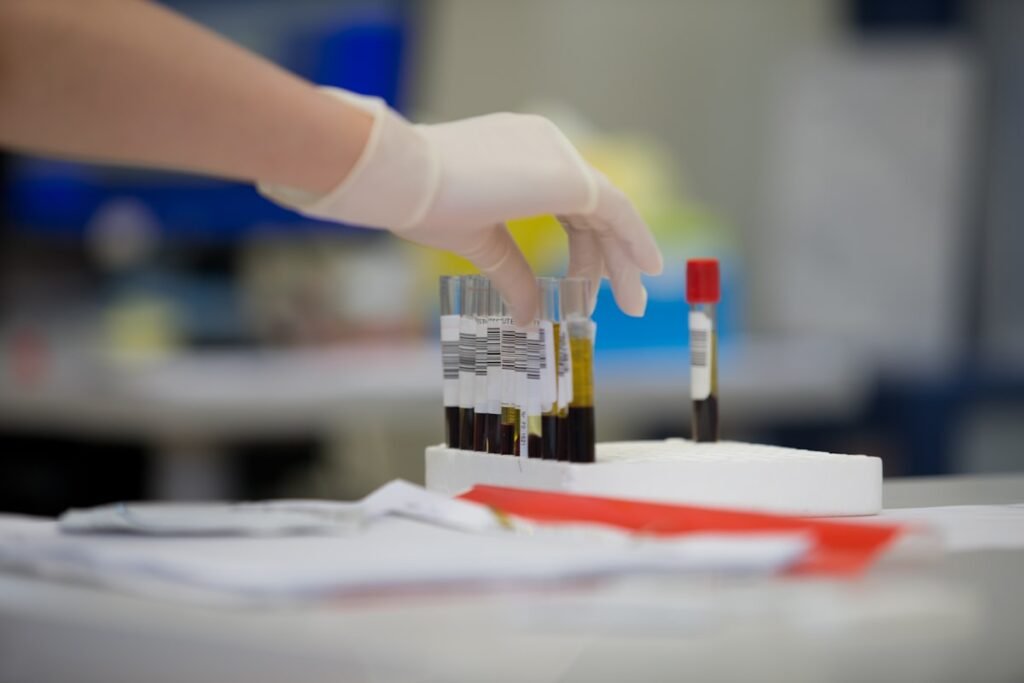
Knowing which blood tests men should get, and when, is the difference between catching a problem early and finding out too late. Most men only get a blood test when something’s already wrong, which is backwards. The entire value of bloodwork is catching problems before you feel them (the rising blood sugar, the creeping cholesterol, the quietly low testosterone) while they’re still easy to fix. Many of the conditions that shorten men’s lives announce themselves in a blood panel years before they cause symptoms.
The problem is knowing what to actually ask for. Walk into a clinic and “I’d like a check-up” can mean anything. This guide lays out the blood tests that genuinely matter for men, what each one tells you, and how the priorities shift by age.
The Core Panel: Blood Tests Men Should Get First
Regardless of age, these are the foundational tests worth getting periodically. Think of them as your baseline dashboard.
Lipid panel (cholesterol). Measures total cholesterol, LDL (“bad”), HDL (“good”), and triglycerides. This is central to assessing heart disease risk, which is the leading killer of men. A standard recommendation is checking every 4-6 years from your 20s, more often if you have risk factors or elevated results. Pay attention to the LDL and the triglyceride numbers in particular.
Blood glucose / HbA1c. Fasting blood glucose and HbA1c (a measure of your average blood sugar over ~3 months) screen for prediabetes and type 2 diabetes. Type 2 diabetes is common, often silent in its early stages, and far easier to reverse when caught early. Increasingly important from your 30s and 40s onward, especially if you carry excess weight.
Complete blood count (CBC). A broad screen of your red cells, white cells, and platelets. It can flag anaemia, infection, and a range of other issues, and it’s a standard part of any general check-up.
Comprehensive metabolic panel (CMP). Checks kidney function, liver function, blood proteins, and electrolytes. Useful for spotting kidney or liver problems early, which is relevant given alcohol’s effect on the liver and the kidney’s role in blood pressure.
Vitamin D. Given how common deficiency is in men, and its links to fatigue, immunity, bone health, and mood, vitamin D is a worthwhile addition, particularly if you get limited sun. We cover this in depth in our guide to vitamin D deficiency in men.
Tests That Become Important With Age and for Men Specifically
Testosterone. If you have symptoms of low testosterone (fatigue, low libido, loss of muscle, low mood, poor morning erections), a testosterone test is worth requesting. Ideally measured in the morning when levels peak, and interpreted alongside symptoms rather than the number alone. Becomes more relevant from the late 30s onward as levels naturally decline. Ask about both total and free testosterone.
PSA (prostate-specific antigen). A blood marker related to prostate health, used in screening for prostate issues including cancer. This is genuinely a discussion to have with your doctor rather than an automatic test, because PSA can be raised by a benign enlarged prostate, not just cancer, and screening has both benefits and limitations. Generally a conversation for men from around age 50 (earlier with family history). We cover the nuances in our guide to the PSA test.
Thyroid function (TSH). Checks how your thyroid is working. An underactive thyroid can cause fatigue, weight gain, low mood, and brain fog, symptoms men often attribute to stress or ageing. Worth testing if you have those symptoms.
Inflammatory markers (e.g. hs-CRP). High-sensitivity C-reactive protein measures inflammation and can add information about cardiovascular risk. Often included in more thorough cardiovascular assessments.
A Rough Guide by Decade
This is general orientation, not a prescription; your doctor tailors testing to your personal and family history.
In your 20s-30s: Establish your baseline. Lipid panel, blood glucose, CBC, CMP, vitamin D. Testosterone if you have symptoms. This baseline is valuable: it’s what future results get compared against.
In your 40s: Everything above, with more attention to blood sugar/HbA1c and cholesterol as cardiovascular and metabolic risk climbs. Testosterone becomes more relevant. Begin discussing prostate screening timing with your doctor.
In your 50s and beyond: Continue the core panel more regularly. Have the PSA conversation. Keep close watch on cardiovascular and metabolic markers, since this is when risk accelerates. Thyroid and other targeted tests as symptoms warrant.
How to Get the Most From Your Bloodwork
A few practical tips:
- Fast if required. Some tests (lipids, fasting glucose) need 8-12 hours of fasting. Confirm beforehand so you don’t have to repeat them.
- Test in the morning for anything affected by daily rhythm, especially testosterone.
- Keep your results. Track them over time: trends matter more than single snapshots. A cholesterol number creeping up year over year is more informative than one reading.
- Ask for your actual numbers, not just “everything’s normal.” Many results sit within the “normal” range but at an edge worth watching.
- Interpret in context. A number is just a number until it’s read alongside your symptoms, history, and other markers. That’s your doctor’s job, but understanding the basics helps you ask better questions.
Bloodwork pairs naturally with the other numbers worth tracking: your blood pressure, resting heart rate, body fat percentage, and waist-to-height ratio. Together they form a genuinely useful picture of where your health stands and where it’s heading.
FAQ: Blood Tests Men Should Get
What blood tests should a man get annually? There’s no single universal list, but a core panel (lipid panel, blood glucose/HbA1c, CBC, and a metabolic panel) covers the essentials, with frequency depending on age and risk. Vitamin D, testosterone, thyroid, and PSA are added based on symptoms and age.
At what age should men start getting blood tests? Establishing a baseline in your 20s or 30s is valuable. Cholesterol screening is often recommended from the 20s every few years, with more comprehensive and frequent testing as you move through your 40s and 50s.
Do I need to fast before a blood test? For some tests, yes: lipid panels and fasting glucose typically require 8-12 hours of fasting. Always confirm with the clinic, since fasting requirements vary by test.
Should every man get a PSA test? Not automatically. PSA screening has benefits and limitations, and an elevated result can come from a benign enlarged prostate. It’s best discussed with your doctor, generally from around age 50 or earlier with family history.
When should I test testosterone? If you have symptoms like persistent fatigue, low libido, lost muscle, or low mood, particularly from your late 30s onward. Test in the morning when levels peak, and have it interpreted alongside your symptoms.
The Bottom Line on Blood Tests Men Should Get
Blood tests are how you catch the silent problems (high cholesterol, rising blood sugar, low testosterone, thyroid issues) while they’re still easy to address. Every adult man benefits from a core panel of cholesterol, blood sugar, a complete blood count, and a metabolic panel, with vitamin D, testosterone, thyroid, and PSA added based on age and symptoms. Establish your baseline early, keep your numbers, track the trends, and use them to have better conversations with your doctor. It’s one of the highest-leverage, lowest-effort things a man can do for his long-term health, but only if you don’t wait until something’s already wrong.
This article is for informational purposes only and does not constitute medical advice. Which tests are right for you depends on your individual health, history, and risk factors; consult a qualified healthcare professional.
